Picking a new toilet sounds simple until you actually start comparing sizes, flush types and fitting requirements. For most UK homes, a close coupled toilet is still the go-to choice. It’s familiar, easy to look after, and works in almost any bathroom layout.
If you’re swapping out an old toilet or redoing the whole bathroom, it pays to get the details sorted before you buy. A few wrong assumptions about space or plumbing can turn a simple job into an expensive one.
What Exactly Is a Close Coupled Toilet?
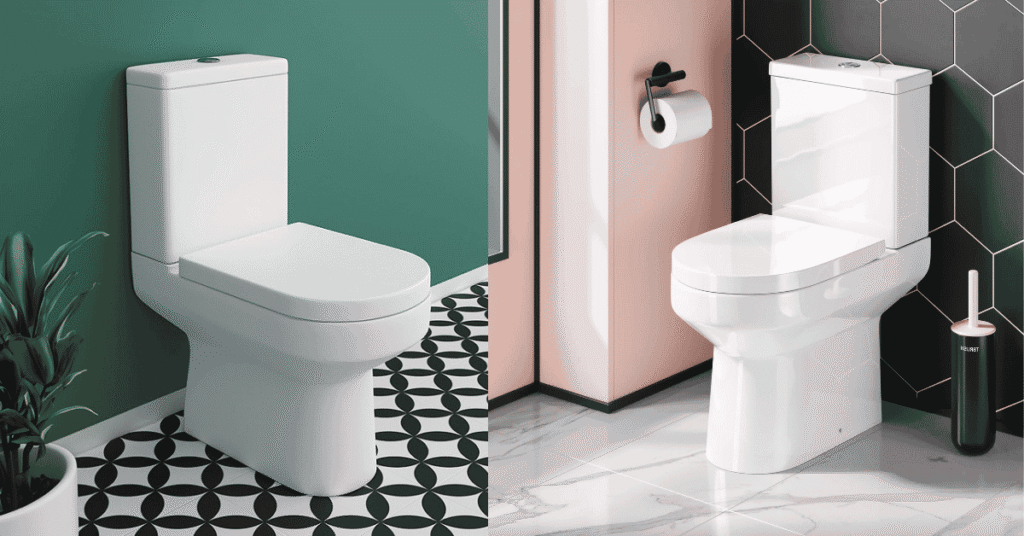
In a close coupled toilet, the cistern sits directly on top of the pan, joined together as one unit. That’s the classic setup you’ll find in the vast majority of British bathrooms.
Compared with wall-hung or concealed-cistern designs, most of the internal parts stay within easy reach. So when something eventually needs fixing and something usually does, eventually you’re not pulling panels off the wall to get at it.
Don’t picture the bulky old-style toilets your grandparents had, either. Today’s close coupled models come in compact, curved, square and minimalist shapes, so there’s a version that suits pretty much any bathroom, traditional or modern.
Start by Measuring Your Bathroom
Before you fall in love with a toilet online, grab a tape measure.
It’s easy to get swept up by how a toilet looks in photos or in a showroom, without thinking about how far it’ll stick out into the room once it’s fitted. This matters even more in small UK bathrooms, downstairs loos and en-suites where every centimetre counts.
Check the Projection
“Projection” is just the distance from the wall to the front of the toilet.
Standard models can eat up more floor space than you’d expect, while compact designs are built with a shorter projection specifically to save room. Even a small reduction here can be the difference between a bathroom that feels cramped and one that doesn’t especially if the door, basin or shower are close by.
While you’re at it, check the width and height too, particularly if there’s a windowsill, shelf or boxed pipework nearby.
Know Where Your Waste Pipe Sits
Your soil pipe’s position has a big say in which toilets will actually work for you.
In a lot of UK homes the waste outlet runs through the wall behind the toilet though this varies a fair bit between older houses and newer builds.
If you’re replacing an existing toilet, sticking with a similar outlet position generally makes the whole job easier. You can choose a toilet that needs the pipework moved, but expect that to add to your plumbing bill. When in doubt, measure your current outlet before you order anything.
Standard vs. Fully Back-to-Wall: Which One?
Not all close coupled toilets are built the same way.
Traditional designs leave some pipework on show behind the pan. That’s not a bad thing it actually makes plumbing access easier if you ever need it.
A fully back-to-wall toilet, on the other hand, sits flush against the wall and hides most of that pipework from view.
Looks vs. Practicality
Back-to-wall designs have grown in popularity for good reason they give you a cleaner finish, with fewer gaps and exposed pipes to collect dust and grime around the base.
That said, an open-back design still makes sense if you want easy plumbing access, or if your existing pipework isn’t a great match for a fully enclosed unit.
Which one’s right for you really comes down to your bathroom’s layout and how much you care about that seamless look.
Pan Shape and Seat Height Matter More Than You’d Think
Comfort isn’t something people think about until they don’t have it.
You’ll find round, oval and more angular pan shapes on the market, and honestly, there’s no universal “best” it depends on your space, your bathroom’s style, and what you personally find comfortable.
Seat height is worth thinking about too. Standard height works fine for most households, but comfort-height toilets sit a bit taller, which can make a real difference for taller users or anyone who struggles standing up from a lower seat.
If several people share the bathroom, it’s worth choosing based on who uses it most, not just what looks best.
The Flush System Deserves a Closer Look
A decent flush should clear the bowl properly without wasting water doing it.
Most toilets sold in the UK today use dual-flush buttons a smaller flush for liquids, a bigger one for everything else.
When you’re comparing close coupled toilets, don’t just glance at the flush button and move on. Look into how good the internal mechanism actually is, and whether replacement parts are easy to get hold of down the line.
A well-made cistern mechanism will save you from the classic headaches: water running constantly, a weak flush, or buttons that stop working properly after a year or two.
Should You Go Rimless?
Rimless toilets have become a lot more common in recent years, and it’s easy to see why.
The old-style rim around the top of the bowl is exactly where grime and limescale like to build up and it’s notoriously fiddly to clean properly.
A rimless design gets rid of most of that hidden edge, sending water around the bowl through a different route entirely.
If easy cleaning is high on your priority list, a rimless close coupled toilet is genuinely worth the extra look. Fewer hard-to-reach corners, and a simpler, tidier bowl overall.
Don’t Overlook the Seat
It sounds like a minor detail, but the seat makes a bigger difference to everyday comfort than most people expect.
Soft-close seats have become the norm for good reason they lower gently instead of slamming down, which is quieter and easier on both the seat and the ceramic underneath.
Quick-release seats are handy too, since you can pop them off in seconds to clean properly around the fixing points something you’ll appreciate the first time you try cleaning around a fixed one.
One more thing worth checking before you buy: does the price actually include the seat? Some retailers bundle the pan, cistern and seat together; others sell them separately, and it’s not always obvious which is which.
Matching the Toilet to Your Bathroom’s Style
A toilet’s job is practical, sure, but it also takes up a fair chunk of visual space in a small room.
For a modern bathroom, look for smooth-sided toilets with concealed pipework and slim cisterns square or softly curved shapes tend to sit well alongside contemporary basins and vanity units.
Going for a more traditional look? Softer curves, classic detailing and a conventional cistern shape will usually blend in better.
Try to keep it visually consistent with your basin and bath rather than picking each fitting in isolation it’s a small thing, but it shows.
Cleaning and Long-Term Upkeep
A bathroom fixture needs to hold up well after the shine wears off, not just look good on day one.
Smooth exteriors with fewer awkward gaps are simply easier to keep clean. Toilets with complicated shaping around the base tend to trap dust and make mopping around them more of a chore than it needs to be.
Access to the cistern matters just as much. One genuine advantage of close coupled toilets is that you can usually get into the cistern without removing any wall panelling or dealing with a concealed frame — which makes routine repairs far less of a hassle.
What to Check Before You Order
Bathroom listings can look nearly identical while actually including quite different things.
Before you check out, confirm exactly what’s in the box: pan, cistern, flush mechanism, seat — are they all included, or sold separately? Also check whether you’ll need extra connectors or fixing kits that aren’t listed as standard.
Delivery size and weight matter too. Ceramic toilets are heavy and can crack if they’re mishandled in transit, so it’s worth inspecting everything carefully as soon as it arrives, well before installation day.
Making the Final Call
The best toilet for your home isn’t necessarily the priciest or the most stylish one on the shelf. It’s the one that actually fits your bathroom, suits your existing plumbing, and stays comfortable to use day after day.
Take the time to measure your space, check your waste connection, and weigh up projection, height, cleaning and upkeep before you commit.
Get it right, and a good close coupled toilet will give you years of reliable, low-maintenance use whatever style of UK bathroom you’re working with.
FAQs
Will a close coupled toilet fit in a small bathroom?
Yes — plenty of compact models are built specifically with shorter projections for small bathrooms and cloakrooms.
Are they difficult to install?
Not usually. Replacing an existing toilet with a compatible model is generally a straightforward job.
What does “rimless” actually mean?
It means the toilet skips the traditional internal rim around the bowl, which removes one of the hardest areas to keep clean.
Do they come with a seat included?
Some do, some don’t always check the product listing before you order rather than assuming.
How long does a close coupled toilet typically last?
The ceramic pan itself can last for decades. Seals, seats and flush mechanisms tend to wear out sooner and may need replacing along the way.