Bathroom upgrades always throw up more decisions than you’d expect, and taps are one of the trickiest. A mixer bath tap shower is often the practical answer if you want one fitting handling both bath filling and showering, without putting in an entirely separate system.
In a lot of UK bathrooms particularly the smaller ones this setup strikes a nice balance between convenience, looks and cost. The trick is picking one that actually matches your water system, your bath, and how you use the room day to day.
What Is a Mixer Bath Tap Shower, Exactly?
A mixer bath tap shower blends hot and cold water through one tap unit, then sends it out either through the bath spout or the shower handset.
Most come with a diverter that switches the flow between the two — sometimes a lever, sometimes a pull-up knob, sometimes a rotating dial, depending on the model.
The real appeal here is simplicity. Rather than fitting separate bath taps plus a whole other shower control, you get one compact fixture doing both jobs.
That’s exactly why a mixer bath tap shower works so well in family bathrooms, tighter spaces, and homes where installing a dedicated shower system would mean ripping into the plumbing.
Know Your UK Water System First
Water pressure is probably the single most important thing to get right here.
Not every mixer tap performs the same way across every plumbing setup. Some UK homes run high-pressure systems; older properties often still rely on gravity-fed setups with noticeably lower pressure.
If You’ve Got Low Pressure
Got a traditional cold-water tank and a hot-water cylinder? Chances are your pressure is on the lower side.
In that case, look specifically for a mixer bath tap shower built to perform well at lower pressure. Buy one designed for high pressure instead, and you might find the bath fills fine but the shower barely trickles.
If You’ve Got High Pressure
Combi boilers and unvented cylinders typically deliver stronger pressure across the board.
That opens up a much wider range of taps to choose from, and generally means a better flow rate through the shower handset too. Either way, check the manufacturer’s stated pressure range before you buy — don’t just guess.
Measure the Bath and the Tap Holes
However good a tap looks, it still has to physically fit your bath.
Baths are typically drilled for one, two, or occasionally three tap holes, and a standard bath shower mixer usually goes into two.
If you’re replacing an old unit, measure the gap between the existing holes carefully even a centimetre or two off can cause real fitting headaches.
Don’t forget to check the rim thickness and how much clearance there is underneath, especially if the bath’s already boxed in against a wall. It’s a tight squeeze in a lot of UK bathrooms.
Five minutes with a tape measure now beats discovering a mismatch halfway through installation.
Picking the Right Style
Taps have stopped being purely functional the shape and finish genuinely change how a bathroom feels.
Clean lines, soft curves and simple lever controls dominate modern UK bathrooms. Chrome’s still the safest bet because it pairs with almost any colour scheme going.
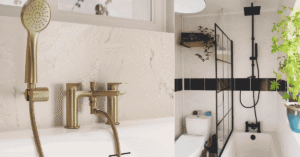
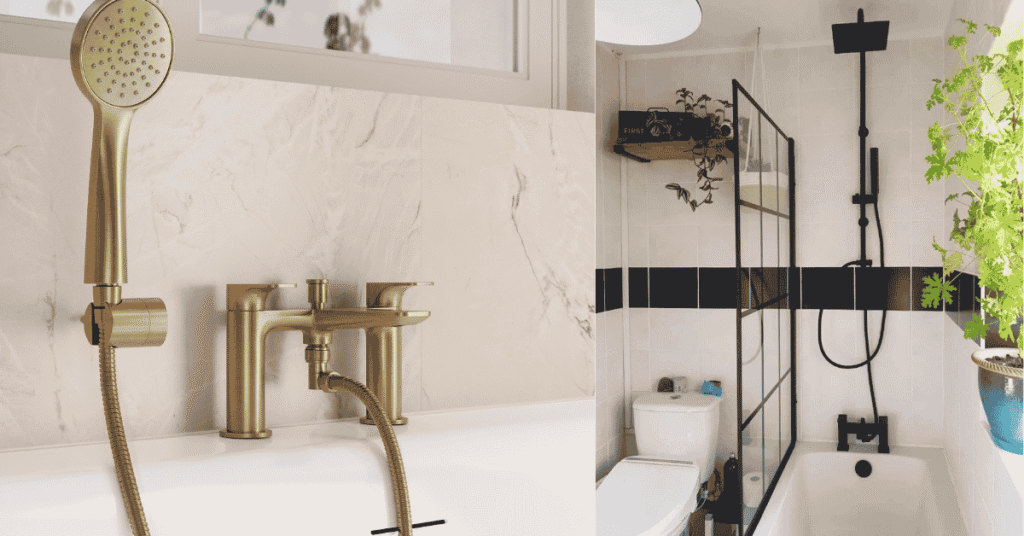
That said, black, brushed brass and brushed nickel finishes have all been gaining ground lately.
Keep Things Coordinated
Try to match your bath mixer to whatever else is already in the room.
If your basin tap, shower enclosure and accessories are all chrome, dropping in a mismatched finish can make the whole bathroom feel a bit disjointed.
You don’t have to buy everything from one range just keep the shapes and finishes broadly similar, and the room will look far more pulled-together.
Don’t Forget the Handset and Hose
The shower attachment matters just as much as the tap itself, so don’t skip past it.
Look closely at the handset’s size and shape, the hose length, and how it’s stored when you’re not using it.
A longer hose makes life easier for washing hair or bathing kids — though go too long and it just ends up coiled untidily in the bath.
If you plan to shower standing up, a wall-mounted holder is worth having. If it’s mainly for rinsing off, a simple cradle by the tap will probably do the job.
Is Thermostatic Control Worth It?
Temperature control matters a lot more in a busy household than you’d think.
Standard bath shower mixers rely on you manually balancing hot and cold so if someone runs a tap elsewhere in the house, your water temperature can shift without warning.
Thermostatic models fix that by holding the temperature steady regardless of what else is happening on the system.
For family bathrooms — especially ones used by kids or older relatives — a thermostatic mixer bath tap shower is genuinely useful. It also means less fiddling with the controls mid-shower.
Yes, they cost a bit more. For most households, that extra stability is worth paying for.
How It Feels to Actually Use
A tap can look great in a showroom and still be a pain to use every single day.
Lever handles tend to win out over small round dials, particularly once your hands are wet and soapy.
The diverter should switch cleanly between bath and shower with no resistance cheaper diverters have a habit of getting stiff or starting to leak after a while.
Cleaning is worth a thought too. Fussy edges, grooves and unusual shapes are magnets for soap scum and limescale, whereas smooth surfaces just wipe down easily.
Build Quality and What It’s Made Of
You’ll likely be using this tap for years, so it’s worth checking what’s underneath the finish.
Brass-bodied taps are the industry standard for a reason solid durability, decent resistance to corrosion. The outer finish should also be built to handle constant exposure to water and cleaning products.
Look into the cartridges, valves, seals and diverter mechanism too, not just the exterior.
Going for the cheapest option can backfire replacing worn internals, or the entire tap, after a year or two usually costs more than spending a bit extra upfront.
What Installation Actually Involves
Swapping a like-for-like tap is usually simple, but not every job is that straightforward.
Hot and cold supplies need to connect properly, and the tap has to be fixed securely to the bath and getting underneath the bath isn’t always easy, depending on how it’s boxed in.
If pipework needs moving, or your new mixer uses different connections than the old one, it’s probably worth calling in a professional rather than risking it yourself.
Whatever you do, check every connection for leaks before the bath panel goes back on.
Choosing What Actually Suits You
The best mixer bath tap shower isn’t automatically the priciest one on the shelf.
Think honestly about how your bathroom gets used. A household that mostly takes baths and only occasionally reaches for the shower handset has very different needs from a family showering every single morning.
Weigh up pressure compatibility, temperature control, handset quality, how easy it is to clean, and what installation will involve then make the call.
Get it right, and a good mixer makes the bathroom noticeably more practical, without overcomplicating anything. It also ties the whole space together as part of a bigger upgrade.
FAQs
Will a mixer bath tap shower work with a combi boiler?
Yes, in most cases. Just double-check the tap’s recommended pressure range against your system before buying.
Do I need high water pressure for a bath shower mixer?
Not necessarily. Plenty of models are built for low-pressure systems, though others do need stronger pressure to give decent shower performance.
Is a thermostatic mixer bath tap shower actually worth the extra cost?
Often, yes — particularly in family bathrooms, where keeping the temperature steady while someone else uses water elsewhere in the house makes a real difference.