I once watched a friend spend three weekends arguing with herself over a single tap. Brass or chrome. Traditional cross-head or a sleek lever. In the end she went brass, paired it with a completely modern walk-in shower, and the whole room somehow worked. That’s the thing about character bathrooms the good ones never look like they were planned to death, even when every single choice was deliberate.
If you love the clean feel of a modern interior but don’t want your home to lose its warmth or its history, blending the two isn’t as tricky as it sounds. You just need balance. Go too heavy on period details and the room reads as dated. Go too sleek and it feels a bit cold, like a hotel bathroom rather than somewhere you actually live.
What Actually Makes These Rooms Feel Special
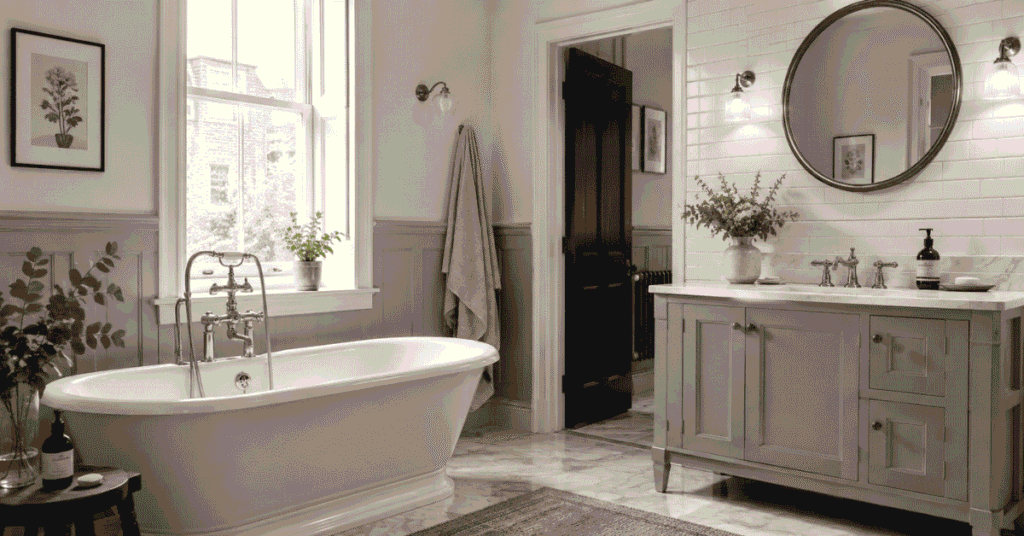
It usually comes down to a handful of details rather than the whole room shouting “traditional” or “modern” at once. Roll-top baths, pedestal basins, decorative taps, patterned tiles, panelled walls that’s the classic side. Clean lines, smart storage, practical lighting, low-maintenance surfaces that’s the modern side.
Put a traditional basin under a sleek, frameless mirror. Fit heritage-style taps onto a proper modern walk-in shower. Done right, it shouldn’t feel like two design eras fighting for the same square metre — more like they were always meant to sit together.
Colour First, Everything Else After
Colour does more heavy lifting than most people give it credit for. Soft white, warm cream, muted green, navy, a gentle grey these shades turn up again and again in British homes for good reason, and they work whether the room leans traditional or contemporary.
Small bathroom? Stick to lighter tones so the space doesn’t close in on you. Bigger room? You can get away with darker colours on a vanity unit or a feature wall without it feeling heavy-handed.
None of this means avoiding modern colour entirely deep greens and dusty blues can sit comfortably next to a roll-top bath if you don’t overdo it. Two or three main colours, tops. Any more and the room starts to feel busy rather than considered.
Fixtures That Look Old But Work Like New
Here’s probably the easiest route into character bathrooms: choose fittings that look like they’ve been there for decades but perform like they were installed last week.
A freestanding bath becomes the obvious centrepiece. A thermostatic shower gives you consistent temperature without any of the old-fashioned fiddling. Traditional-style taps look the part while still being efficient underneath.
Same logic applies to basins, toilets, vanity units. Pick pieces with subtle period shaping rather than dressing the entire room in full ornate detail a few strong choices tend to land harder than filling every surface with decoration. This matters even more if you’re in a Victorian, Edwardian, or Georgian property and want the bathroom to actually match the rest of the house rather than feeling bolted on.
Tiles Do a Lot of the Talking
Tiles are probably the single most effective way to bring character into a bathroom without overwhelming it.
Metro tiles keep coming back into fashion because they genuinely suit both traditional and contemporary spaces white grout keeps them fresh, darker grout adds a bit more contrast and edge.
Patterned floor tiles are worth considering too. Geometric or Victorian-inspired designs give a room an established feel almost instantly. If that’s too bold for your taste, stone-effect porcelain does something quieter while staying practical for a busy family bathroom.
One rule worth sticking to: don’t stack multiple bold patterns in the same room. Pick one area to be the feature and keep everything around it simple.
Furniture Is Where the Warmth Comes From
Glossy white cabinets everywhere can start to feel a bit clinical after a while. Painted timber, wood-effect finishes, shaker doors, traditional handles these bring a warmth that’s genuinely hard to get from flat modern gloss.
A good vanity unit does double duty: proper storage plus a focal point for the room. That storage matters more than people expect, because clutter is the fastest way to undo everything else you’ve done. Tuck toiletries and cleaning products away in drawers, leave a small handful of things out on display, and the room reads as considered rather than chaotic.
Open shelving can work here too towels, baskets, the odd decorative piece but use it sparingly. Too much open storage just becomes visual noise.
Lighting That Doesn’t Break the Illusion
Practical first, always but lighting still shapes the mood of the room more than people realise. Ceiling spotlights handle the general lighting job, wall lights beside a mirror soften things considerably, and a decorative pendant (if the room’s big enough and the zone allows it) adds a touch of proper luxury.
Warm-toned light tends to sit better with traditional interiors than the cool white you’d find in an office. Illuminated mirrors are a nice middle ground too genuinely modern, but subtle enough that they don’t clash with the rest of the room’s character.
The Small Stuff Nobody Notices Until It’s Missing
Handles, taps, towel rails, mirrors, even the toilet-roll holder every one of these small details either reinforces the look or quietly undermines it. Brass, brushed nickel, chrome, darker finishes all fine choices, but pick one lane. Mixing three different metal finishes rarely looks intentional, it just looks unplanned.
Mirrors are an easy win. A framed rectangular mirror leans traditional, a large round one softens things and brings in a slightly more contemporary edge. Small choices like these are usually what separate character bathrooms that feel genuinely finished from ones that just feel themed.
What You Gain — and What It Costs You
On the plus side, this style tends to age well. You’re not tied to one passing trend, so the room is less likely to look dated in five years, and it works across a huge range of UK homes — period terraces, new-builds, cottages, doesn’t really matter, you just adjust how far you lean traditional or modern.
The trade-off is cost and planning. Decent traditional-style taps, quality furniture, a proper freestanding bath, good tiles none of that comes cheap compared to basic modern fittings. And getting the balance right takes more thought than picking one style and running with it; colours, metals, tiles and furniture all need to agree with each other, which takes a bit more decision-making than most bathroom projects.
Small Bathroom, Same Idea
You don’t need a big room for any of this if anything, smaller spaces can feel cosier and more considered when every choice actually matters.
A compact vanity instead of a full pedestal basin frees up floor space if storage’s tight. Wall-hung furniture does something similar, making more of the floor visible and the room feel bigger than it is. Pick one strong traditional feature patterned flooring, a statement mirror and keep everything else deliberately quiet. Glass shower screens help too, letting light move through the room instead of chopping it into smaller sections.
Pulling It All Together
The best character bathrooms don’t try to recreate a period interior exactly. They borrow the warmth and craftsmanship of traditional design and keep the convenience that comes with modern living — which is really the whole appeal of character bathrooms in the first place.
Pick a few features you genuinely love a freestanding bath, a painted vanity, brass taps, patterned flooring — and build outward from there rather than trying to fit everything in at once. Keep the overall balance in check and you end up with a room that feels established and lived-in, without giving up the practicality of something you’ll actually use, clean, and maintain every single day.
A Couple of Common Questions
Can this style work in a newer home, not just a period property? Yes, easily classic features slot into modern builds just fine once you pair them with simple colours and contemporary lighting or storage. It’s less about the age of the house and more about how you balance the details.
Do you need a big budget to pull off character bathrooms properly? Not really. Pick a handful of statement pieces — taps, tiles, a standout mirror, one good vanity unit — rather than replacing every single fixture with a premium traditional option, and the room will still read as intentional.