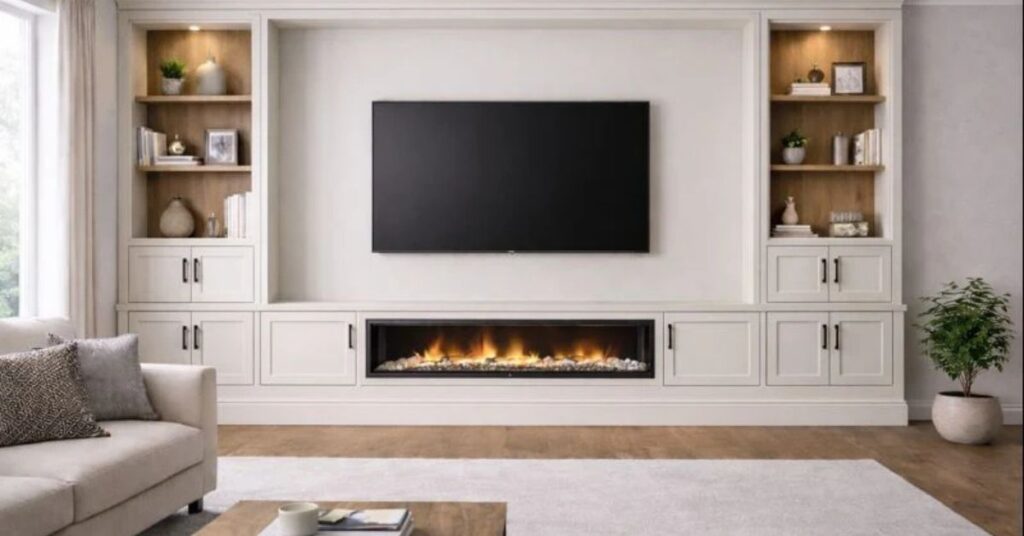
A media wall is one of the most popular ways to sort out a living room. If you look at popular media wall images online, you see flat screens set into false stud walls with electric fires glowing underneath.
When set up right, a tv media wall brings neat order to the room. It gives your screen a tidy home, keeps every wire out of sight and makes the living room feel cosy in the evening.
Whether you want to research how to build a media wall, hire local tradespeople to build a bespoke media wall with fireplace, or install an electric media wall fireplace yourself, understanding your choices before spending money prevents expensive mistakes.
This guide walks through real UK costs, screen sizing rules, electric fireplace choices, hidden storage solutions and the latest media wall designs for homes of any size.
What a Media Wall Actually Costs in the UK
Understanding how much does a media wall cost helps you set a realistic budget before speaking to builders or buying supplies. The overall price of a media wall project depends on room width, the style of fireplace you pick and whether you hire tradespeople or buy modular units:
Flat Pack and Modular Kits
A flat pack media wall kit gives you pre-cut wooden panels that fit together without custom building from scratch. Prices for good quality flat pack kits run between £400 and £900. Once you add a basic electric fireplace and pay an electrician to put in power points, the total project costs between £1,100 and £1,600.
Custom Built by Local Tradespeople
Most UK households hire a carpenter to build a custom timber stud wall, add plasterboard and finish the surface ready for painting. A standard custom media wall with fireplace usually costs between £2,000 and £3,500. That covers timber studs, plasterboard, electrical wiring, plastering and a reliable 50-inch wide electric fire.
Luxury Units with Custom Cupboards
For larger rooms where you want a complete media wall with storage, lower cupboards, timber slat panelling and warm LED lighting strips, total costs run between £4,000 and £6,500. Custom painted cupboards and high-end three-sided glass electric fires make up most of the higher price tag.
Choosing the Right Electric Fire for a Media Wall
The fireplace is the main feature of any media wall with fire. Choosing the wrong fire can lead to high energy bills or heat damage to your television screen:
How Modern Media Wall Electric Fires Work
A dedicated electric fire for media wall setups is very different from an old freestanding heater. Modern media wall electric fires push warm air out through the front of the unit rather than letting heat rise straight up into the television gap.
You can also run the LED flame visuals without turning the heating element on. On warm summer evenings, you can enjoy glowing logs and fuel bed lighting for less than 2p per hour without making the room hot. When winter sets in, switching on the 1kW or 2kW fan heater warms a cold living room quickly.
One-Sided vs Two-Sided vs Three-Sided Glass
When looking at media wall fires, think about how the glass looks from your sofa:
- One-Sided Glass: The flame display sits behind a single flat front pane of glass. This is the cheapest choice and works best for simple flat walls viewed straight on from the front.
- Two-Sided Corner Glass: Glass wraps around the front and either the left or right corner. This suits L-shaped rooms or corner media walls.
- Three-Sided Glass: Clear glass runs across the front and both sides, giving you a full view of the glowing logs from anywhere in the room.
What About a Log Burner Media Wall?
Many people ask whether they can put a real wood-burning stove underneath a television.
While a real log fire looks lovely, putting a wood stove inside a timber false wall is risky and difficult. Real wood stoves generate intense heat well above 300 degrees, which melts television parts and cancels screen warranties.
Setting up a real log burner media wall requires building blocks, fire-proof boards, a deep mantle shelf to push heat away from the screen and an approved chimney pipe running through the ceiling. For almost all normal homes, an electric fire is cheaper, safer and much easier to live with.
Modern Media Wall Ideas and Layout Options
Living room design has moved away from cold, shiny white boxes. Homeowners now prefer warmer wood finishes, soft colours and practical storage setups:
1. Dark Painted Media Walls
When researching modern media wall ideas with fire, designers now paint the whole wall in rich, deep colours. Instead of leaving the media wall bright white while the rest of the room is cream, painting the wall, baseboards and cupboards in a deep charcoal, forest green or dark navy looks smart.
A dark background also helps hide the big black screen when the television is turned off, stopping it from looking like an ugly black box on the wall.
2. Wood Slat Media Wall Panels
Putting wooden slat media wall panels or painted tv wall panelling inside the television gap or across the whole wall has become a huge home trend.
Oak, walnut or ash wood slats mounted on dark felt backing break up flat plaster and add warm wood tones. The thick felt backing also absorbs sound, cutting down room echo and helping television dialogue sound much clearer.
3. Asymmetric Layouts
Rather than building identical shelves on both sides of the screen, modern media wall ideas often use uneven balance. You might have open display shelves with warm LED downlights on one side for books and plants, balanced by a closed media wall cabinet on the other side for games consoles and spare cables.
4. Built-In Lower Storage Cupboards
Open display shelves look great in magazines, but in a real home they quickly gather dust and cable clutter. Building a media wall with cupboards along the lower half gives you deep, hidden storage for games consoles, controllers, internet routers and set-top boxes.
You can read our guide on kids toy storage solutions to see how closed bottom cupboards keep living room floors completely clear of daily clutter.
Small Media Wall Ideas for Compact Rooms and Bedrooms
Living in a smaller flat or house does not mean you cannot have a built-in entertainment setup. A few smart adjustments keep small rooms feeling open:
Floating Media Unit Designs
In compact living rooms, keep the base of the wall unit lifted off the floor. A floating tv wall unit or compact media wall unit lets you see the carpet or floorboards running underneath the joinery.
When you can see the floor all the way to the skirting board, a small room feels much bigger. Adding a soft LED light strip beneath the floating base helps keep the room looking light and airy.
Slimline Bedroom Setups
Replacing a chunky freestanding tv stand in the bedroom with a slim wall-mounted tv panel clears walking room around the bed and gets rid of loose wires on the floor.
A bedroom setup only needs to stick out 150mm to 200mm from the wall if you use a flat screen bracket. Adding a mirror on another wall bounces natural window light around the room, which you can plan using our guide on where to place an arch mirror to keep smaller rooms feeling bright.
Sizing Rules, Screen Proportions and Audio Planning
Getting your measurements right before you start building saves you from annoying problems later on:
Television Size vs Wall Width
A common planning mistake is building a false wall that is too narrow for the television screen, which makes the whole thing look odd and top-heavy:
- 55-inch Screen (around 123cm wide): Needs a wall width of at least 1.6 metres to look right.
- 65-inch Screen (around 145cm wide): Needs a wall width of at least 2.0 metres.
- 75-inch Screen (around 168cm wide): Needs a wall width of at least 2.3 metres.
Always pick an electric fireplace that is slightly wider than, or at least the same width as, your television screen. A fireplace that is narrower than the television looks odd and unbalanced.
Seated Eye Level and Viewing Comfort
Never put your television too high up the wall just to fit a massive fireplace underneath. Watching a screen that sits above eye level makes your neck ache during long movie nights.
The middle of your screen should sit around 100cm to 110cm above the floor when you are sitting on the sofa. Choose a slim horizontal electric fire that sits low down near the floor so your television stays at a comfortable height.
Soundbars and Upward-Firing Audio
If you use a soundbar with upward-firing Dolby Atmos speakers, do not push the soundbar into a tight closed plaster box. Putting upward-firing speakers inside a tight cutout traps the sound waves inside the wall, ruining your surround sound.
Leave at least 100mm of open room above your soundbar, or place the soundbar on a forward-facing shelf so sound travels cleanly into the room.
Planning Electrical Points and Cable Conduits
A media wall is only as good as the wiring hidden behind it:
Power Sockets and Fire Switches
Do not try to run an entire entertainment setup off one cheap extension cord hidden behind plasterboard. Have an electrician put four double sockets directly behind the television screen to power your screen, soundbar, streaming boxes and lights.
The electric fire should run on its own separate switch placed inside a nearby cupboard or on the side of the wall unit so you can turn it off safely.
Internal Cable Pipes
Always put a wide 50mm smooth plastic pipe inside the hollow wall cavity between the television cutout and the bottom media wall cupboards. This hidden pipe lets you pull new HDMI cables, audio leads or power cables through the wall in the future without cutting holes in your plaster.
If you are updating other heating features around your house, take a look at our guides on matte black towel radiators and bleeding radiators without a key to keep your central heating working properly. If you get dust or water on your carpets during building work, check our guide on how to clean carpet stains to get marks out quickly.
Designing a Large Wall Unit for Drawing Room Spaces
In larger homes, big living rooms and formal drawing rooms, a small central media box can look tiny against high ceilings.
Setting up a full-width wall unit for drawing room spaces balances modern screens with classic room sizes:
Floor-to-Ceiling Built-In Shelving
A full-width media wall unit with fireplace or custom media unit with fireplace runs across the entire main wall. Framing a central television and electric fire with matching floor-to-ceiling bookshelves creates the feel of a traditional home library.
Building a media wall with cupboards along the base hides games consoles, board games and router boxes out of sight. Painting the woodwork in a deep colour like dark green or inky navy gives the whole room a settled, cosy feel.
Mixing Materials and Finishes
Large rooms look best when you mix different materials. Pair a dark slate or black stone hearth with warm oak shelves and wood slat panels.
Adding brass or black wall lights above the shelves brings warm evening light to the room, which you can match with other built-in storage ideas using our under stairs storage ideas.
Frequently Asked Questions About Media Walls
How long does a media wall take to build
A standard custom timber and plasterboard media wall takes between three and five days. The first day covers timber framing and running electric wires. The second day involves fitting plasterboard and plastering. The third and fourth days let the wet plaster dry out before painting, fitting the electric fireplace, hanging the television and plugging everything in.
Can I build a media wall on a stud wall
Yes. You can build a false media wall against a solid brick wall or a plasterboard stud wall. The builder finds the wooden uprights inside the partition wall and screws the new timber frame securely into them using heavy wood screws.
Does a media wall increase property value
A well-built media wall with tidy hidden wiring and a good electric fire makes a home attractive to buyers. It gets rid of messy cables and gives the room a ready-made entertainment setup. However, poorly built walls with crooked cutouts or visible wires can look untidy and turn buyers away.
What is the normal depth for a media wall
The standard depth for a media wall is between 300mm and 380mm. This depth easily fits the inner box of most electric fires, lets television brackets fold flat and leaves plenty of room inside for electrical sockets and cable pipes.
Can you put an electric fire directly on carpet
No. Electric fires should never sit straight on carpet pile, as loose carpet fibres can block air vents underneath and make the heater cut out. Always build a solid wooden shelf at least 50mm above the floor, or place the fire on a stone or tiled hearth.
How do you paint a media wall after plastering
Wait until the pink plaster turns pale and dry all over. Put on a mist coat made from cheap white emulsion mixed with twenty percent water so the fresh plaster does not suck all the moisture out of your paint. Once the mist coat is dry, put on two coats of your chosen wall paint.
Final Thoughts
A well-planned media wall fixes two common living room headaches at once: it gets rid of messy wire clutter and makes the room warm and cosy with an electric fire.
Whether you choose a simple floating media unit, a modern slatted wood feature wall, or a large wall unit with built-in cupboards, measuring your screen and putting in cable pipes gives you a clean result that works well for years.
For more practical home advice, storage tips and room makeover ideas, check out the latest guides on Monday Magazine.



1 thought on “Media Wall Guide for Living Room Ideas, Fireplaces and Real Costs”
Comments are closed.