For years, bathroom design stuck to a formula. White tiles. Chrome fixtures. Minimalist cabinetry. Clean lines, in nearly every new build and renovation you’d walk into. It looked fine. It worked. But after a while, it all started to blur together one bathroom indistinguishable from the next.
That’s changing now. Bathroom design has entered a more expressive phase.
Homeowners are starting to treat the bathroom as a chance for creativity, not just another functional room to tick off the list. Rather than hide personality behind neutral finishes, they’re reaching for natural materials, vintage touches, sculptural fixtures, warm metallics, and textures that catch you off guard a little.
The modern bathroom is becoming a room with character.
It’s part of a bigger shift, really. People want homes that feel personal and lived-in rather than styled to match whatever’s trending this year. So traditional craftsmanship and distinctive materials are making their way back into everyday interiors not as a nostalgia trip, but because they simply hold up better.
Why Bathrooms Are Becoming More Personal
The bathroom used to be one of the most purely practical rooms in a home.
Kitchens and living rooms got the design attention; bathrooms were built around plumbing and efficiency. That’s shifting. Homeowners are realising the bathroom matters just as much to a property’s overall character as any other room in it.
It is, after all, where the day starts and ends. Before the phone gets checked, before the emails start.
A well-designed bathroom can be a place to slow down and step away from everything else for a few minutes.
So people are thinking beyond function now, weighing things like:
- The atmosphere they want
- Materials they actually enjoy touching, not just looking at
- Colours that help them relax
- The architectural character of the property
- How old and new elements sit together
The result? Bathrooms that feel less like fitted-out utility rooms and more like proper living spaces.
The Return of Natural Materials
One of the clearest trends in interiors right now is a renewed appreciation for natural materials.
Wood, stone, marble, terracotta, metal all used to bring warmth and texture into rooms that would otherwise feel a bit cold and clinical.
Bathrooms respond particularly well to this, maybe more than any other room.
Natural materials carry a sense of permanence that manufactured finishes rarely manage. And unlike most synthetic surfaces, they develop character with age instead of just wearing thin.
That’s a real draw for homeowners who are tired of disposable interior trends and want something that still looks right in twenty years, not two.
Why Warm Metals Are Replacing Cold Finishes
Chrome and polished stainless steel were the default for a long time. Practical, easy to clean, a bit forgettable.
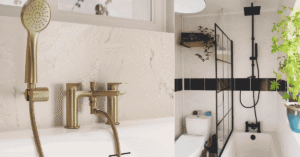
They’re still around, but warmer metals are catching up fast. Brass, bronze, copper, aged finishes these bring a softer visual quality that sits beautifully alongside natural materials.
They’re also surprisingly flexible across styles. A warm metallic finish can feel:
- Rustic in a country home
- Sophisticated in a contemporary space
- Romantic in a vintage-inspired bathroom
- Industrial next to exposed brick
- Luxurious paired with marble and stone
Few finishes stretch across that many looks convincingly. That’s exactly why warm metals have become such a popular way to add depth to a bathroom without locking into one single style.
The Bathtub as a Design Statement
Few bathroom features have as much potential to become the room’s focal point as the bathtub.
In smaller bathrooms, the bath usually has to prioritise function above all else there’s just no room to indulge. But where there’s space, a freestanding tub can completely change the character of a room.
Pulled away from the wall, a freestanding bath stops being just a fixture it becomes part of the architecture.
It gives homeowners a centrepiece, and real room to play with shape, material, and colour.
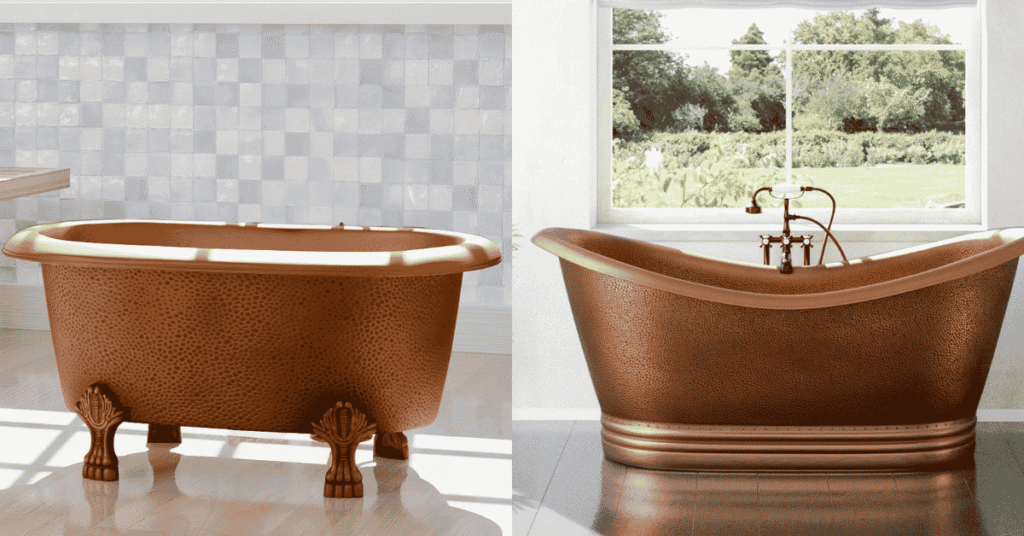
For anyone drawn to warm metallic finishes and traditional craftsmanship, a copper bathtub brings a particularly distinctive character to the room. The natural warmth of copper works well with timber, stone, neutral tiles, and softer lighting. And because its surface evolves over time deepening, developing a patina that’s genuinely unique to each tub a copper bathtub can give a bathroom a sense of history almost from the start.
The appeal isn’t only visual, either.
A carefully chosen statement bath tends to shape the direction of the entire room, right down to the tile colour and the light fittings.
Creating a Bathroom That Feels Timeless
One of the harder things in interior design is making a space feel current without it dating fast.
Trends are tempting. But most of them don’t last long a year, maybe two, before they start looking a bit tired.
A bathroom built around this season’s favourite colour or pattern might look great at first, then feel stuck in time a few years later.
Timeless design works differently. It leans on:
- Quality materials
- Strong proportions
- Natural textures
- Functional layouts
- Classic silhouettes
- Thoughtful lighting
None of that has to mean boring, though.
In fact, the interiors that age best usually have one or two genuinely distinctive features carrying the room’s personality, with everything else playing a quieter, supporting role.
Mixing Old and New
Modern bathrooms don’t have to commit fully to one era.
Some of the best interiors blend historical influences with modern convenience a traditional freestanding bath next to contemporary lighting, say, or vintage-inspired taps against minimalist tiling.
A period property can gain a lot from contemporary storage. A newer home can borrow warmth from older materials and techniques.
Put together well, this mix creates a layered interior that feels collected over time, rather than assembled from a single catalogue in one weekend.
The goal isn’t to recreate the past exactly. It’s to borrow what’s already stood the test of time and combine it with how people actually live now.
The Importance of Texture
A bathroom made entirely of smooth, reflective surfaces can end up feeling cold, even if every individual choice looks good on its own.
Mixing textures adds warmth and visual interest. Think:
- Rough natural stone
- Smooth ceramic
- Textured plaster
- Natural timber
- Aged metal
- Soft textiles
Even small variations make a noticeable difference to how a room feels underfoot and at eye level.
Texture also plays off lighting in interesting ways. A textured wall throws shifting shadows through the day. A metallic surface catches warm evening light differently depending on where you’re standing, sometimes glowing, sometimes just quietly reflecting.
These are the small details that make a room feel alive instead of static.
Choosing the Right Colour Palette
Colour shapes how a bathroom feels more than people usually expect.
Bright white is still the classic choice, but plenty of homeowners are exploring warmer, more atmospheric palettes these days think:
- Soft beige
- Warm white
- Sage green
- Deep blue
- Terracotta
- Charcoal
- Muted brown
These pair particularly well with natural materials and warm metallic fixtures.
A darker palette can feel dramatic and intimate, almost cocoon-like. Lighter tones open a room up and make it feel bigger than it is.
Which one makes sense really depends on the size of the space, how much natural light it gets, and the mood you’re after.
Lighting Can Change Everything
Even a beautifully designed bathroom can fall flat under the wrong lighting. It’s the detail people underestimate most.
Good bathroom lighting usually layers a few types together. Ambient lighting handles general illumination. Task lighting supports practical jobs like shaving or applying makeup. Accent lighting picks out architectural details or statement pieces.
Worth considering:
- Wall sconces
- Pendant lights
- Recessed ceiling fixtures
- Backlit mirrors
- Under-cabinet lighting
Warm-toned lighting does a lot of heavy lifting when paired with copper, brass, or bronze finishes. It gives the room a feel closer to a boutique hotel than a strictly functional space.
Designing for Relaxation
Wellness culture has quietly reshaped a lot of bathroom design choices.
Homeowners increasingly want the room to feel calm, not just clean. That usually comes down to fairly simple decisions natural materials, soft lighting, uncluttered surfaces, calming colours.
Some homeowners are also adding:
- Indoor plants
- Wooden accessories
- Aromatherapy products
- Comfortable towels
- Soft bath mats
- Built-in storage
The goal, really, is just a room that encourages people to slow down a little instead of rushing straight through it.
Don’t Forget Practicality
Good design should always be backed up by good function. It’s easy to forget that in the middle of picking finishes.
Before locking in statement fixtures or decorative materials, it’s worth thinking through:
- Storage requirements
- Cleaning
- Ventilation
- Water resistance
- Available floor space
- Accessibility
- Daily routines
A bathroom can look incredible in photos and still be frustrating to live with if there’s nowhere practical to put things.
The best interiors balance beauty with everyday usability not one at the cost of the other.
Designing Around One Hero Feature
A reliable approach to any bathroom renovation is picking one feature to act as the visual anchor. This could be:
- A freestanding bathtub
- A dramatic stone basin
- A patterned tile wall
- A sculptural mirror
- A statement lighting fixture
Once that feature is chosen, everything else can be designed to support it rather than compete with it.
This keeps the space from feeling visually cluttered or over-decorated.
If the bathtub is the focal point, for instance, the surrounding finishes can stay fairly understated. The result feels intentional, not overwhelming.
The Case for Buying Once and Buying Well
Interior design is drifting away from fast trends.
Part of that is environmental people are more conscious of what constantly replacing furniture and fixtures actually costs, in every sense of the word.
Choosing durable materials and timeless designs helps cut down on unnecessary consumption.
A well-made bathroom feature might cost more upfront, but its longevity can make it the smarter investment over time — especially with large fixtures that are difficult and expensive to swap out later.
Rather than defaulting to the cheapest option, it’s worth weighing:
- Material quality
- Craftsmanship
- Expected lifespan
- Maintenance requirements
- Long-term style appeal
These factors often matter more, in the end, than the price tag on day one.
A Bathroom That Reflects the Home
The most successful bathroom designs don’t exist in isolation. They complement the wider character of the property.
A Victorian terrace might suit traditional materials and vintage-inspired fixtures. A rural cottage often benefits from natural stone and timber. A contemporary apartment could work well with clean lines and one confident sculptural piece.
Understanding a home’s architecture is a useful starting point.
That said, homeowners shouldn’t feel boxed in by convention. The best interiors usually come from blending the character of the property with the personality of the people actually living in it.
Final Thoughts
The modern bathroom isn’t an afterthought anymore.
It’s becoming a real part of how homeowners express their taste and values. Natural materials, warm metals, timeless silhouettes, and statement fixtures are replacing the overly predictable interiors of the past with something more individual.
Whether the goal is a relaxing retreat, restoring character to a period property, or just adding more personality to a modern home, thoughtful material choices make the difference.
A bathroom doesn’t need to chase every trend to feel current. Sometimes the most modern move is choosing quality, embracing a little individuality, and building a space that still looks good long after today’s trends have faded.