If you have ever tried to put a hot mug of tea down without looking and had it spill down the side of your couch, you know why having a steady side table matters.
A good side table for living room spaces does a very simple job. It gives your drink, your phone charger and your reading lamp a safe spot next to where you sit. When you set up a practical side table living room layout, you stop losing the remote between couch cushions and your living space instantly feels less messy.
In smaller homes, picking small side tables for living room corners keeps walking paths open. Placing neat side tables for living room seating prevents tight spaces from feeling cramped with bulky furniture.
Whether you need a slim sofa side table to slip beside an armchair, a solid wooden side table that won’t wobble when bumped, or a neat bed side table to sit beside your mattress, getting a piece that actually fits your daily life saves you plenty of headaches.
Getting the Height Right Next to Your Sofa Arm
The most common mistake people make is buying a table that looks great online but ends up way too tall or awkwardly low once it sits beside their couch. You want to be able to reach your cup without leaning right over or twisting your back.
When you set up sofa and side tables together, the top of the table should sit right around the same height as your sofa arm, or just two to five centimetres below it.
Matching Sofa Arm Heights
Measure straight up from the floor to the firm top of the armrest to find the right height:
- Low modern modular couches usually sit around 42cm to 48cm high. These pair nicely with a short wood table so your drink stays right by your hand.
- Standard UK family couches usually have armrests around 55 centimetres high, matching common table sizes.
- Big armchairs or sofas with tall rolled arms need a tall side table so you don’t have to bend down towards the floor every time you want your drink.
Always measure to the firm arm frame rather than loose pillows, because seat cushions compress down as soon as you sit down.
Keeping Walkways Clear
Your side table should never stick out past the front cushion edge of your sofa. Keep the depth between 35cm and 50cm so nobody catches their legs on sharp corners.
Leave at least 45 centimetres of clear room between your table and other furniture so you can walk past without bumping your knees.
Smart Shapes When Space is Tight
Living rooms in UK flats and terraced houses often have very little floor area to spare. Picking the right table shape helps you squeeze useful surface space into tight spots without blocking doorways.
Different table shapes solve different room problems around your seating.
Sliding Under the Couch
If you have barely any room between your sofa and the wall, a table for under couch use is easily the best option. These C-shaped frames slide their bottom metal feet right under the couch base, so the tabletop floats right above your seat.
Just make sure your couch feet leave at least three centimetres of clear gap from the carpet so the base slides in smoothly. A slim side table or narrow side table of this style takes up almost zero floor space while giving you a steady spot for a laptop or mug.
Round Shapes for Tight Spaces
Square corners can be annoying in tight rooms because people constantly catch their clothes on them. A round side table softens the room and keeps walking paths clear.
In bedrooms where space is tight, a circular bedside table or small circle bedside table slides right beside the bed without blocking wardrobe doors or drawers from opening. Choosing a circle table small design gives you room for an alarm clock and a glass of water without crowding the walkway.
Materials That Can Take Daily Life
A good side table needs to look nice, but it also has to survive hot mugs, spilled drinks and daily bumps from kids or pets. Choosing the right material keeps your furniture looking good for years without endless cleaning.
Different materials offer very different levels of durability and upkeep around the house.
Warm Wood Surfaces
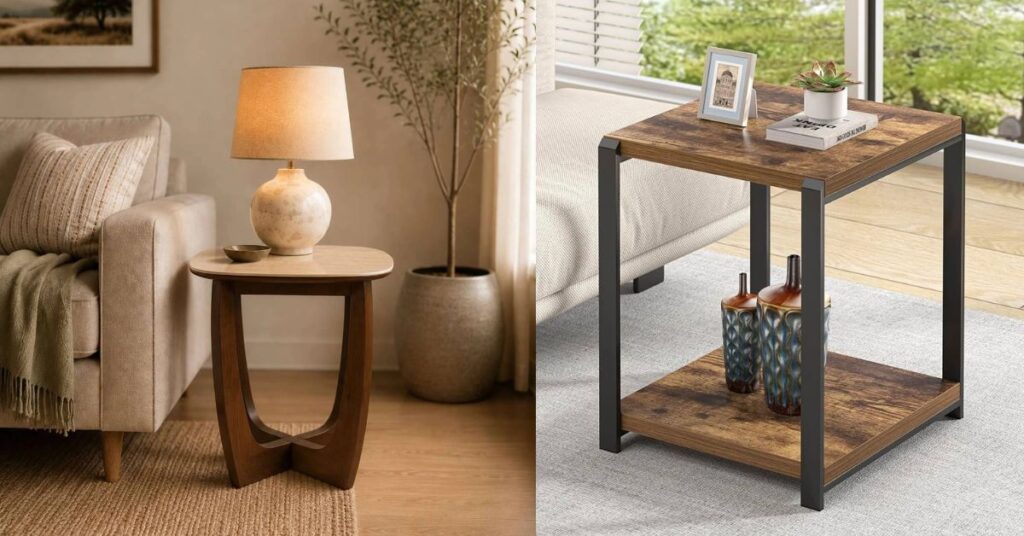
Wood remains the most popular choice because it feels solid and warm. An oak side table handles daily family life really well. If you prefer darker tones, a walnut side table brings rich brown shades that look great next to fabric couches. A simple wood table side piece balances soft sofas, while a solid wooden table side table choice brings natural wood warmth into plain rooms.
For older cottages, a rustic side table, a rustic occasional table, a side table rustic oak finish, or a reclaimed timber side table has natural marks and grain that easily hide small dings and scratches.
Stone, Marble, Glass and Metal
A marble side table feels heavy and looks great in bright rooms. But keep in mind that unsealed marble absorbs liquids fast. Spilled tea, coffee or wine will leave cloudy marks on polished stone if you don’t wipe it up right away. Always keep coasters handy.
A black side table made from dark steel fits modern rooms and wipes clean with a damp cloth. A gold side table with a brass finish brightens up dark corners without being too flashy.
If your sitting room is quite small, a glass side table is a great trick. Because you see the floor right through it, the room feels larger and less crowded. Just pick tempered safety glass so it won’t break if a heavy mug gets knocked onto it.
For bright spaces, a white side table or white wood side table bounces light around and fits clean Scandinavian decor.
Keeping Remote Controls and Mess Off the Floor
Every living room collects small items like charging cables, television remotes, spare glasses and half-read magazines. If your table has no storage, all that mess ends up piled on top where you want to put your cup.
Adding hidden storage into your living room tables keeps your living space looking tidy with very little effort.
Drawers and Useful Shelves
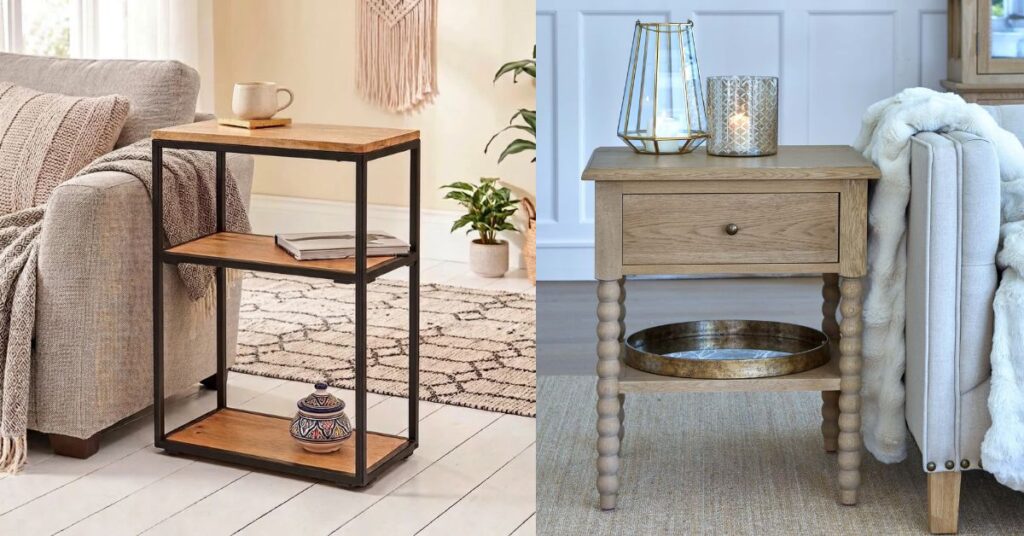
A small side table with a single drawer gives you a closed spot for spare glasses, chargers and remotes. Open shelves underneath let you stack a couple of books or put a small basket for kids things. Choosing a practical side table with storage keeps everyday items organized without taking up extra floor space.
If you are trying to keep family mess under control, take a look at our guide on kids toy storage solutions to see how low baskets and cupboards keep floors clean.
Cheap Flat Packs and Vintage Pieces
If you are renting or setting up a first flat on a budget, an ikea side table gives you something simple and light that goes together quickly.
If you want something with more personality, you can look for unique side tables, quirky side tables, or novelty side tables. A vintage antique side table found at a secondhand market brings old brass handles and real age that brand-new flat-pack boxes can’t match. A side table vintage piece gives your living room a comfortable, lived-in feel.
Arranging Side Tables with Coffee Tables and Couches
A common trap is buying a full matching furniture set where every single table has the exact same wood and shape. That can make a cosy home feel stiff like an office waiting area.
Mixing different shapes and textures makes your room feel collected and relaxed while giving everyone a spot for their drink.
Mixing Different Pieces
Years ago, people bought matching sets of occasional tables furniture to hold cups of tea. Today, combining a sofa table and end tables makes a sitting room feel much more relaxed. Many sofa tables furniture arrangements use a console table behind the couch paired with matching end tables and occasional tables beside armchairs.
Mixing shapes keeps your room interesting:
- If you have a solid wood coffee table or a large coffee table in the center of the room, use light metal or glass tables next to the sofa arms.
- If your room has a wide rectangle coffee table, using round wood end tables helps balance the sharp lines.
- If you have coffee tables big enough for trays and magazines, keep your side perches small and light so the room doesn’t feel stuffed.
To see practical ideas for styling table surfaces, check out our guide on creative table top ideas for your living room.
Getting the Seating Right
Setting up a couch with end tables on both sides makes having people over much easier because everyone has a place to put their drink.
If you are planning to update your couch, read our guide on modern 3-piece sofa set trends in the UK to see how different seating shapes work in real rooms.
If your lounge connects to an eating space, our guide on dining chair styles for small dining rooms helps you pick compact chairs that fit alongside your lounge furniture.
Using Your Table for Lamps and Handling Drink Spills
Side tables are the natural spot for reading lamps, but placing a bulky lamp on a tiny table leaves no room for your tea. Spills also happen when tables sit right beside busy seating.
Planning your lamp size and knowing how to handle spills keeps your table useful and your flooring clean.
Checking Your Lamp Base
When using a table as a lamp table, always check the width of the lamp base first.
If your lamp base is 28 centimetres wide and your table is only 35 centimetres across, the lamp takes up almost the whole surface. You won’t have room for a cup of tea or your phone. Look for a tabletop that gives you at least 15 centimetres of free space around the lamp.
Bouncing Window Light
In dark rooms or bedrooms, putting a mirror on the wall behind a lamp table helps spread the light around in the evening. Read our tips on where to place an arch mirror to find good spots that also catch daylight during the day.
Cleaning Up Spilled Tea Fast
Because side tables sit right next to sofa arms, cups get knocked over now and then. When tea or coffee spills onto the carpet, acting fast stops it from leaving a stain. You can use our guide on how to remove coffee stains from carpet with basic household items to clean it up before it sets into the pile.
Frequently Asked Questions About Side Tables
Here are quick answers to the most common questions people have when picking side tables for their homes:
Should side tables match the coffee table exactly
No. Matching every piece makes a room look like a furniture catalogue. Mixing a wooden coffee table with dark metal side tables creates a warmer, more relaxed look.
How high should a side table be next to a sofa
The tabletop should sit level with the top of your sofa armrest, or about two to five centimetres below it. This makes grabbing your drink comfortable without stretching.
Can you use a living room side table as a nightstand
Yes. Many compact side tables work really well beside a bed. Just make sure the surface aligns comfortably with the top of your mattress so you can easily reach your alarm.
How do you stop a side table from wobbling on deep carpet
Stick wide felt pads or screw-in levelling feet under the legs. This spreads the weight out across the carpet pile and stops the table from rocking when you set down a mug.
What is the normal depth for a side table
Most standard tables are between 35cm and 50cm deep. They should never stick out past the front cushion of your sofa or block clear walking paths.
How much weight can a glass side table safely hold
Most tempered glass tables hold between 10kg and 20kg. That is plenty for a table lamp, books and drinks, but avoid placing very heavy ceramic planters on top.
Quick Things to Check Before You Buy
Before spending money on a new table, keep these simple checks in mind:
- Measure from the floor to your sofa arm so you don’t end up with a table that is awkward to reach.
- Make sure you have at least 45 centimetres of walking space around the table.
- If you want a C-table that slides under the couch, check that your sofa legs leave at least 3 centimetres of space underneath.
- Pick solid wood or powder-coated metal if you have young kids who knock furniture around.
Taking a few minutes to check these measurements gives you a steady, comfortable side table that fits your room from the day it arrives.