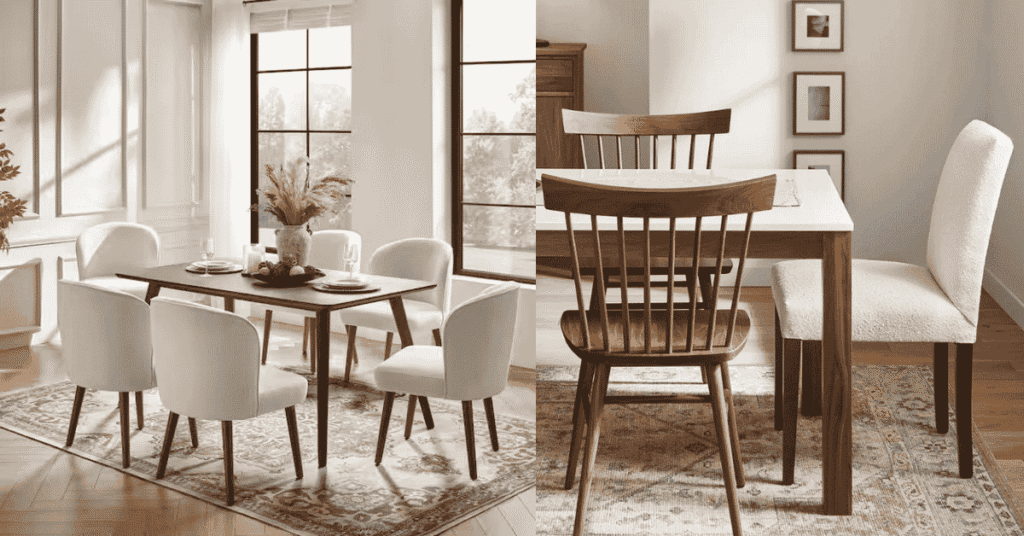
If you’ve ever tried to squeeze a table and six chairs into a UK terrace dining room, you already know the problem. Small rooms are just… common here. Flats, conversions, kitchen-diners that used to be a scullery — none of it was built with a big family dinner in mind. But cramped doesn’t have to mean cluttered. Pick the right Dining Chair and the room can actually breathe a bit.
It really comes down to proportion. Slim frames. Backs you can see light through. Seats that vanish under the table the second you’re done eating. Small things, but they add up.
Choosing the Right Seat for Limited Space
Grab a tape measure before you buy anything genuinely, do this first. Table height, the gap between the legs, how much room is left behind each seat once someone’s pulled it out. You don’t want a dinner guest elbowing the radiator every time they sit down.
Armless chairs win here almost every time. A Dining Chair without arms slides in flush and lets people sit a bit closer when you need the extra space. Thin legs, a small seat, an open back all of it keeps the room feeling lighter than it is. Save the big padded armchairs for a room that can actually spare the square footage.
Slim Wooden Styles for a Timeless Look
Wood’s forgiving it works whether your place leans traditional or fairly modern. But in a small room, skip the heavy carving. Tapered legs, a narrow frame, a plain finish. That’s it.
Spindle backs give support without turning into a solid block of wood, which matters more than you’d think in a tight space. Bentwood is another good option those curved frames look almost sculptural and barely touch the floor. Got a darker room? Light oak or ash helps. Pale walls and flooring? Black or walnut gives you some contrast instead of everything blending together.
Skip the thick upholstery too. A removable seat pad does the comfort job just fine, and you can wash it or swap it out whenever you’re bored of the colour.
Compact Upholstered Seating
Dining table doubling as a home office desk these days? A little upholstery softens that up.
Go for a Dining Chair on a slim wood or metal base, with a gentle curve in the back and not much padding. Neutral fabric oatmeal, beige, warm grey, that muted sage-green everyone seems to love right now — keeps things calm. A touch of texture, maybe a thin piping detail, adds interest without turning into a bold pattern that dominates the room.
Armless still wins for flexibility here. Extra guest turns up? You can shuffle things around without a whole furniture rearrangement.
Benches and Mixed Seating Arrangements
Honestly, a bench might be the single best trick for a narrow dining space. Push it flat against the wall, seat two or three people, slide it back under the table once everyone’s done.
A combination that works well: bench along one side, a single Dining Chair anchoring each end. Just repeat one detail across the pieces — same wood tone, same leg colour, whatever so it reads as a choice and not a mismatch you never got round to fixing.
Go backless if you’re really tight on room. If your dinners tend to run long though, a low-backed bench is worth the extra few inches it eats up.
Clear and Open-Frame Designs
Acrylic seating basically disappears visually, which is oddly useful in a studio flat or one of those awkward leftover corners every small home seems to have. Open metal frames do something similar and are usually light enough to shift around one-handed.
Pair either with a round table if you can manage it. No sharp corners means you can squeeze one more person round without anyone catching a table edge on the hip. Black frames read as contemporary; chrome or brass edges toward something a bit more polished.
Dining Chair Covers for a Quick Refresh
You don’t always need new furniture to fix a tired room. A decent set of dining chair covers hides worn fabric, catches spills before they set in, and pulls a mismatched set of chairs into something that looks like it was chosen on purpose.
Stick to cream, light grey, or beige for a small room pale tones bounce light around and keep the furniture from feeling heavy. Stretch fabric gives a snugger fit and washes easily, which matters when the cover’s also doing spill duty.
Avoid the loose, floor-length dining chair covers though. All that extra fabric makes chairs look bulkier than they are, collects dust along the floor, and gets underfoot when people are moving around the table. A fitted cover that follows the actual chair shape just looks cleaner.
Choosing Dining Chair Covers for Family Homes
Kids, pets, general daily chaos a household like that needs covers that can take a hit. Washable dining chair covers protect the chairs without forcing you to replace furniture that’s otherwise fine.
Measure the seat width, depth, and back height before ordering. Guessing rarely works out. A cover that doesn’t fit right slips or bunches up, and ends up hiding the shape of the chair rather than flattering it. Check the wash instructions too, and make sure there’s enough stretch for your particular design.
You don’t need an exact colour match to your curtains or rug — same general palette is enough. That’s usually all it takes for the room to feel joined-up rather than overly styled.
Colours That Make a Small Room Feel Bigger
Generally: light wood, white, soft grey, muted pastels. These open a room up. But darker colours aren’t necessarily off the table you just have to be a bit more deliberate about where you use them.
One trick worth trying: a bold Dining Chair at each end of the table, lighter seating filling in the middle. Navy, forest green, rust, charcoal any of these can anchor the room without swallowing it whole. Matching the chair legs to the table base helps too; it cuts down on visual noise more than people expect.
Let the light guide you. A room that gets decent sun can carry deeper tones without feeling gloomy. A darker room usually does better with paler finishes and anything reflective.
Final Thoughts
There isn’t really one “correct” chair for a small UK dining room. It’s a balance comfort, scale, how the room actually gets used on a Tuesday night versus a dinner party. Slim frames, open backs, a bench, light upholstery, fitted covers all of it helps stretch a limited footprint further than you’d expect.
Measure properly. Think about how people actually move around the table. Pick materials that suit how your household really lives, not some showroom version of it. Get that right, and even a genuinely small room can feel welcoming instead of cramped.
FAQs
Are fitted covers suitable for small rooms?
Yes. They protect the chairs underneath and give the room a coordinated look without adding bulk. Lighter colours tend to work best if you’re trying to keep things feeling open.
Which chair style works best in a narrow dining area?
Armless, slim legs, open back — that combination is usually the safest bet. It slides under the table easily and leaves room for people to actually move.