Nobody really thinks about a tool box until they actually need one. Then it hits you you need a screwdriver, or a tape measure, or a pair of pliers, and somehow everything’s scattered across three different drawers and the bottom shelf of the garage.
A decent tool box sorts that out. Keeps everything together, makes it way easier to find what you need when a cupboard handle comes loose or a “quick job” turns into something bigger than expected.
Thing is, there are quite a few types out there in the UK, and they’re not all built for the same person. What works for someone doing the odd job at home is completely different from what a builder or mechanic actually needs day to day.
What Type Of Tool Box Do You Actually Need?
Start with how you use your tools, not how good the box looks on the shelf.
Got just a handful of basic tools at home? No point buying some massive professional storage system for that. A small or medium box will do the job just fine.
But if your tool collection keeps growing, a small box gets annoying fast. You end up cramming everything in, and finding one specific spanner turns into its own little mission.
Think about what you already own and where you actually use it. That alone narrows things down quite a bit.
Plastic Tool Boxes For Everyday DIY
For general household jobs, it’s hard to go wrong with plastic.
Light enough to carry around the house, cheaper than the bigger storage systems, and easy to wipe clean if it picks up dust or dirt. A lot of them come with a removable tray up top for smaller tools, plus a bigger compartment underneath for hammers and bulkier stuff.
Plastic also makes sense if you’re storing tools in a shed or garage. Unlike untreated metal, it won’t rust just because the space gets a bit damp now and then.
Putting up shelves, assembling flat-pack furniture, tightening the odd fitting for that kind of thing, you really don’t need anything fancier.
Metal Tool Boxes For Tougher Jobs
Metal’s a different story altogether.
Steel models feel a lot more solid, and they can take a proper beating in a busy workshop. If you’re using your tools daily, that extra durability actually counts for something.
There’s a catch though metal’s heavy. Fill it up with spanners, sockets, screwdrivers, and you’ll definitely feel it when you’re carrying it around.
Rust is also a risk if it sits somewhere damp for too long. Doesn’t make metal a bad option, just means it needs a bit more looking after compared to plastic.
For a garage or workshop where toughness matters more than portability, metal’s still a solid pick.
Tool Organisers For Screws And Small Parts
Sometimes it’s not even the tools that are the issue it’s all the little bits.
Screws, nails, wall plugs, drill bits, washers they all somehow end up in one chaotic pile. A compartment organiser genuinely saves a lot of hassle here.
The good ones have separate sections, and some let you move the dividers around too. So you can make bigger spaces for stuff you’ve got loads of, and smaller ones for the bits you barely use.
If you do much DIY at all, this is worth having even alongside a regular tool box. Keeps the small stuff from taking over.
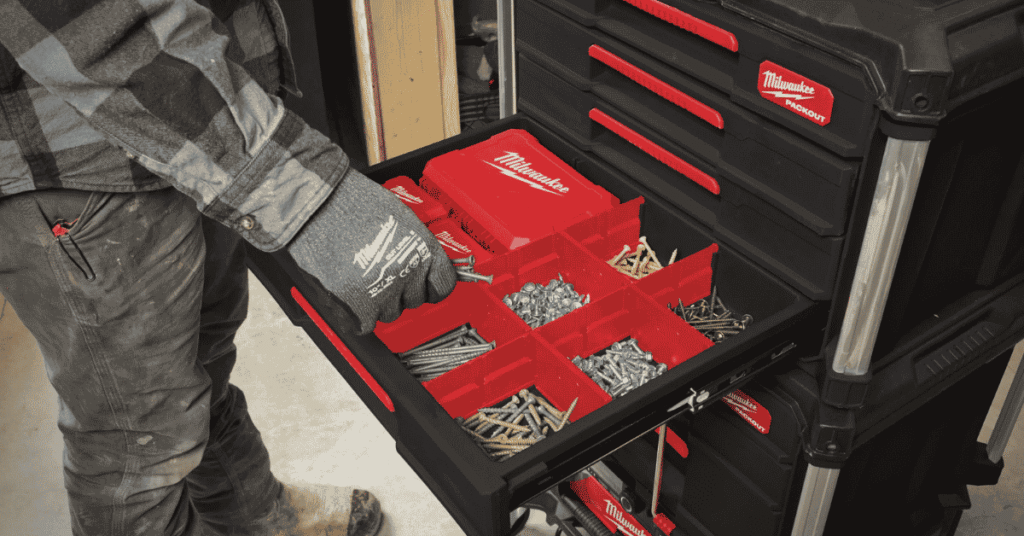
Tool Boxes With Drawers
Drawer-style boxes make sense once your tool collection starts getting properly serious.
Instead of dumping everything into one big compartment, you can split things up screwdrivers in one drawer, spanners in another, smaller accessories somewhere they won’t get buried.
Main downside is weight. A drawer unit stuffed with tools isn’t exactly something you want to be hauling around the house.
Because of that, this style usually suits a garage or workshop better, somewhere your tools can just stay put.
Wheeled Tool Boxes For Larger Collections
If you’re regularly carrying a serious amount of gear, wheels genuinely make life easier.
A wheeled tool box means you’re pulling your tools along instead of lifting the whole thing. Handy for tradespeople moving between rooms, workshops, or job sites.
Some systems stack too one section for hand tools, another for fittings, another for the bigger stuff.
They cost more than a basic box, sure, but if you’re working with tools every single day, the convenience usually justifies the price.
How Much Storage Space Do You Actually Need?
This is where people tend to get it wrong.
Too small, and everything’s crammed together frustrating. Too big, and you’re lugging around a heavy box full of tools you barely touch.
For basic household maintenance, a compact or medium box is plenty. If you’re regularly working on cars, building furniture, or tackling bigger renovation projects, more space will actually come in handy.
Leave a bit of spare room too your tool collection’s probably going to grow whether you plan for it or not.
What Tools Should Actually Go In A Home Tool Box?
You don’t need a full professional workshop’s worth of kit for everyday jobs.
A sensible starter set might include a hammer, tape measure, a few screwdrivers, pliers, an adjustable spanner, a utility knife, and a spirit level. A set of screwdriver or drill bits helps too.
What you actually need depends on what you do. Someone doing weekend DIY projects obviously needs more than someone who just wants to tighten the odd screw or put together flat-pack furniture.
There’s no prize for having the fullest box out there. The useful tools are the ones you can actually find when you need them.
What To Check Before Buying
Once you know roughly what you’re storing, look at the practical stuff.
Check the handle first it should feel comfortable and sturdy enough to carry the box when it’s fully loaded. Hinges and latches matter too since they get used constantly.
Think about where it’ll actually live. A huge box is fine in a garage but awkward if it needs to fit in a kitchen cupboard or small utility room.
Portability matters if you’re moving between jobs regularly. If it’s staying in the workshop the whole time, storage capacity probably matters more than how easy it is to carry.
So, Which Tool Box Is Right For You?
Honestly, there’s no single right answer.
For basic home repairs, plastic’s usually the sensible pick. For heavier workshop use, a sturdy metal one takes more punishment. Got a lot of small parts to deal with? An organiser saves you the digging around. Carrying a big collection between jobs? A wheeled system is probably worth the extra cost.
What matters most is buying for the tools you actually have and the work you actually do. A simple box that keeps things organised beats an expensive one sitting half-empty in the garage most of the year.
Quick FAQ
What’s The Best Tool Box For Home Use?
For most households, a medium plastic tool box does the job well lightweight, easy to store, and enough space for the usual DIY tools.
Should I Go For Plastic Or Metal?
Plastic if you want something light and easy to carry around. Metal suits heavier, more demanding workshop use where durability’s the priority.