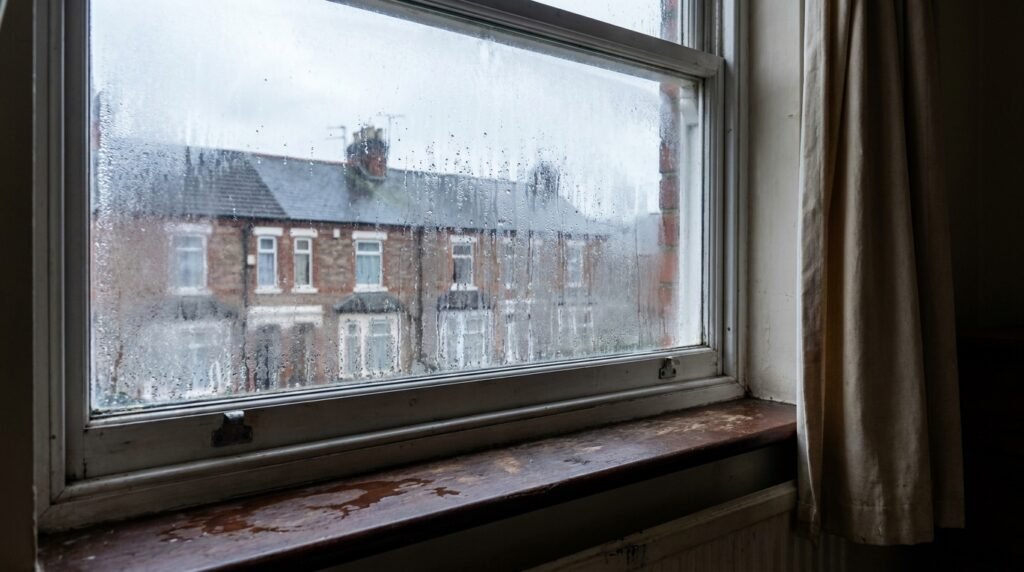
If you wake up on chilly UK mornings with wet glass and damp sills, learning how to stop condensation on bedroom windows overnight is crucial to protect your home. Condensation is not just annoying to wipe away every morning; it can quickly lead to harmful black mould and peeling wallpaper if left untreated.
Fortunately, you do not need to spend hundreds of pounds on new double glazing to solve it. Here are six practical, budget-friendly UK hacks to keep your bedroom windows dry overnight in 2026.
Why Does Window Condensation Happen Overnight?
Window condensation occurs when warm, moisture-packed indoor air hits cold glass surfaces. During the night, your breathing alone releases significant water vapour into the air.
In addition, closed bedroom doors and sealed double glazing trap this moisture inside the room. Consequently, as outdoor temperatures drop, the moisture turns into droplets of water along the bottom of your window panes.
6 Proven Ways to Stop Bedroom Window Condensation Overnight
If you want to prevent morning moisture across your home and check our bathroom mirror buying guide for bathroom steam, try these simple methods:
1. Open Your Window Trickle Vents
Most modern UK double-glazed windows have small plastic trickle vents at the top of the frame. Opening these vents provides continuous, gentle airflow without letting in freezing draughts. Therefore, trapped moisture can escape before it condenses on the glass.
2. The “Bowl of Salt” Moisture Trap
A large bowl of standard table salt or baking soda placed on your windowsill acts as a natural dehumidifier. Salt naturally absorbs moisture directly from the surrounding air. As a result, it reduces the humidity around cold glass panes.
3. Keep Your Bedroom Door Slightly Ajar
Sleeping with your bedroom door completely shut traps all exhaled moisture in one enclosed space. However, leaving the door slightly open allows warm air to circulate throughout the hallway, preventing humidity buildup against cold bedroom windows.
4. Wipe Down Sills First Thing in the Morning
If minor condensation does form, wipe it down immediately using a microfibre cloth or a handheld window vacuum. Leaving moisture sitting on wooden window boards causes rot and damp spots over time.
5. Move Houseplants Away from Windows
Indoor plants release moisture into the atmosphere through transpiration. While houseplants are great for air quality, keeping multiple plants on cold bedroom windowsills significantly increases morning condensation.
6. Consider a Small Electric Dehumidifier
For persistent moisture problems, a compact 500ml mini dehumidifier placed near the window works wonders. These small devices cost pennies per night to run and collect excess moisture before it reaches the glass.
Frequently Asked Questions (FAQs)
Does leaving heating on low overnight stop window condensation?
Yes. Keeping your central heating at a steady, low temperature (around 15°C to 17°C) keeps the glass warmer. As a result, warm indoor air does not hit an icy surface, which drastically cuts down morning condensation.
Can condensation cause black mould on window seals?
Yes. Black mould thrives in persistent damp conditions along silicone window seals. If you spot mould, clean it immediately with a dedicated antifungal spray or warm soapy water.
Does bubble wrap or window film stop condensation?
Applying thermal window insulation film creates an extra air barrier between the cold glass and the room. Consequently, it keeps the inner surface warmer and reduces condensation levels.