Bringing a Labradoodle puppy home comes with a wave of excitement and a few costs nobody warned you about. Where you live, the breeder you choose, and the coat type you prefer all affect what you’ll spend. So getting across the full Labradoodle care budget before you commit is just practical.
The first year is the expensive one. Vaccinations, vet check-ups, grooming setup, training, and insurance all land at once. Most new owners piece this together on the fly, and that’s where the surprises hit hardest.
If you’re figuring out the same thing right now, don’t worry. Established breeders like Oodle Pups can explain what’s included in the purchase price and what to budget for beyond it. This article breaks down first-year vet bills, insurance, training costs, and more, so you’ve got the full picture before your pup comes home.
Let’s get started.
What Do Labradoodle Prices Actually Include?

A Labradoodle puppy from an established Australian breeder typically costs between $3,000 and $5,000. That price isn’t arbitrary. It reflects health testing, socialisation, and the preparation behind each litter.
Before you commit, two things are worth getting clear on upfront: what the price covers and why two puppies can vary so much in cost.
Health Guarantees and Desexing Contracts Explained
A health guarantee is a written commitment that the pup has been bred to a specific standard, usually covering genetic conditions for the first 12 to 24 months. If something hereditary shows up in that window, you will have recourse. Without one, you carry that financial risk alone.
The desexing contract is a separate agreement requiring you to desex your pup by an agreed age, typically between five and nine months. It exists to protect breed integrity and prevent unplanned litters.
In Australia, desexing a dog typically costs $300–$600 depending on size, sex, and your vet. Most responsible breeders won’t place a pup without a signed contract, so it’s common practice rather than cause for concern.
We recommend you go through both documents carefully, because what’s written there affects your responsibilities as an owner from day one.
Why Two Labradoodle Puppies Can Cost So Differently
DNA health testing on the breeding dogs, coat type, size, and generation all factor into Labradoodle prices. So two puppies from separate breeders can sit thousands of dollars apart for entirely legitimate reasons.
Size and generation tend to account for the largest price differences. A miniature poodle cross sits at a different price point than a fully multi-generational Australian Labradoodle. Fleece coats, common in Australian Labradoodles, also take more work to produce consistently across a litter, which pushes costs up.
Many breeders charge more when demand outpaces supply too. That’s not a warning sign. Nine times out of ten, it signals a breeder who isn’t rushing litters to meet the market.
First-Year Vet Bills and Vaccinations: What New Owners Pay
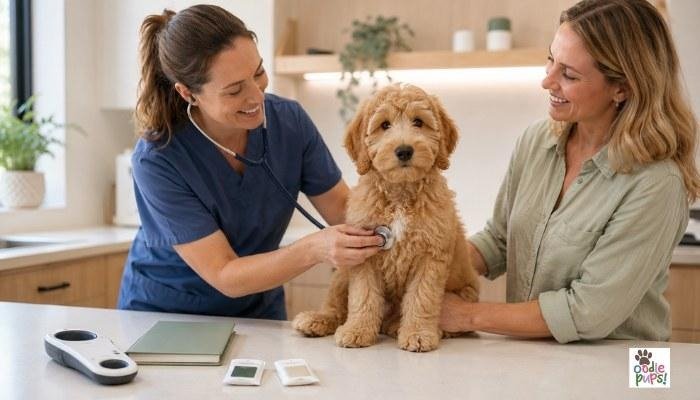
First-year vet costs for a Labradoodle puppy run between $750 and $1,200. Most of that lands in the first six months, with vaccinations, microchipping, and check-ups all hitting at once.
Here’s what that actually looks like:
- Vaccinations: Puppies need three rounds between six and sixteen weeks, starting with the C3, then the C5, then a booster. The full course runs $440–$700 depending on your location and clinic.
- Routine Check-Ups: Budget roughly $300–$500 for two to three visits across year one. These cover general health checks, worming, flea prevention, and microchipping (yep, those sneaky costs everyone forgets).
- Unexpected Illness: A single emergency visit can push total costs well above $1,000. Early vet care is cheaper than delayed treatment, without question. If your pup shows any signs of illness in the first few months, get it checked sooner rather than later.
Most new owners know about vaccinations but underestimate what parasite prevention, travel to the clinic, and routine visits add to the total. It’s several medium bills arriving close together, which catches people off guard every time.
Daily Feeding and Grooming Costs for Australian Labradoodles
Both food and grooming costs are predictable once you know what an Australian Labradoodle needs. Food is the steadier of the two. Grooming is where most new owners get a wake-up call, because upkeep runs higher than it looks.
Take a look at where your ongoing money goes:
- Monthly Food Costs: Premium dry food runs $80–$120 per month. Larger Labradoodles sit toward the top of that range, so factor size into your monthly budget early.
- Professional Grooming: Without regular attention, a Labradoodle’s fleece mats quickly. A professional groom every six to eight weeks costs $80–$120 per session, reaching $600–$1,200 annually.
- Daily Extras: Chew toys, leads, bowls, and bedding are easy to overlook, but they add to the bill too. That’s why you should budget an extra $200–$400 for accessories (usually spent in small amounts here and there).
Worth Noting: Some pet insurance policies cover routine care like grooming and dental checks as an optional add-on. It won’t eliminate these costs, but it can take the edge off what you spend each year.
What Labradoodle Training Costs in Year One
Training varies based on whether you go to group classes, private sessions, or a mix of both. For new owners, it usually starts in the same place.
Puppy preschool runs $150–$250 for a four- to six-week group course, usually held at a vet clinic or dedicated training centre. It covers basic commands, lead manners, and early socialisation with other dogs and people, which is harder to replicate at home.
Once that’s done, plenty of people move straight into follow-on obedience classes at $200–$400. These build directly on what your pup already knows and go deeper into reliability and real-world behaviour. Your pup learns to respond off-lead, settle in new environments, and ignore distractions (which saves your furniture, your sanity, and the occasional vet bill).
Private sessions are a different investment. At $80–$150 per hour, they suit owners dealing with a particular issue rather than general training. One or two targeted sessions can sort problems that group classes don’t have time to address individually.
In the long run, $400–$800 across year one on training is one of the better spends you’ll make. A well-trained dog is cheaper to own since destructive behaviour, anxiety, and aggression are common drivers behind vet and specialist referral costs.
Pet Insurance: Is It Worth the Monthly Cost for Labradoodles?
For new Labradoodle owners, pet insurance often pays for itself after one surprise vet bill.
Every time we talk to Australian owners about what caught them off guard financially in year one, the gap between insured and uninsured costs is the first thing that comes up. That’s exactly why it’s worth knowing what each policy type costs before you need one.
The table below breaks down what you can expect to pay in Australia:
| Cover Type | Monthly Premium | What’s Included |
| Accident only | $20–$40 | Injuries, emergency treatment |
| Accident and illness | $40–$80 | Injuries, illness, diagnostics |
| Comprehensive | $80–$120 | Above plus dental, specialists |
| Routine care add-on | +$10–$20 | Vaccinations, check-ups, grooming |
According to a Pets in Australia report, dog owners pay an average of $145 annually on pet insurance. It sits at the lower end of what policies actually cost, which suggests a large portion of people choose basic accident-only and hope for the best.
So what’s the catch? Premiums rise as your dog ages, and a large number of policies carry an excess per claim. For that reason, many owners prefer a fixed excess because it’s easier to budget for than a percentage-based one.
All of that said, no insurance policy covers problems that stem from poor breeding.
Your Breeder Choice Directly Affects Your Long-Term Vet Bills
Poor breeding decisions show up in vet bills. It’s just a matter of time. The breeder you choose now will follow you to the vet for years, and two things in particular tell you whether one is a sound choice. We’ll cover both below.
Why a Waiting List Signals a Responsible Breeder
Breeders with waiting lists aren’t producing puppies to meet immediate interest. They breed once their dogs are ready, health testing is complete, and each litter can get proper attention. That kind of work ethic produces healthier dogs with fewer inherited problems later on.
When you join, use that time to look into the breeder thoroughly. Check their testing records, ask about parent dogs, and find out what’s included in the contract before placing a deposit. The contract should also clearly explain the deposit policy. A refundable deposit is a fair expectation from an established breeder. If they won’t offer one, that’s worth a second thought.
We operate this way at Oodle Pups. Our waiting list exists because we breed Pip and Rosie (our two fleece-coated Australian Labradoodles) deliberately rather than continuously, with RightPaw certification to back it up.
What a Health Guarantee Saves You Over Time
A health guarantee is financial protection against inherited conditions like hip dysplasia and progressive retinal atrophy that show up later.
In practice, breeders who invest in DNA health testing on their breeding dogs are selecting against the conditions most likely to generate serious vet costs. Without that screening, those risks transfer directly to you.
At the serious end of the scale, a hereditary condition like hip dysplasia can run $5,000–$8,000 in surgical costs alone. A health guarantee gives you a clear path forward in that window, and the full bill lands elsewhere if it doesn’t.
Put It All Together Before You Commit
Year one with a Labradoodle pup runs between $6,700 and $12,000 when you factor in the purchase price, vet care, desexing, grooming, training, and insurance. That’s a wide range, and every decision in this article moves you toward one end or the other.
If you’re ready to find a pup and want to explore what responsible breeding looks like in practice, browse our website at oodlepups.com.au. You can also check our current waiting list, learn about Pip and Rosie, and get across what’s included before you secure your spot.