Choosing a bath shower mixer sounds simple. It rarely is. Pick the wrong one and you’re left with weak flow, awkward controls, or an installation bill nobody warned you about. Part of the trouble is that UK bathrooms aren’t built to one standard some older houses still run on gravity-fed systems, others have combi boilers doing all the work. So the “right” mixer depends less on what looks nice in a showroom and more on your plumbing, your bath, and how your household actually uses the room. This guide walks through everything worth knowing before you settle on a bath shower mixer for your home.
Bath Shower Mixer Tap Style Comes First
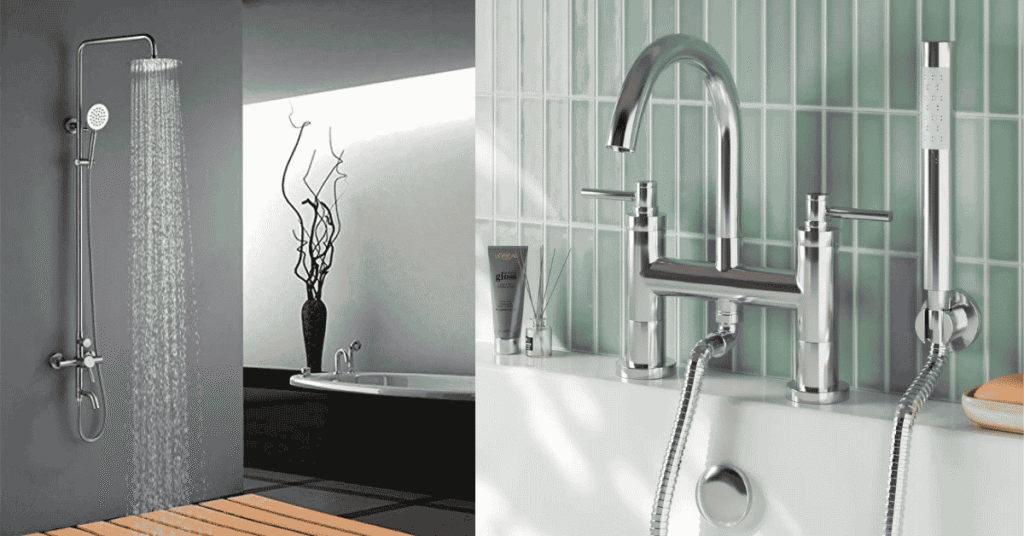
A bath shower mixer tap blends hot and cold water, then a diverter sends it to either the bath spout or the shower handset. Nothing fancy but it’s exactly why it works so well in family bathrooms or anywhere space is limited.
Deck-mounted taps sit on the bath rim itself. Most UK homes already have one, which makes it the easiest swap when the tap holes line up. Wall-mounted versions look tidier once fitted, sure, but getting there usually means opening up the wall to hide the pipework. That’s not a five-minute job.
Freestanding mixers are a different animal entirely built for roll-top or freestanding baths, with floor-mounted pipework and a fair bit more planning involved. Renovating on a budget? Stick with a like-for-like replacement. It’s almost always the least disruptive route.
Check Your Water Pressure Before Anything Else
Here’s the bit people skip, then regret. A gorgeous mixer means nothing if your pipes can’t feed it properly, and the shower handset is usually the first thing to suffer.
Got a cold-water tank in the loft and a hot-water cylinder tucked away somewhere? You’re probably on a gravity-fed system, and pressure tends to drop off upstairs especially. Look for a bath shower mixer rated for low minimum operating pressure don’t assume, check the spec.
Combi boilers and unvented cylinders generally push out stronger, mains-pressure water. Even then, glance at the manufacturer’s pressure range before buying. Guess wrong and you’ll end up with a bath that fills at a crawl and a shower spray with all the force of a light drizzle.
Does It Actually Fit?
Before you click “buy” on any bath shower mixer tap, count your tap holes. Measure the distance between them. Check what room you’ve got behind the bath. Two mixers can look near-identical online and still have completely different centres, spout lengths, or mounting requirements it happens more than you’d think.
The spout has to reach far enough over the bath, or water ends up hitting the inner edge and splashing where it shouldn’t. Same logic applies to the handset hose too short, and you’ll be wrestling with it every time you wash your hair.
Then there’s access. Some baths have removable panels, which makes any future repair painless. Others are tiled straight in, and suddenly a small cartridge swap turns into a proper renovation job.
Manual vs. Thermostatic Which One?
Whichever way you lean, every bath shower mixer needs to suit your household’s daily routine. Manual mixers put you in charge of balancing hot and cold. They’re cheaper, easy to use, and perfectly fine if your pressure is stable. The downside? Someone flushes a toilet elsewhere in the house and your temperature can shift without warning.
Thermostatic mixers hold their temperature steady, which is genuinely useful in a busy household. A lot of them include a temperature stop around 38°C worth having if there are kids, older relatives, or anyone with limited mobility using that bathroom.
But thermostatic isn’t automatically the smarter buy for every home. It costs more, and it can be fussier about the pressure it needs. Really, it comes down to your plumbing, your household, and what you’re willing to spend.
Choose a Finish You’ll Actually Maintain
Chrome is still the safe, sensible choice it goes with almost everything, and spare parts are easy to find years down the line. Brushed nickel and stainless steel do a slightly better job of hiding fingerprints and light watermarks, if that’s a concern.
Black, brass, and bronze finishes make more of a statement, no question. But they need more coordination with the rest of the bathroom, and it’s worth confirming matching accessories exist before you commit to something unusual.
And then there’s hard water a fact of life in much of the UK. Limescale shows up fast on dark or polished surfaces. A soft cloth and a bit of regular wiping will treat these finishes far better than anything abrasive.
What’s Inside Matters More Than the Finish
Longevity comes down to what’s inside your bath shower mixer, not what you see. Ceramic disc cartridges give smoother control and resist dripping far better than the old rubber washer designs. A well-made diverter switches cleanly between spout and handset — no leaking from both at once.
Worth checking before you buy: are replacement cartridges, hoses, and shower heads even available for this model? A cheap fitting stops being cheap the moment one small part fails and can’t be replaced. And make sure the handset actually clicks into its holder — a loose one gets old fast.
Getting the Installation Right
Installing a bath shower mixer tap is usually straightforward when you’re swapping like-for-like. Changing the mounting style deck-mounted to wall-mounted, say — is a different story, often involving opened walls, rerouted pipework, and retiling.
Before any panels or tiles go back on, test everything. Diverter, hose, temperature control, flow from both outlets all of it. A small leak is easy to fix now. Once it’s sealed behind tile, not so much.
Final Thoughts
The best bath shower mixer tap isn’t the one that photographs well. It’s the one that fits your bathroom, your pressure, and your household. Check the pressure rating, the measurements, the control type, the finish, and whether spare parts exist — do that, and you’ll end up with something that just works, instead of something that creates more plumbing problems than it solves.
FAQs
Can a bath shower mixer tap work with low water pressure?
Yes. Just make sure you pick a model rated for low-pressure or gravity-fed systems, and check its minimum operating pressure before you buy.
Is a thermostatic mixer worth the extra cost?
Often, yes — especially in family homes. It keeps the temperature steadier and gives you a buffer against sudden changes elsewhere in the water supply.