A water heater should give your household enough hot water when it is actually needed. In practice, choosing the right setup is not quite that simple. A compact flat, a family home with two bathrooms and an all-electric property can all need completely different hot water systems.
In the UK, the choice usually comes down to a combi boiler, stored hot water cylinder, electric water heater or a system designed to work with a heat pump. The right option depends on demand, available space, water pressure, fuel supply and how much you want to spend on installation and running costs.
Water Heater Options at a Glance
| System | Works Best For | Main Strength | Main Limitation |
|---|---|---|---|
| Combi boiler | Small to medium homes | Hot water on demand | Can struggle with several outlets at once |
| Electric water heater | Flats and homes without gas | Simple installation | Electricity can be costly for heavy use |
| Hot water cylinder | Families and larger homes | Handles higher hot water demand | Needs storage space |
| Unvented cylinder | Homes with strong mains pressure | Good pressure at several outlets | More complex installation |
| Point-of-use heater | Single sinks, offices, annexes | Heats water close to the tap | Not suitable for a whole home |
| Heat pump cylinder system | Efficient modern homes | Works with low-carbon heating | Requires careful system design |
This is a more useful starting point than choosing a heater purely by price.
Which Water Heater Suits Your Home?
The number of bathrooms and people living in the property matters more than the number of bedrooms.
One-Bedroom Flat
For one or two people, an electric water cylinder can be a sensible choice, particularly where there is no mains gas.
A typical setup may include:
- Direct electric hot water cylinder
- Compact electric water tank
- Immersion heater
- Small electric hot water system
The main thing to get right is capacity. A cylinder that is too small may run out during back-to-back showers. An oversized cylinder heats more stored water than the household needs.
Two- or Three-Bedroom Home
A combi boiler is common where there is one bathroom and decent mains water pressure. It heats domestic hot water when a tap is opened, so there is no hot water heater tank taking up cupboard space.
Water pressure also affects bathroom fittings. If you are upgrading the bath at the same time, our mixer bath tap shower buying guide explains how low- and high-pressure UK systems affect shower performance.
If the household regularly uses several hot water outlets together, stored hot water may be more comfortable.
Larger Family Home
A family using two bathrooms at the same time will usually place much more demand on the hot water system.
A larger hot water cylinder can provide a reserve for:
- Two showers running close together
- Baths
- Kitchen hot water
- Morning family routines
In this type of property, flow rate and recovery time matter as much as total cylinder capacity.
Electric Water Heater: Where It Makes Sense
An electric water heater is particularly useful where gas is unavailable or unnecessary.
Electric water heaters UK households use range from tiny units under a sink to full-size electric hot water cylinders.
Good Uses for Electric Hot Water
Electric systems are commonly suited to:
- Flats
- Studios
- Annexes
- Holiday homes
- Garden rooms
- Offices
- Properties without mains gas
Installation can be relatively straightforward because there is no gas burner or flue.
The trade-off is running cost. If a household uses a large amount of hot water every day, electric water heating can cost more to operate than some alternatives.
Electric Hot Water Cylinder vs Small Electric Heater
These two products solve different problems.
Electric Hot Water Cylinder
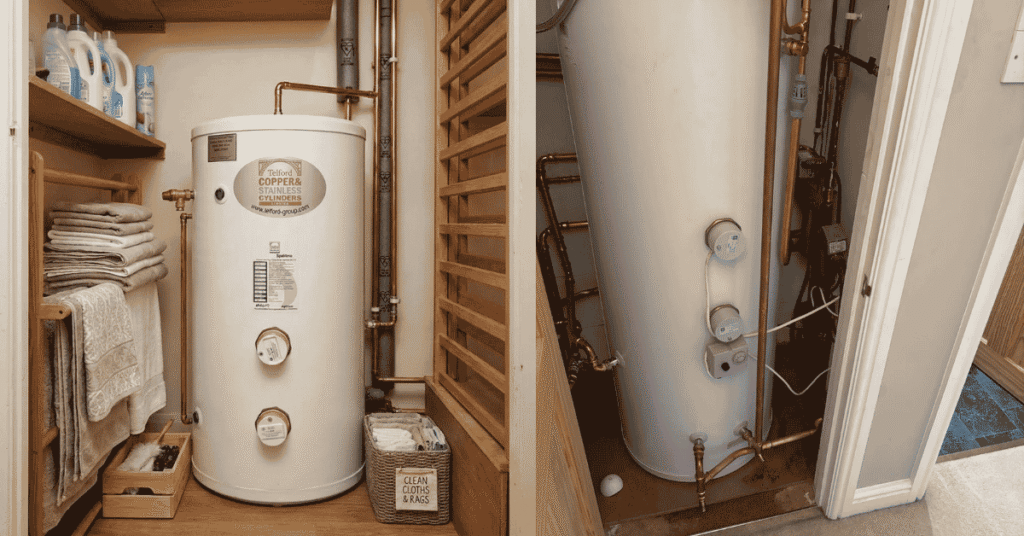
An electric hot water cylinder stores a larger quantity of heated water. It can serve showers, baths and several taps.
You may also see similar systems described as:
- Electric water cylinder
- Electric water tank
- Hot water tank electric
- Electric hot water heater tank
- Water heater electric tank
A direct hot water system usually uses immersion elements inside the cylinder to heat the stored water.
Point-of-Use Electric Heater
A small heater sits close to the outlet and serves one sink or a very limited area.
It works well for a:
- Utility room
- Workshop
- Small office kitchen
- Garage
- Garden building
It should not be confused with a full domestic hot water system.
Combi Boiler or Hot Water Tank?
This is one of the main decisions in UK homes.
A combi boiler heats water when you need it. A cylinder stores hot water in advance.
Neither is automatically better.
Choose a Combi When
A combi is usually well suited where:
- Space is limited
- There is one main bathroom
- Mains pressure is good
- Several showers rarely run together
- You do not want a separate cylinder
There is no stored supply to run out, but the boiler still has a maximum hot water flow rate.
Choose Stored Hot Water When
A hot water system with a cylinder becomes more attractive when:
- The property has two or more bathrooms
- Several people shower around the same time
- Baths are used regularly
- High simultaneous demand is common
- A heat pump forms part of the heating system
A properly sized cylinder gives the household a buffer of ready-to-use hot water.
Vented vs Unvented Hot Water Cylinders
Not all cylinders work in the same way.
Vented Cylinder
A traditional vented cylinder normally receives water from a cold-water storage tank.
These systems are still found in many older UK homes.
Unvented Cylinder
An unvented cylinder connects directly to the mains water supply.
Where mains pressure and flow are suitable, this can give strong hot water performance without a separate cold-water tank in the loft.
Because the cylinder stores pressurised hot water, installation and maintenance need to be handled correctly rather than treated as a basic DIY job.
What About a Water Geyser?
The terms water geyser and electric geyser are widely used outside the UK.
In Britain, the same sort of product would normally be described as an:
- Electric water heater
- Instantaneous water heater
- Storage water heater
- Hot water cylinder
If you are buying equipment in the UK, searching by the British terminology will usually give more relevant products and installation information.
How Much Does a Water Heater Cost?
There is no single useful price for a water heater because the heater itself may be only one part of the bill.
A replacement can involve:
- New cylinder or heater
- Labour
- Pipework alterations
- Electrical work
- Valves and controls
- Removal of the old tank
- Changes to cupboard space
- Upgrades to the existing hot water system
A small electric unit serving one sink is a very different job from replacing a large unvented cylinder.
For that reason, compare complete installation quotes rather than comparing appliance prices alone.
Running Cost: Look Beyond the Energy Rating
Two households using the same heater can still have very different bills.
Running cost is affected by:
- Number of occupants
- Shower length
- Bath use
- Cylinder size
- Insulation
- Electricity tariff
- Heating schedule
- Reheat time
- Standing heat loss
A well-insulated cylinder that is correctly sized for the household will generally waste less heat than an oversized or poorly insulated tank.
Timing Matters With Electric Water Heating
An electric hot water heater does not need to run continuously just because it stores water.
Timers and appropriate controls can help match heating periods to household routines.
For example, a household that mainly showers in the morning may not need the cylinder reheating at full capacity throughout the entire day.
Choosing the Right Cylinder Size
Do not choose a cylinder simply because the old one was the same size.
Households change.
A previous owner may have had four people in the house while only two live there now, or a family may have added another bathroom since the original hot water system was installed.
Ask these questions instead:
- How many people use hot water each day?
- Are showers used one after another?
- Are baths common?
- Do two bathrooms operate together?
- How quickly can the cylinder recover?
- Is there enough physical space for the cylinder?
Capacity and reheat performance need to work together.
Water Heater Replacement: Repair or Replace?
A fault does not always mean the entire system needs replacing.
An immersion element, thermostat or control problem may be repairable.
Replacement becomes more reasonable when several problems start appearing together.
Signs Worth Investigating
Look more closely at replacement if:
- The cylinder is leaking
- Hot water regularly runs out too early
- Reheating has become noticeably slower
- The system loses heat quickly
- Repairs are becoming frequent
- Corrosion is visible
- The heater no longer suits household demand
A leaking hot water tank needs prompt attention. Water escaping from a cylinder can cause significant damage to floors, ceilings and nearby rooms.
If the hot water system is working but individual radiators are cold at the top, the issue may simply be trapped air. Our guide on how to bleed a radiator without a key covers the checks and steps to try before assuming there is a wider heating fault.
Water Heater for an All-Electric Flat
Electric hot water systems for flats need particularly careful sizing.
There is often limited cupboard space, and the electricity supply may place limits on what can be installed.
A good setup balances:
- Cylinder capacity
- Reheat time
- Available electrical load
- Hot water demand
- Physical dimensions
- Water pressure
A large electric water boiler for home use is not automatically better. If most of its stored water is never used, you are paying to keep unnecessary water hot.
Domestic Hot Water and Heat Pumps
Heat pumps have changed the way some UK homes approach domestic hot water.
A heat pump normally works with a suitable hot water cylinder rather than producing high-flow hot water instantly like a combi boiler.
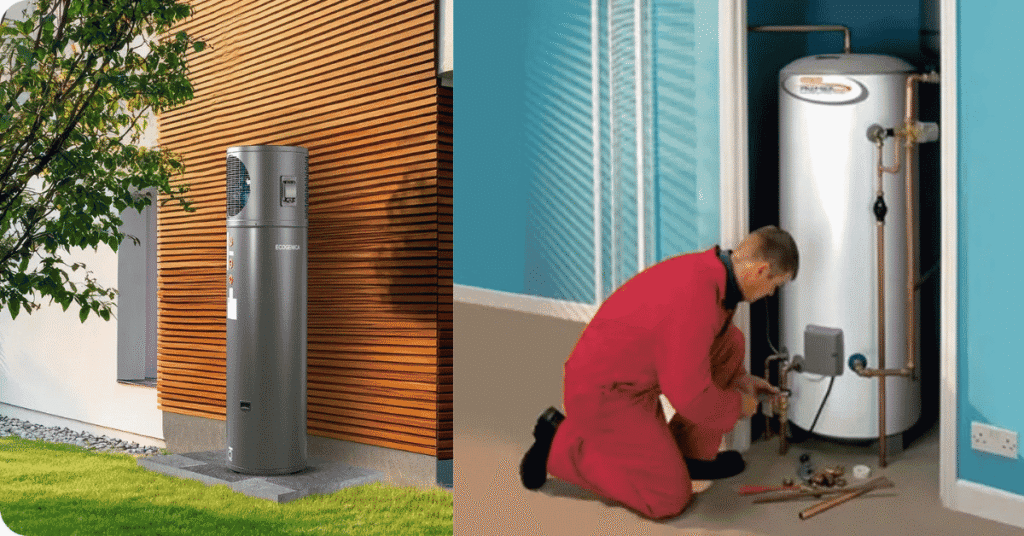
That means properties switching from a combi to a heat pump may need space for an electric hot water cylinder or heat pump-compatible cylinder.
Cylinder size, coil design and controls all become important parts of the installation.
This should be considered at the planning stage rather than after the heat pump has already been chosen.
Bathroom Heating Should Fit the Same System
Hot water and bathroom heating are separate jobs, but renovation plans often involve both at the same time.
If you are fitting a new bathroom, think about how the radiator or towel rail will be powered. Central-heating, electric and dual-fuel models each suit different setups.
Our guide to 750mm wide matte black towel rail radiators explains the differences between fuel types, sizing and bathroom heat output.
Matching the bathroom heating to the wider system can avoid unnecessary electrical or plumbing changes later.
Portable Water Heater: Useful or Not?
A portable water heater has limited uses, but it is not a direct substitute for a professionally installed domestic hot water system.
Temporary or portable products may be useful for specific situations, but permanent bathrooms, showers and kitchens need equipment suited to fixed domestic use.
Water and mains electricity are not an area where improvised installations make sense.
Planning a Full Bathroom Upgrade
If the water heater is being replaced as part of a wider bathroom renovation, check the plumbing layout before choosing fittings.
Changing the bath, toilet, taps and hot water system at the same time can affect pipe routes and installation costs.
For example, if the toilet is also being replaced, our guide on choosing a close coupled toilet for a UK bathroom covers projection, waste position, flush systems and fitting considerations.
Planning these jobs together can be easier than changing each part separately later.
Before You Buy: Water Heater Checklist
Before ordering a new unit, confirm:
- Household size
- Number of bathrooms
- Peak hot water demand
- Available fuel
- Mains water pressure and flow
- Space for a cylinder
- Electrical capacity
- Reheat time
- Warranty
- Installation requirements
- Expected running cost
- Compatibility with future heating plans
This avoids the common mistake of buying a heater based on capacity or price alone.
Which Water Heating Solution Is Right?
For a small no-gas flat, an electric hot water heater may be the simplest choice. A home with one bathroom may suit a combi boiler. A busy family property is more likely to benefit from stored hot water, while a heat pump installation normally needs a compatible cylinder.
The useful question is not which water heater is best overall. It is which system can meet your household’s busiest period of hot water use without wasting energy or adding unnecessary installation costs.
Once that is clear, choosing between an electric water heater, boiler water heater or hot water cylinder becomes much easier.
FAQs
What is the best water heater for a UK home?
There is no single best type. The right choice depends on household size, bathrooms, available fuel, water pressure and hot water demand.
Are electric water heaters suitable for flats?
Yes. Electric hot water systems are common in flats, especially where there is no gas supply. Correct cylinder sizing is important.
Is a water geyser the same as a water heater?
Generally, yes. “Water geyser” is common terminology in some countries. In the UK, “water heater” or “hot water cylinder” is more widely used.
Is a combi boiler better than a hot water tank?
A combi saves space and works well for moderate demand. A hot water tank can be better where several outlets need hot water at the same time.
When should a water heater be replaced?
Consider replacement if the tank leaks, performance has fallen significantly, repairs are becoming frequent or the system no longer meets household demand.
Can an electric hot water cylinder supply a whole house?
Yes, provided it has been correctly sized for the household and the installation can support the required hot water demand.
What affects water heater running costs?
Fuel type, water use, cylinder size, insulation, tariff, controls and heating schedule all affect the final cost.