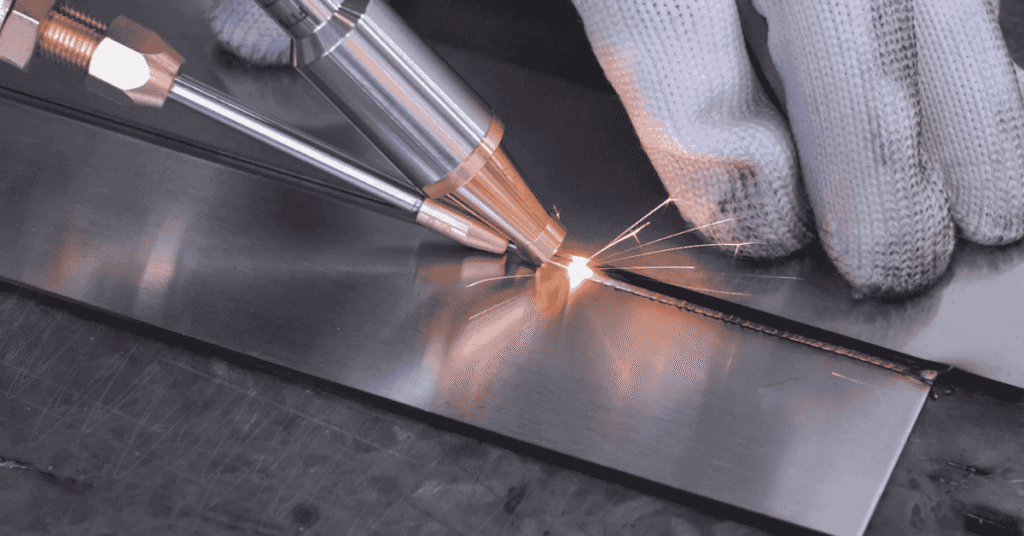
A laser welder can look properly complicated at first, especially if you’re used to MIG or TIG welding. Fair enough, honestly. The machine’s different, the heat source is different, and the whole process happens a lot faster than most beginners expect.
A laser welder uses a concentrated beam of light to heat and join metal. That’s really the whole concept in one line. Because the beam’s narrow and tightly controlled, it can produce clean welds with less distortion than a lot of traditional methods. That’s part of why laser welding’s becoming more common across UK workshops, manufacturing plants, repair businesses, and fabrication companies. Growing fast, from what people say.
What Is a Laser Welder, Exactly?
A laser welder is a machine that joins two pieces of metal by directing a focused laser beam right onto the joint. No more complicated than that at its core. The energy from that beam heats the metal until it melts. No two ways about it. As the molten area cools back down, the two pieces fuse together.
Unlike MIG welding, the process doesn’t always need a continuously fed wire, which surprises a lot of newcomers. Catches people off guard, that one. Filler wire can still get used where the joint needs extra material, but plenty of laser welds get completed just by melting the edges of the two parts directly against each other. Cleaner in some ways, honestly.
The machine normally includes a laser source, a control unit, a cooling system, and a welding head. Fairly standard setup across most brands. Handheld systems also come with a gun-style torch that the operator moves along the seam by hand.
How a Laser Welding Machine Actually Produces Heat
The laser source creates a powerful beam of concentrated light. That’s step one, basically. That light travels through an optical system or fibre cable before it ever reaches the welding head. Standard path, every time.
Inside the head, lenses focus the beam down onto a genuinely tiny point. Smaller than you’d think possible. Concentrating that much energy into such a tight area produces intense heat almost instantly, faster than most people expect the first time they see it happen.
Once the beam reaches the metal, the surface absorbs the energy and starts to melt. Simple as that, really. The operator, or an automated system, moves the beam along the joint, creating a narrow molten pool as it goes. The metal then cools and forms a solid weld behind it. That’s the whole cycle, start to finish.
Because the heat stays so focused, the surrounding area barely gets affected. That’s actually one of the bigger selling points. That smaller heat-affected zone can cut down on warping, discolouration, and damage to nearby material. Worth the trade-off, most would say.
Conduction Welding and Keyhole Welding
Laser welding generally works in two main ways, and it’s worth knowing the difference. They’re not interchangeable, not really.
Conduction Laser Welding
Conduction welding uses lower power, plain and simple. Nothing fancy about it. The laser heats the surface of the metal, and that heat then spreads out into the surrounding area. That’s really all there is to it.
This creates a smooth, shallow weld, genuinely neat-looking. It works well for thin materials and jobs where appearance actually matters. Cosmetic finish, essentially. The weld usually looks tidy, but it doesn’t penetrate as deeply as keyhole welding does. Different tool for a different job, basically.
Keyhole Laser Welding
Keyhole welding uses a much greater energy density. A step up in intensity. The beam heats the metal so quickly that part of it starts to vaporise, forming a narrow cavity known, fittingly, as a keyhole. Quite literal, that name.
The laser energy travels deeper into that cavity, producing a weld with genuinely strong penetration. Solid stuff, structurally. As the beam moves forward, the molten metal closes up behind it and forms the joint. Neat mechanism, when you picture it.
This method gets used wherever speed and deeper welds are needed. Pretty much the industrial default, honestly.
How a Handheld Laser Welder Actually Works
A handheld laser welder gives the operator a lot more flexibility than a fixed industrial system does. That’s the main appeal, really. The welding head gets held much like a torch, and moved along the joint by hand. Nothing too unfamiliar there.
Before starting, the operator picks settings like power, speed, pulse pattern, and beam width. A fair bit to dial in before the first weld. These settings all depend on the material, thickness, and the type of joint you’re working with. No universal preset that covers everything.
Once the trigger’s pressed, the laser activates and creates the weld pool. Fast, no delay to it. The operator guides the head along at a steady pace. Some machines use an oscillating beam, which moves rapidly side to side to create a slightly wider weld as it travels. Handy for certain joint types.
Handheld machines get used a lot for stainless steel fabrication, kitchen equipment, cabinets, railings, metal furniture, repair work, and that sort of thing. They can be fairly quick to pick up, but safe operation still demands proper training. No shortcuts there. Rushing this bit just isn’t worth it.
Which Metals Can Actually Be Joined With a Laser Welder?
Laser welding works well with most of the common metals used across UK manufacturing and fabrication. A decent spread, honestly.
Stainless steel is probably the most popular choice, since it absorbs laser energy effectively and produces a genuinely clean finish. Makes sense why it’s everyone’s default. Mild steel gets welded with laser equipment fairly commonly too. Nothing exotic about that pairing.
Aluminium can be joined, though it reflects more laser energy and conducts heat quickly, which means the machine settings and joint prep need to be spot on. Not much room for error there. Get it wrong and it shows immediately.
Copper and brass are trickier, honestly, since they reflect light and transfer heat rapidly. A genuine headache for some operators. Some modern laser systems can handle them, but they often need specialised equipment to do it properly.
A laser welder can also join some dissimilar metals, though that really depends on how the materials react once they’re melted together. Case by case, basically.
Joint Preparation and Fit-Up
Laser welding is precise, which is both an advantage and, honestly, a limitation depending on how you look at it. The parts usually need to fit together closely for it to work well. Sloppy fit just doesn’t cut it here.
Large gaps can make it genuinely difficult for the beam to create a consistent joint. No way around that physically. In those cases, filler wire may be needed. Dirt, oil, rust, paint, and coatings can all affect the weld too, so surfaces should get cleaned properly before work begins. Skip that step at your own risk.
Good positioning matters just as much. No margin for sloppy aim here. If the beam misses the joint by even a small amount, the weld can end up weak or incomplete.
Traditional welding can sometimes tolerate poor fit-up a bit more easily. Laser welding just isn’t that forgiving. It really rewards accurate preparation instead.
Main Benefits of Laser Welding
Speed is probably the biggest advantage here, no contest really. A laser welder can complete long seams a lot faster than most manual MIG or TIG processes manage. Not even close, honestly.
The welds tend to come out narrow and tidy, which can cut down on the need for grinding or polishing afterwards. Saves a step at the end, essentially. Less heat also means less distortion, particularly on thin sheet metal. A real plus for finer work.
Other practical benefits include repeatable results, strong penetration, and the ability to automate the whole process. All of it adds up nicely. In a production environment, laser welding can genuinely improve consistency across large batches of parts. Big deal for anyone running volume work.
The downside’s cost, though. No getting around that. Laser equipment is usually a lot more expensive to buy, and repairs may need specialist support. The working area also has to be controlled carefully, since the beam can cause serious injury if things go wrong. Not a risk worth ignoring.
Laser Welding Safety in UK Workshops
A laser welder isn’t simply another type of welding torch. Worth saying that plainly, since it’s an easy assumption to make. The beam can damage eyes and skin, including through reflected light, not just direct exposure. People forget the reflected part especially.
The machine should get used in a controlled area with proper guarding, interlocks, warning signs, and laser-rated protective equipment. No cutting corners on this. Ordinary welding goggles might not offer the correct protection here. Easy mistake to make if you’re used to other welding types.
Fumes need controlling too, with proper extraction, especially when welding coated or contaminated metals. Not optional, that part. Operators should get trained before using the equipment, and should follow the manufacturer’s safety procedures closely. No exceptions on that front.
Is a Laser Welder Suitable for Beginners?
A handheld laser welder can be easier to operate than TIG welding in some situations, sure, but that doesn’t make it risk-free or automatic by any means. Worth remembering that going in.
Beginners still need to learn joint preparation, machine settings, travel speed, and safety basics. No skipping the fundamentals here. Starting out on clean, flat test pieces is genuinely far better than practising on an important job straight away. Save yourself the headache.
The whole process gets easier once you understand how the beam actually reacts to different metals and thicknesses. Comes with practice, mostly.
Frequently Asked Questions
Does a laser welder need filler wire?
Not always. Closely fitted joints can often get welded without it, while wider gaps may need wire.
Is laser welding stronger than MIG welding?
It can produce very strong joints, but strength really depends on the metal, settings, penetration, and joint preparation.