knee pain causes
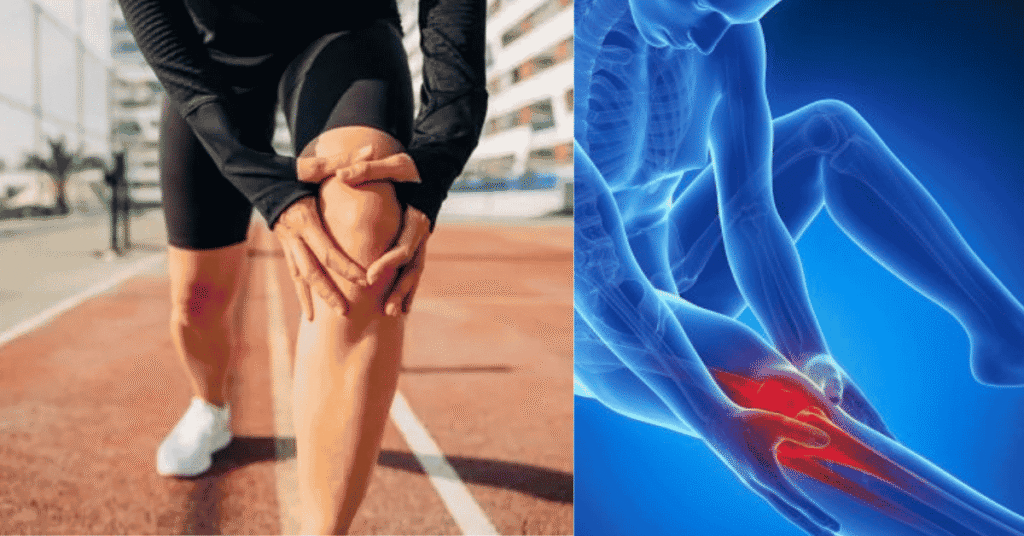
Knee pain rarely happens without a warning sign, yet pinpointing exactly what went wrong inside the joint can feel confusing. With every normal stride, your knees absorb between two and four times your total body weight. When you walk downhill or tackle a flight of stairs, that mechanical load spikes significantly higher.
Because the knee is an intricate hinge made of bone, articular cartilage, shock-absorbing menisci, stabilizing ligaments, and fluid-filled bursae, pain in different areas points to entirely different root causes. A sharp twinge along the inner joint line requires a completely different approach than a persistent morning stiffness or an ache behind the kneecap.
Here is a practical, symptom-led guide to understanding knee pain causes, mapping your symptoms by location, and knowing when home rehab or an NHS clinical assessment is needed.
Knee Pain Location & Symptom Triage Matrix
Before jumping into treatments, identifying where the discomfort concentrates provides the clearest clue about which structure is under strain:
| Pain Location | Common Sensation | Mechanical Trigger | Suspected Primary Cause |
|---|---|---|---|
| Front (Anterior) | Dull ache, grinding beneath kneecap | Walking downstairs, sitting long periods | Patellofemoral Pain Syndrome (Runner’s Knee) |
| Below Kneecap | Sharp, localized tendon tenderness | Jumping, sprinting, sudden deceleration | Patellar Tendinopathy (Jumper’s Knee) |
| Inner Edge (Medial) | Sharp catch, clicking, or dull ache | Twisting on a planted foot, deep squatting | Medial Meniscus Tear or MCL Sprain |
| Outer Edge (Lateral) | Burning friction, sharp stinging | Repetitive running, cycling downhill | Iliotibial (IT) Band Friction Syndrome |
| Back (Posterior) | Tight fullness, pressure when bending | Squatting, straightening leg fully | Baker’s (Popliteal) Cyst or Hamstring Strain |
| Deep & Diffuse | Morning stiffness, creaking, swelling | Weight-bearing after rest, damp weather | Knee Osteoarthritis or Inflammatory Arthritis |
1. Front of the Knee Pain (Anterior Joint Issues)
Anterior knee pain is the single most common joint complaint seen in UK general practice and physiotherapy clinics. It affects desk workers who sit for hours just as frequently as marathon runners.
Patellofemoral Pain Syndrome (PFPS)
Often referred to as “runner’s knee,” PFPS occurs when the patella (kneecap) does not glide smoothly along the femoral groove at the front of the thigh bone. Instead of tracking cleanly in its channel, uneven muscle pull causes the back of the kneecap to rub against underlying cartilage.
- Classic Signs: A dull, grating ache around or behind the kneecap. It flares up during downhill walks, squats, or after sitting in a cinema or car for hours (the “theatre sign”).
- Underlying Driver: Weakness in the hip stabilizers (specifically the gluteus medius) and tightness in the quadriceps or iliotibial band, causing the knee to track inwards during movement.
Patellar Tendinopathy
This involves micro-damage and inflammation in the patellar tendon, which connects the bottom of the kneecap to the shinbone.
- Classic Signs: Point tenderness directly at the base of the kneecap. Pain is sharpest during explosive movements like jumping or sudden braking.
2. Inside and Outside Knee Pain (Medial vs Lateral)
Discomfort isolated to one side of the knee joint typically stems from rotational stress, sudden lateral forces, or repetitive gait friction.
Medial Meniscus Tears (Inner Side)
The medial meniscus is a C-shaped fibrocartilage pad that acts as a hydraulic shock absorber on the inside of the knee. In younger adults, tears usually follow an aggressive twist while the foot remains planted. In adults over 40, meniscal tissue becomes less pliable, meaning a tear can occur from something as simple as rising from a low garden chair.
- Key Symptoms: Sharp localized pain along the inner joint line, swelling developing over 24 to 48 hours, and a feeling that the knee “catches” or gives way during pivoting movements.
Medial Collateral Ligament (MCL) Sprains
The MCL runs along the inner edge of the knee to prevent the joint from collapsing inward. Injuries occur when force strikes the outer leg, forcing the knee inward. Unlike meniscal tears, MCL pain tends to be immediate and tender to touch along the entire inner band.
IT Band Friction Syndrome (Outer Side)
The iliotibial band is a thick strap of connective tissue running from the hip down the outside of the thigh, inserting just below the outer knee. When overloaded, it creates friction against the lateral femoral condyle.
- Key Symptoms: A stinging, burn-like pain on the outside of the knee that begins 10 to 15 minutes into a run or brisk walk and ceases shortly after stopping.
3. Back of the Knee Pain (Posterior Issues)
Pain behind the knee is frequently overlooked because people assume the primary trouble lies at the front. However, posterior swelling usually signals fluid buildup inside the joint.
Baker’s Cyst (Popliteal Cyst)
A Baker’s cyst is a fluid-filled bulge that develops in the popliteal fossa behind the knee. It occurs when an underlying problem—such as cartilage wear or a meniscal tear—causes the joint lining to overproduce synovial fluid. The excess fluid herniates backwards into a sac.
- What It Feels Like: A sensation of tight pressure, similar to a small water balloon lodged behind the joint. It feels most restrictive when attempting to straighten the leg completely.
- Important Note: Simply draining a Baker’s cyst provides temporary relief; resolving the intra-articular inflammation inside the joint is essential to prevent it refilling.
Hamstring Tendinopathy
The hamstring tendons cross the back of the knee joint. Overuse from uphill walking, sprinting, or cycling with the saddle set too high can cause aching and stiffness where these tendons insert behind the knee.
4. Chronic Deep Aching and Morning Stiffness
When knee discomfort is widespread rather than confined to a single focal point, joint degeneration or systemic conditions are usually responsible.
Knee Osteoarthritis
Osteoarthritis involves the gradual thinning of articular cartilage that caps the ends of the bones. As this protective surface thins, joint lubrication decreases and bone ends experience higher mechanical friction.
- Progression: It starts as mild morning stiffness that eases after 15 to 20 minutes of gentle movement. Over time, it develops into an ache after weight-bearing activity, accompanied by audible cracking or crepitus.
- Management Strategy: Modern NHS clinical guidelines emphasise that rest is not a cure for osteoarthritis. Low-impact movement stimulates synovial fluid production, which naturally nourishes remaining cartilage and strengthens supporting muscles.
Gout and Pseudogout
Gout occurs when uric acid crystals accumulate inside the synovial space, triggering intense, rapid inflammation. Pseudogout involves calcium pyrophosphate crystals.
- Key Symptoms: Sudden onset (often overnight) of severe joint redness, heat, and extreme sensitivity where even a bedsheet touching the knee causes acute pain.
The Biomechanical Chain: Footwear and Hip Influence
The knee does not operate in isolation; it functions as a bridge between the hip and the foot. Biomechanical faults above or below the joint place excess torque on the knee structure.
- Foot Pronation: If your foot arches collapse inward when walking, your lower leg rotates inwards, pulling the kneecap out of alignment and straining the inner medial joint. Wearing supportive, properly fitted footwear with stable arch support and shock-absorbing soles significantly reduces rotational load on the knee joints.
- Gluteal Weakness: When the gluteus medius fails to stabilize the pelvis during single-leg stance phases, the femur angles inward (valgus collapse), creating excess pressure across the patellofemoral joint.
Red Flag Symptoms: When to Seek Urgent Medical Help
While most knee aches settle with load management and targeted exercises, certain symptoms indicate serious structural damage or infection that requires prompt clinical attention.
According to NHS guidelines and the Ottawa Knee Rules, seek same-day assessment at an urgent treatment centre or A&E if you experience:
- Inability to bear weight on the leg for at least four steps immediately following an injury.
- Sudden, severe joint swelling that appears within two hours of trauma (indicates possible hemarthrosis or ACL tear).
- A hot, bright red, swollen knee accompanied by a fever or chills (potential septic arthritis, which requires urgent intravenous antibiotics).
- The knee is physically locked and cannot be straightened mechanically.
- Visible joint deformity following a fall or sports collision.
- Unexplained calf swelling, redness, and warmth alongside knee pain (requires ruling out deep vein thrombosis).
Modern Recovery: Moving From RICE to PEACE & LOVE
For mild to moderate soft tissue strains, the traditional advice of complete rest and aggressive icing has been updated in sports medicine to the PEACE & LOVE protocol:
- Protect: Unload the knee for the first 24 to 48 hours to minimize bleeding and tissue strain.
- Elevate: Keep the leg higher than the heart to promote interstitial fluid drainage.
- Avoid Anti-Inflammatories Early On: Standard NSAIDs in the first 48 hours may blunt the natural tissue healing response; check with a pharmacist regarding simple analgesia like paracetamol.
- Compress: Use a tubular bandage or wrap to manage localized swelling.
- Educate: Understand that active rehabilitation produces superior outcomes compared to passive treatments.
- Load: Gradually reintroduce gentle weight-bearing as soon as pain allows.
- Optimism: Maintain a confident outlook; fear of movement often delays functional recovery.
- Vascularisation: Engage in pain-free cardiovascular activity (like stationary cycling) to boost blood flow to damaged tissues.
- Exercise: Rebuild quad, hamstring, and hip strength to restore joint stability.
Frequently Asked Questions
What are the most common knee pain causes in adults over 45?
In adults over 45, the primary causes are early-stage knee osteoarthritis and degenerative medial meniscus tears. Both conditions develop gradually as cartilage loses moisture and elasticity over time, leading to morning stiffness and aching after prolonged walks.
Why does my knee hurt more when walking downstairs than upstairs?
Walking downstairs requires your quadriceps to contract eccentrically while lengthening. This movement forces your kneecap against the femur with substantial mechanical force, making anterior knee issues like patellofemoral pain syndrome and patellar tendinopathy noticeably more painful on the descent.
Can bad footwear really cause knee pain?
Yes. Shoes that lack adequate arch support, worn-out trainers, or shoes that are too loose force the foot to overpronate. This inward roll twists the shinbone and alters kneecap tracking, placing excess strain on the inner knee ligaments and patellofemoral joint.
How do I know if my knee pain is a ligament or meniscus issue?
Ligament injuries (like ACL or MCL sprains) usually follow a high-impact knock or sudden pivoting force, often producing an immediate popping sound and rapid swelling within a couple of hours. Meniscal tears tend to produce localized joint line tenderness, clicking, catching, and swelling that builds more gradually over 24 to 48 hours.
When should I see an NHS GP about knee pain?
You should arrange a routine GP appointment if your knee pain does not improve after two weeks of home management, if regular daily activities like walking or climbing stairs remain painful, or if you experience recurring episodes of the joint giving way.