A heating pad can be genuinely useful when your back’s tight after a long day, your shoulders are stiff from hours at a desk, or your muscles just want some gentle warmth. That said, it’s not right for every ache — far from it, actually. Used carelessly, heat can burn the skin, or make a freshly swollen injury feel worse than before.
A heating pad basically works by delivering controlled warmth to one area of the body. Simple enough in theory. The real skill lies in knowing when heat actually makes sense, which type fits your routine, and how to use the thing safely.
What Does a Heating Pad Actually Do?
A heating pad warms the skin and the tissue underneath it. Nothing complicated about that part, really. Gentle heat can help ease muscle spasms, stiffness, and everyday back or joint discomfort which is why people tend to reach for one after gardening, commuting, exercising, or just sitting in one position too long.
Heat generally suits tight or aching muscles better than a fresh, swollen injury. If you’ve just twisted an ankle or strained something and the area’s hot or puffy, heat probably isn’t your best first move. NHS guidance advises avoiding heat during the first couple of days after many sprains and strains, since it can actually add to the swelling.
The pad should feel comfortably warm. Never painfully hot that’s the line, and it’s not a hard one to notice if you’re paying attention.
Common Heating Pad Uses
Lower-back stiffness is probably the single most common reason people reach for heat. Pads also get placed over tense shoulders, tired legs, and stiff necks, provided the product’s actually designed to fit that area safely.
Some people use gentle warmth for period cramps or mild abdominal discomfort, and find it genuinely helpful. Others apply heat before stretching, since the area tends to feel less rigid afterwards. It can be comforting during the colder UK months too, though a medical heat pad still shouldn’t get treated like an all-night electric blanket.
Persistent, severe, or unexplained pain shouldn’t just get covered up with repeated heat, though that’s a trap it’s easy to fall into. Pain following a fall, or pain with major swelling, numbness, weakness, or fever attached, needs proper medical advice, not another round with the heat pad.
Different Types of Heating Pad
Electric Heating Pads
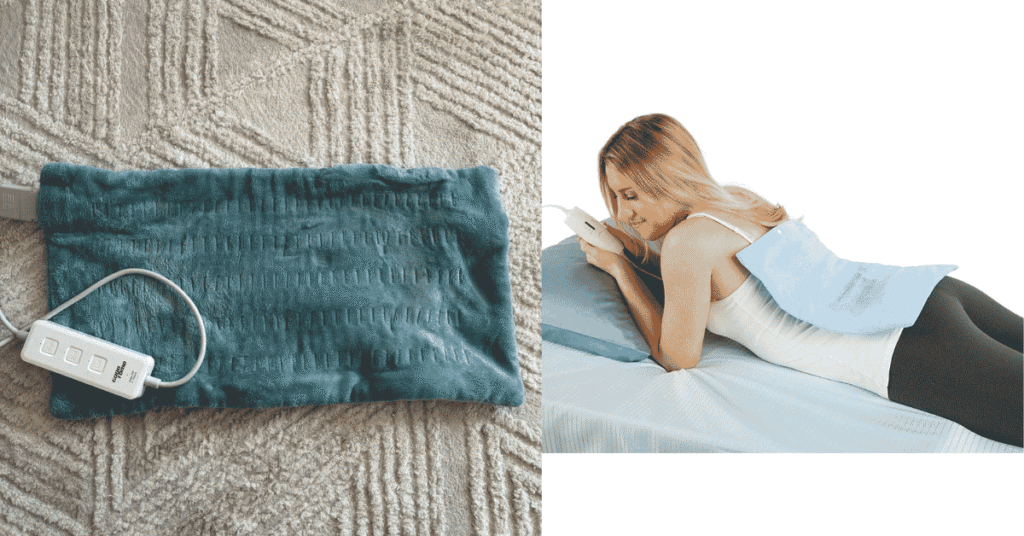
Electric models plug into the mains and usually come with several temperature settings. They give steady warmth and work well at home, no question about that. Look for clear controls, an automatic shut-off, and a cover you can actually remove and wash.
Skip anything with damaged fabric, exposed wiring, or a faulty controller. Not worth the risk.
Microwavable Heat Pads
Microwavable pads are often filled with wheat, seeds, or gel cheap and cheerful, and they do the job well. Portable, easy to use, though the temperature can be a bit less predictable than an electric one.
Stick to the stated heating time exactly — don’t guess, even if you’re in a hurry. Spread the filling out before use so one section doesn’t end up hotter than the rest. Stop using it right away if it’s scorched, leaking, or giving off an unusual smell.
Rechargeable and Wearable Pads
Rechargeable pads suit anyone who wants to keep moving while using heat, which is a real plus if sitting still isn’t your thing. Some wrap around the waist, shoulder, or knee. Check that the fit’s adjustable, and that the warmth spreads evenly rather than pooling in one spot.
A wearable heating pad should feel secure, but not so tight it restricts movement or circulation. There’s a real difference between the two, and it’s worth getting right.
How to Use a Heating Pad Safely
Start on the lowest comfortable setting always. Put a cover or towel between the pad and bare skin, unless the manufacturer specifically says its cover is safe for direct use.
Check your skin regularly for unusual redness, blotching, or irritation don’t skip this bit. For most minor aches, somewhere around 10 to 20 minutes is far more sensible than leaving it on for ages. NHS patient guidance generally recommends gentle warmth, a protective layer, and regular skin checks throughout.
Don’t fall asleep with an electric heating pad switched on that’s an easy mistake, and one with real consequences. Don’t fold it, crush it, or sit heavily on it either, since that can damage the internal heating elements. And keep drinks and other liquids well away from electric models.
Stop using the pad immediately if your skin becomes painful, blistered, or numb. No exceptions there.
Who Should Avoid or Limit Heat?
Talk to a pharmacist, GP, or another healthcare professional before using a heating pad if you have reduced sensation, numbness, poor circulation, fragile skin, an open wound, or any condition that makes it hard to judge temperature accurately.
These issues raise the risk of burns, mainly because you might not even realise the pad’s gotten too hot until damage is already done that’s the tricky part with reduced sensation especially.
People with diabetes should be especially careful where nerve damage affects the feet or legs — that combination needs extra caution. Never place direct heat over a medicated skin patch, either. Heat can change how certain medicines get absorbed, and NHS guidance specifically warns against using a heat pad anywhere near buprenorphine patches.
Children, older adults, and anyone who can’t remove the pad on their own should always be supervised while using one no room for guesswork there.
Choosing the Right Heating Pad
Pick a shape that actually matches the area you’re planning to warm sounds obvious, but people skip this step all the time. A broad rectangular pad tends to suit the lower back well, while a shaped wrap sits more securely around the shoulders or neck.
Useful features worth looking for: adjustable temperature levels, automatic shut-off, simple controls, a washable cover, clear instructions. Size matters too, more than people expect, honestly. A pad that’s too small won’t cover the aching area properly, while an oversized one gets awkward to position safely.
Buy from a reputable UK retailer, and actually check the product safety information that comes with it. Reliable temperature control and solid construction matter far more than any decorative extras those never kept anyone’s back warm.
Looking After Your Heating Pad
Let an electric pad cool down and unplug it before you clean it. Basic, but easy to forget. Only wash the removable cover the way the manufacturer actually tells you to.
Store the pad flat, or loosely rolled if that’s easier whatever fits your drawer, really. Tight folding can damage the internal wiring over time. Microwavable pads need to stay dry, and it’s worth checking them regularly for leaks, scorch marks, or worn seams.
Replace any heating pad that no longer warms evenly, or shows visible damage of any kind. Not worth pushing your luck with it, not with something that touches your skin directly.
FAQs
Can I use a heating pad every day?
Briefly, yes as long as your skin stays normal. Ongoing pain needs a doctor, not more heat.
Is a heating pad better than a hot water bottle?
It’s steadier and adjustable. A hot water bottle’s simpler and cheaper. Both can burn skin if overused.