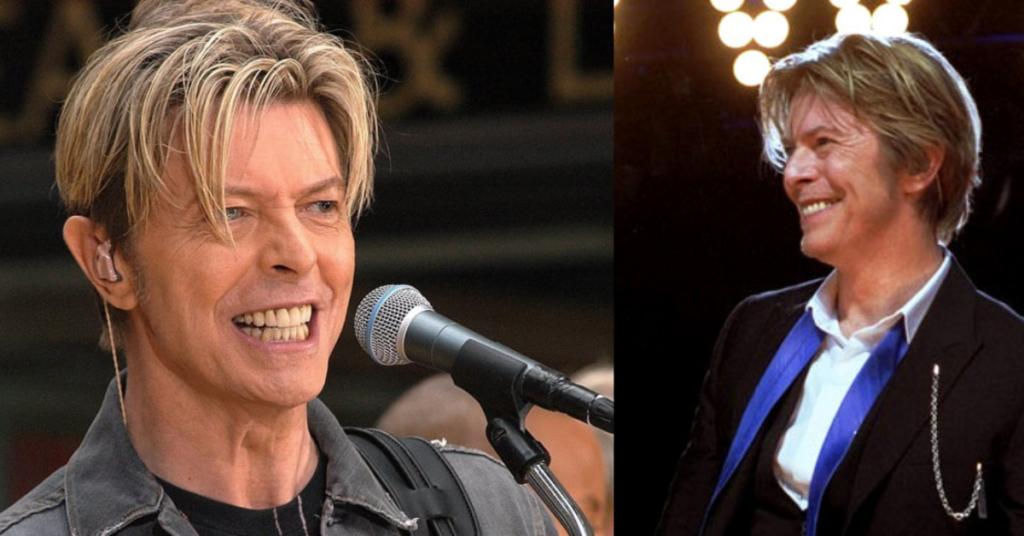
david bowie eyes
Ask almost anyone on the street about David Bowie’s face and they will tell you he had one brown eye and one blue eye. It is one of the most stubborn myths in rock music. He did not have two different coloured irises. Both of his eyes were the same pale grey-blue. The dark look of his left eye came from an enlarged, frozen pupil that let in light and never shrank.
Understanding david bowie eyes means looking at a real school playground fight in south London in the spring of 1962. A heavy punch tore the muscle that controlled his pupil, leaving him with a medical condition called anisocoria. That teenage scrap changed his face forever, created his famous stage look and led to a creative partnership that gave the world Ziggy Stardust.
Why Both of Bowie’s Eyes Were Actually Blue
The belief that Bowie had heterochromia is completely false. Heterochromia is a genetic condition where each iris has a different amount of melanin, making one eye green or brown and the other blue. That heterochromia myth bowie biographers spent years correcting misses the real science. With this medical myth debunked david bowie fans can see what was really happening in front of the lens.
In reality, both eyes pale blue in colour looked identical until light hit them. The right eye had a healthy iris muscle that shrank to a tiny pinprick under camera lights or sunshine. The left eye had anisocoria pupil dilation, meaning the pupil was jammed open.
Because the left pupil stayed wide, the dark opening swallowed up the light and covered almost the entire blue ring of the iris. The light absorption dark pupil appearance tricked the human eye. In studio flash photography eye contrast, the left eye looked dark brown or pitch black, while the right eye showed its natural pale blue iris. This created an optical illusion mismatched eye color effect that looked supernatural on magazine covers.
The Schoolyard Scrap Over Carol Goldsmith
The story started in 1962 in Bromley, south-east London. At fifteen years old, the singer was still known to his neighbours and teachers as david robert jones bromley schoolboy. He spent his bromley youth south london years attending Bromley Technical High School, which locals know today as ravens wood school bromley pupils attend.
David and his schoolmate George Underwood were close pals who shared a love of American rock and roll. Trouble started when both boys fell for the same local girl. David and George found themselves caught up in a carol goldsmith school crush that got out of hand. George had secured a date with Carol for a Friday evening. David wanted the date for himself, so he phoned George and told him Carol had called off the meeting because of family plans.
David then met Carol himself and took her out. When George found out the truth on the school bus the next morning, he was livid. He waited for David at the bus stop outside the school gates. An argument broke out immediately, turning into a teenage fistfight over a girl.
George wore a signet ring on his hand. When he threw a punch at David’s face, the ring caught him directly in the left eye socket. The corneal scratch fingernail ring impact tore deep into the eye, causing severe concussion and internal eye bleeding. David fell to the ground clutching his face in agony. Teachers rushed out while an ambulance took him straight to the emergency ward. That single george underwood punch 1962 moment changed the singer’s physical appearance forever.
Inside Farnborough Hospital: The Diagnosis of Anisocoria
David arrived at Farnborough Hospital in Kent with blood pooling inside the anterior chamber of his eye. Specialist doctors admitted him immediately for emergency farnborough hospital eye surgery to relieve pressure and stop internal bleeding. He spent the next four months in and out of wards, enduring a four month hospital treatment 1962 ordeal that kept him away from classes.
Eye surgeons managed to save his eyeball, but the internal mechanics were ruined. The impact caused a left iris sphincter tear, leading directly to sphincter pupillae muscle paralysis.
In a normal human eye, the circular sphincter muscle works like a camera aperture, pulling the pupil shut in daylight to protect the retina. With the muscle torn and paralyzed, David suffered from traumatic mydriasis left eye damage. His pupil could no longer contract.
The lead ophthalmologist diagnosis anisocoria confirmed that the damage was permanent. He would spend the rest of his life with two different sized pupils. The pupil unable to constrict gave him a permanently dilated left pupil that looked huge compared to his right eye. Decades later, medical textbooks cited his case as a classic example of traumatic pupil damage from blunt force trauma.
How the Man Who Punched Bowie Ended Up Painting His Album Covers
In most cases, an injury of this scale would destroy a friendship forever. In this case, it did the exact opposite. Once David came home from hospital, George visited him to offer a heartfelt apology. David knew his own deceit had triggered the punch and accepted George’s apology without hesitation.
Their bond survived and turned into a lifelong friendship george underwood kept until Bowie’s death in January 2016. In 1964, the two teenagers formed a band called The King Bees, playing rhythm and blues across London pubs. George played guitar and sang backing vocals, recording a single under the king bees rhythm and blues banner.
George soon stepped away from music performance to focus on fine art and graphic design. When David signed solo deals in the early 1970s, he asked George to design his album sleeves.
George produced two of the most famous pieces of cover art in music history:
- The painterly, hand-tinted cover image for the hunky dory album cover art release in 1971.
- The artwork and back-cover illustration for the rise and fall of ziggy stardust in 1972.
Instead of holding anger, Bowie often thanked George for the black eye. He said the damaged pupil gave his face an unusual edge that separated him from every other singer in London. George’s fist had accidentally handed Bowie an iconic mismatched gaze rock history would never forget.
Living with One Working Pupil on Stage and in Daily Life
The eye looked striking in photographs, but it caused daily physical frustration for Bowie. The biggest problem was depth perception. With permanent depth perception issues bowie found basic physical tasks awkward. He struggled to judge steps, often miscalculating distances when stepping off tour buses or walking up dark venue staircases.
He also had to manage faulty colour perception brown haze in his left field of vision. When he looked through his left eye alone, colours appeared muted, with a distinct sepia tint that washed out red and green tones.
Live concerts presented another hurdle. Stage lighting eye sensitivity plagued him throughout arena tours. When bright spotlights hit the stage, his wide left pupil took in blinding amounts of light, causing sharp headaches and dizziness.
To manage the glare during the space oddity era bowie started wearing dark sunglasses outdoors and during interviews. In the mid-1970s, during his thin white duke persona tour, he worked directly with lighting designers to use white side-lights that cast shadows across his face rather than shining bright spotlights directly into his pupils.
That Bizarre Night in Oslo When a Lollipop Hit the Damaged Eye
The vulnerability of Bowie’s bad eye became front-page news during a concert in Norway on 18 June 2004. Bowie was performing at the Norwegian wood festival oslo 2004 in front of thousands of fans. The venue was the outdoor frognerbadet oslo concert 2004 arena on a bright summer evening.
Three songs into his set, a girl in the crowd threw a hard candy on a plastic stick toward the stage. In Norway, fans call this candy love on a stick and often throw it as a compliment.
The candy flew straight through the air and struck Bowie directly in his left eye. The plastic stick wedged itself tightly between his eyeball and his eyelid. A lollipop thrown on stage bowie had not seen coming left the singer doubled over in pain. Tour crew ran onto the stage, gathered around him and pulled the sharp plastic stick out of his eye socket.
Bowie was furious. He walked back to the microphone, cursed at the crowd and demanded to know who threw it. Once he realised the cornea was not perforated, his sharp wit took over. He pointed to his face and told the audience lucky you hit the bad one to ease the tension.
A young Norwegian woman later spoke to local newspapers, explaining that someone had bumped her arm while she was dancing, sending the candy flying by accident. Bowie refused to abandon the show. Instead, he told the crowd he would punish them by playing all night. He powered through a massive twenty seven song oslo setlist that ran for nearly two and a half hours, making it one of the longest concerts of his career.
How His Eye Reshaped Pop Culture and Style
Pop fans today search for physical details about stars just as they check Tom Holland height online, but Bowie’s eye became an essential part of his artistic identity. Conversations about david bowie physical appearance always come back to his eyes. What started as an ugly school fight became the ultimate visual trademark rock music fans celebrate.
In 1972, Bowie used the look to build Ziggy Stardust. His ziggy stardust alien gaze made him look like a creature from another planet, fitting the story of a cosmic visitor. Record companies printed close up portraits album sleeves that put his asymmetric gaze front and centre on high street record racks.
In 1973, Brian Duffy photographed Bowie for the cover of Aladdin Sane, painting the aladdin sane lightning bolt makeup across his closed right eye while leaving his wide left eye exposed. In 1976, director Nicolas Roeg cast Bowie in The Man Who Fell to Earth. Playing the character the man who fell to earth thomas jerome newton required almost no special makeup, because his real eyes already looked alien.
Other British performers, including bruce springsteen and mick jagger contemporaries who stuck to traditional rock postures, never had an accidental trademark like this. His paralyzed iris muscle dilation became the centerpiece of his glam rock visual identity, turning a teenage street scrap into rock royalty folklore.
Frequently Asked Questions
Did David Bowie have two different coloured eyes?
No. Both of his irises were pale grey-blue. His left pupil was permanently dilated after an injury, which made that eye absorb light and look dark brown or black in photographs.
What caused David Bowie’s eye condition?
His school friend George Underwood punched him in the eye during a fight over a girl named Carol Goldsmith in 1962. A signet ring on George’s hand tore the pupil muscle in David’s left eye.
What is the medical name for David Bowie’s eye condition?
The condition is anisocoria, which means unequal pupil sizes. It was caused by traumatic mydriasis and paralysis of the sphincter pupillae muscle.
Did the eye injury affect David Bowie’s eyesight?
Yes. Bowie lost normal depth perception, suffered from light sensitivity under stage lights and saw a faint brownish tint through his left eye.
What happened with the lollipop in Oslo in 2004?
During a festival concert in Oslo in June 2004, a fan threw a lollipop on a plastic stick that lodged directly in Bowie’s damaged left eye. Crew members removed the stick on stage before Bowie continued the concert.