A radiator that is hot at the bottom but cold at the top usually has trapped air inside it. Bleeding the radiator lets that air escape so hot water can circulate properly again.
Normally, you would use a radiator key for the job. But if yours has disappeared into the back of a drawer, you may still be able to learn how to bleed a radiator without a key. It depends on the type of bleed valve fitted to your radiator.
Can You Bleed a Radiator Without a Key?
Yes, but not every radiator allows it.
Some modern radiators have a bleed valve with a straight slot across the centre. If yours looks like this, a flat-head screwdriver may work perfectly well.
Older or more traditional UK radiators often have a small square bleed pin instead. That design is intended for a radiator key, sometimes called a radiator bleed key or simply a bleed key. If the square pin is tight, painted over, corroded, or already worn, trying to grip it with pliers can easily damage it.
Check the Bleed Valve First
Look at the top corner of the radiator. The bleed valve is usually a small metal fitting on one side.
You will normally see one of these:
- A square pin in the centre
- A straight screwdriver slot
- A less common manufacturer-specific fitting
If there is a clear screwdriver slot, you have a good chance of bleeding it without a radiator key.
If all you can see is a small square pin, getting the correct rad bleed key is the safer option.
What Does a Radiator Key Look Like?
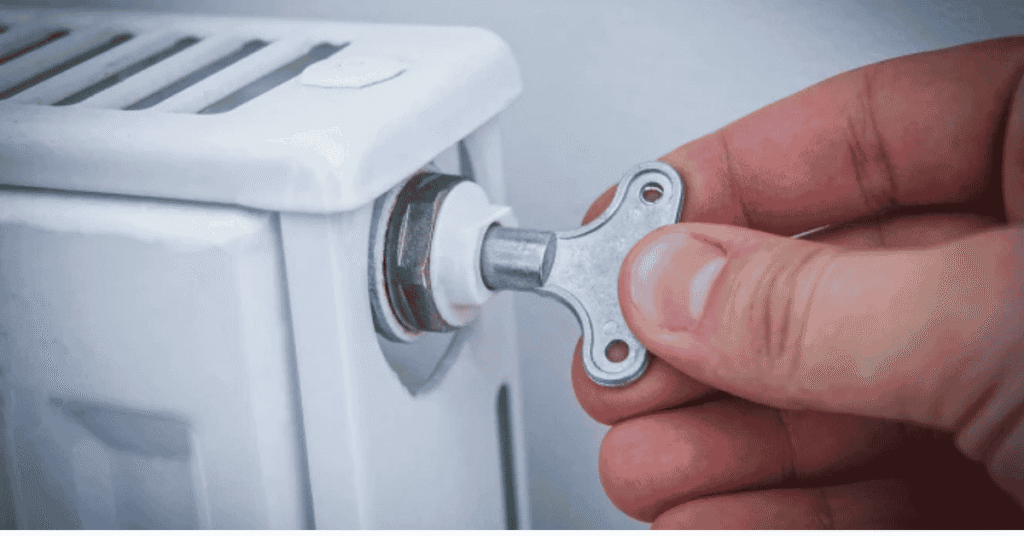
A standard radiator key is a small metal tool with a square opening at one end. That opening fits over the square pin inside the bleed valve. It is often called a radiator key (bleed key) because its only job is to open and close that small valve.
They are usually tiny, which explains why they are so easy to lose.
You may also see them sold under names such as:
- Radiator bleed key
- Rad key
- Rad bleed key
- Radiator valve key
- Radiator bleeding tool
- Heater key
The names vary between shops, but what you need is a tool designed specifically for the bleed valve on your radiator.
Be careful with the term radiator valve key. Some tools sold under that name are intended for other radiator valves rather than the small bleed screw at the top.
How to Bleed a Radiator Without a Bleed Key
If your bleed valve has a screwdriver slot, the job is fairly simple.
1. Turn the Heating Off
Switch off your central heating before touching the bleed valve.
Give the radiator enough time to cool down. You do not want very hot water coming through the valve while your hand is next to it. The radiator should be cool enough to handle comfortably before you continue.
2. Get a Cloth and Small Container
Place an old towel or cloth underneath the bleed valve. Have a cup, bowl, or small container ready as well. Once the trapped air has escaped, a little water will normally follow.
Radiator water can be dirty, so protect painted walls, flooring, carpets, and nearby furniture.
3. Find the Bleed Valve
The bleed valve is normally near the top of the radiator. Look closely at the centre of the valve. If you can see a straight slot, choose a flat-head screwdriver that fits it properly.
Do not use a screwdriver that is too narrow. A poor fit can slip and damage the screw.
4. Open the Valve Slowly
Insert the screwdriver and turn the bleed screw anticlockwise very slowly. You normally need only a small turn. Do not completely unscrew the bleed valve.
Once it opens, you should hear a gentle hissing noise. That is the trapped air leaving the radiator. Keep the cloth or container underneath the valve while the air escapes.
5. Wait Until Water Appears
The hissing should gradually stop. Once a steady little trickle of water starts coming through the valve, the trapped air has been released.
Turn the screw clockwise and close it gently. It only needs to be secure. Overtightening can damage the valve.
6. Wipe the Area Dry
Use your cloth to dry the bleed valve and the surrounding area. Check again after a few minutes. There should be no water seeping from the valve.
If it keeps dripping even after being closed correctly, the valve may need attention rather than more tightening.
How to Bleed a Radiator Without a Radiator Key if It Has a Square Pin
This is where it is better not to improvise too much.
A square bleed pin is designed for a radiator key. You may see advice telling you to use pliers, grips, scissors, or other household tools, but they can round off the small metal pin. Once the pin is damaged, a five-minute job can turn into a leaking valve that needs replacing.
Avoid Forcing a Stiff Valve
Do not force the bleed screw if:
- It will not move easily
- The pin looks rounded
- The valve is rusty
- Thick paint covers the fitting
- Water is already leaking from it
- The radiator is very old
In those situations, buy the proper radiator key rather than trying to make another tool fit.
Radiator Key Sizes: Are They All the Same?
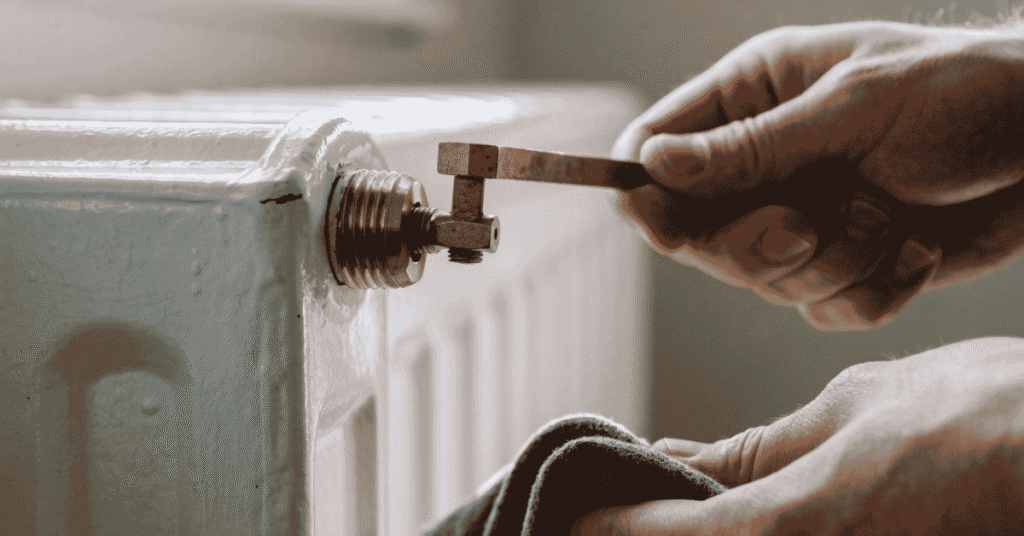
Many traditional UK radiator bleed valves use a familiar small square fitting, which is why basic radiator keys work with a large number of radiators. Even so, radiator key sizes are not completely universal.
Modern designer radiators, towel rails, and some imported models can use different bleed valve designs. Some accept a screwdriver, while others need a specific tool supplied by the manufacturer.
Before buying a replacement, look closely at your valve rather than assuming every radiator key is identical. A multi-size radiator bleeding tool can also be useful if you have several different radiator types around the house.
Where to Buy a Radiator Key in the UK
If your radiator has a square bleed pin, replacing the missing key is usually the simplest solution. Where to buy a radiator key is rarely a problem, as they are inexpensive and widely available from:
- DIY shops
- Plumbing merchants
- Hardware stores
- Home improvement retailers
- Many supermarkets with DIY sections
- Online retailers
It is worth keeping two once you buy them. Leave one near the boiler or heating controls and another with your household tools. That saves another radiator-key hunt next winter.
How Do You Know a Radiator Needs Bleeding?
A cold radiator does not automatically mean trapped air.
The classic sign is a radiator that feels warm or hot at the bottom but stays noticeably cooler at the top. Air rises inside the radiator and creates a pocket that stops hot water reaching the upper section properly.
Other signs can include:
- Gurgling or bubbling noises
- Uneven heat across the radiator
- The top taking much longer to warm up
- One radiator performing worse than the others
A radiator that is cold mainly at the bottom may have a different problem, such as sludge. Bleeding it is unlikely to fix that.
Check Your Boiler Pressure Afterwards
Bleeding a radiator releases air and sometimes a small amount of water from the heating system. On sealed systems, that can cause the boiler pressure to drop.
Once you have finished, check the pressure gauge on your boiler while the system is cool. Many domestic boilers normally sit somewhere around 1 to 1.5 bar when cold, but the correct pressure depends on the boiler. Follow the manufacturer’s instructions rather than topping it up to a random number.
If the pressure has fallen too low, the system may need repressurising before the heating works normally again.
Turn the Heating Back On and Check the Radiator
Once the valve is closed and the boiler pressure looks correct, turn the heating back on. Give the system time to warm up, then carefully feel the radiator from bottom to top. The heat should now be more even.
If the top remains cold, there may still be air trapped inside. If several radiators are not heating properly, the problem could be related to system balancing, low pressure, circulation, sludge, or another heating fault.
Cold weather can also bring damp problems, so it is worth reading our guide on how to stop condensation on bedroom windows overnight.
When Not to Bleed the Radiator Yourself
Bleeding a radiator is normally a straightforward household job, but there are situations where it makes sense to stop. Get professional help if:
- The bleed valve is damaged
- Water keeps leaking after closing it
- The valve is badly corroded
- The boiler repeatedly loses pressure
- Radiators need bleeding very often
- Several radiators stay cold after bleeding
- You cannot identify the correct valve
Repeated air build-up can point to a problem elsewhere in the heating system, so constantly bleeding the same radiator is not a real fix.
FAQs
Can I bleed a radiator with a screwdriver?
Yes, if the bleed valve has a straight slot designed to accept a flat-head screwdriver. Do not try to force a screwdriver into a square bleed pin.
How do I bleed a radiator without a radiator key?
Turn the heating off and let the radiator cool. If the bleed screw is slotted, slowly open it with a correctly sized flat-head screwdriver until the air stops hissing and a little water appears. Then close it gently.
Can I use pliers instead of a radiator bleed key?
It is better not to. Pliers can damage or round off the small square bleed pin, especially if the valve is stiff.
Can you bleed a radiator with a 5p coin?
Only if the valve has a wide, loose slot that the coin fits snugly. It is not recommended, as coins bend and slip easily and can damage the valve. A proper screwdriver is safer.
Can I use an Allen key to bleed a radiator?
Some designer radiators and towel rails have a hexagonal bleed fitting, and an Allen key may fit those. Check your radiator’s manual or the manufacturer’s advice first, and never force an Allen key into a square pin.
Why is my radiator making a gurgling sound?
Gurgling or bubbling usually means air is trapped inside and moving around with the water. Bleeding the radiator often clears it.
Why is the water coming out of my radiator black?
Black water usually points to rust or sludge in the system. If it keeps happening, speak to a heating engineer about a system flush and central heating inhibitor.
Where can I buy a radiator key?
Radiator keys are commonly sold by UK DIY stores, hardware shops, plumbing merchants, home improvement retailers, and online shops.