A new garden fence can provide more privacy, protect plants from the wind and improve the appearance of your home. But if your existing fence is still in good condition, a fresh coat of paint or a few climbing plants might be all you need.
From traditional wooden panels to modern slatted fencing, here are some garden fence ideas for different garden sizes, budgets and British properties.
Modern Garden Fence Ideas
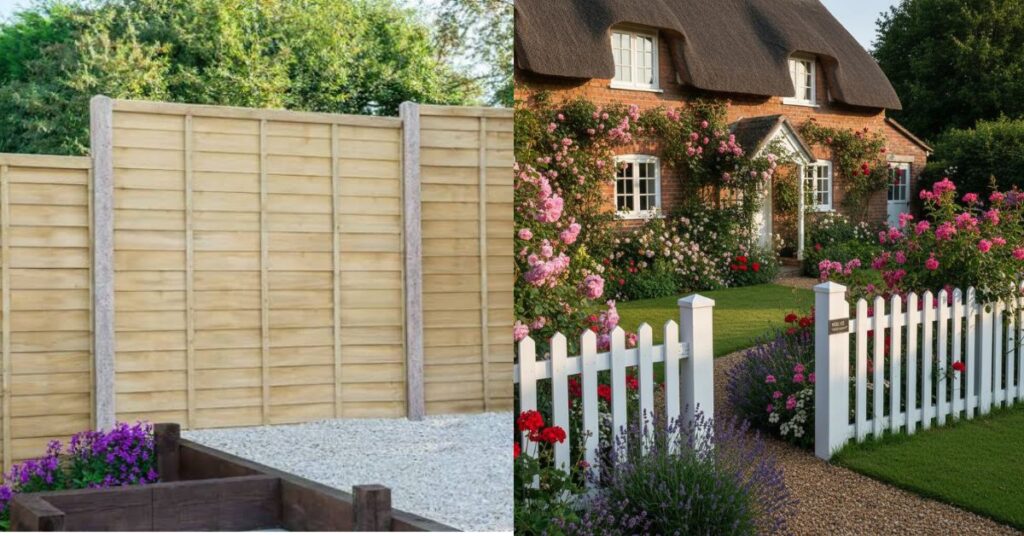
Horizontal wooden slats work well alongside modern patios, decking and raised flower beds. Cedar has a warm natural colour, while treated softwood offers a cheaper alternative.
Composite fencing is useful if you’re tired of repainting wooden panels every few years. It comes in several colours, including charcoal, grey and natural brown, and usually requires little more than occasional cleaning.
Decorative metal panels can also break up a long stretch of plain fencing. Try placing one behind a garden bench or outdoor dining area rather than replacing the entire boundary.
Front Garden Fence Ideas
A front garden fence should provide a clear boundary without hiding the house or blocking too much daylight.
White picket fencing looks at home outside cottages, particularly alongside roses and lavender. Black metal railings tend to suit Victorian and Edwardian properties with brick walls and tiled entrance paths.
For smaller front gardens, a low wooden fence with a matching gate is often enough. Evergreen shrubs planted behind it can provide additional privacy.
Remember to check the permitted fence height if your property borders a road.
Fence Ideas for Small Gardens
Tall, solid fencing can make a narrow garden feel enclosed. Open trellis panels and horizontal timber slats allow more light through, while climbing plants help soften the boundary.
Dark green or charcoal fencing can blend in behind leafy plants. Cream and pale grey are better options for courtyards that receive little sunlight.
If space is limited, consider combining fencing with practical outdoor furniture. A wooden bench placed against a fence provides somewhere to sit without taking up the middle of the garden.
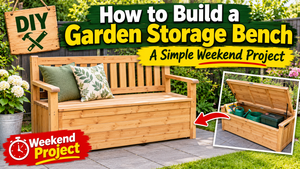
Our guide on how to build a garden storage bench explains how to make your own seating with storage for cushions, gardening tools and other outdoor items.
A small garden fence made from willow or short timber panels can also separate flower beds from the lawn.
Garden Fence Ideas for Privacy
An overlooked garden can make sitting outside feel uncomfortable, particularly when neighbouring windows face your patio.
Closeboard fencing uses overlapping feather edge boards to create a solid boundary with few gaps. It’s commonly used in British back gardens where privacy is important.
If your garden is exposed to strong winds, hit-and-miss fencing allows some air to pass between the boards while reducing direct views.
You don’t necessarily need to screen the whole garden. A freestanding wooden screen beside your seating area may provide enough privacy without the cost of replacing every fence panel.
Climbing roses, clematis and honeysuckle can also help cover bare fencing.
Cheap Garden Fence Ideas
Before buying new fencing, check whether your existing posts and panels are worth keeping. Replacing a few damaged boards and repainting the fence could save you hundreds of pounds on a larger project.
Traditional overlap panels are among the more affordable wooden fencing options. Bamboo or reed screening can also hide an unattractive boundary, although natural screening will eventually need replacing.
Here’s how common garden fencing materials compare:
| Fence type | Relative cost | Maintenance |
|---|---|---|
| Overlap timber panels | Low | Regular treatment |
| Bamboo screening | Low | Periodic replacement |
| Closeboard fencing | Medium | Regular treatment |
| Horizontal wooden slats | Medium to high | Depends on timber |
| Composite fencing | High | Occasional cleaning |
| Metal railings | Medium to high | Relatively low |
When getting quotes, check whether the price includes fence posts, gravel boards, installation and removal of the old fencing.
Garden Fence Paint Colours
Brown isn’t the only colour that works in a British garden. The right garden fence paint can brighten a shaded corner or make flowers stand out.
| Fence colour | Best suited to |
|---|---|
| Sage green | Cottage gardens |
| Black | Gardens with leafy plants |
| Charcoal grey | Modern patios |
| Cream | Small, shaded gardens |
| Dark blue | White flowering borders |
| Natural oak | Traditional gardens |
Test the colour on a small section before painting the entire fence. Paint often looks different outdoors than it does on the tin.
Remove dirt and algae, repair damaged boards and allow the timber to dry. Always choose paint or stain intended for exterior wood.
Garden Fence Lights and Decorations
Solar garden fence lights are useful beside pathways, patios and seating areas. They don’t need mains wiring, although shaded fences may not receive enough sunlight to charge them properly.
Warm white festoon lights can also provide softer lighting for evenings outside. Choose outdoor-rated fittings and avoid shining bright lights into neighbouring windows.
For inexpensive garden fence decorations, try hanging flowerpots, herbs or trailing strawberries. Attach heavier containers to sturdy posts rather than thin wooden panels.
A short slatted screen can hide wheelie bins without restricting access. Leave enough room for ventilation and cleaning, particularly during summer when maggots in wheelie bins can become a problem.
How High Can a Garden Fence Be Without Planning Permission in the UK?
In England and Wales, a new garden fence can generally be up to two metres high without planning permission, provided other permitted development conditions are met.
A lower limit of one metre normally applies alongside roads used by vehicles and their adjoining pavements.
| Country | General height limit | Lower height restrictions |
|---|---|---|
| England | 2 metres | 1 metre beside qualifying roads or pavements |
| Wales | 2 metres | 1 metre beside qualifying roads or pavements |
| Scotland | 2 metres | 1 metre facing a road or extending past the front or side of a house |
| Northern Ireland | 2 metres | 1 metre beside roads used or designed for vehicles |
Different restrictions may apply to listed buildings, conservation areas and properties with restricted permitted development rights.
Adding trellis to the top of a fence can also take it beyond the permitted height.
Before starting work, check the official planning guidance for your location:
- England – Planning Portal
- Wales – Welsh Government
- Scotland – mygov.scot
- Northern Ireland – Planning legislation
Daniel ShenSmith on Garden Fence Law
Daniel ShenSmith, better known as BlackBeltBarrister, has discussed garden fence planning permission in his online legal videos.
Fence ownership and planning permission are separate matters. Even if a fence meets the permitted height requirements, you don’t automatically have permission to alter a fence belonging to your neighbour.
In England and Wales, there’s no universal rule stating that the fence on your left or right belongs to you.
Check your property deeds and the HM Land Registry guidance on property boundaries before painting, replacing or removing a boundary fence.
Looking After Garden Fencing in British Weather
Rain, frost and strong winds can gradually damage wooden fencing. Concrete gravel boards help keep timber panels away from damp soil, reducing the risk of rot.
Check for loose boards and damaged posts after winter storms. Remove wet leaves gathering along the bottom of the fence and follow the manufacturer’s recommendations for timber treatment.
If you live in a rented property, ask your landlord before painting or replacing the fencing.
Frequently Asked Questions
What is the cheapest way to fence a garden?
Traditional overlap wooden panels are generally affordable. Repairing an existing fence or adding reed screening may cost even less.
What colour fence makes a small garden look bigger?
Black, charcoal and dark green can make boundaries less noticeable behind plants. Pale cream can brighten gardens with limited sunlight.
What type of garden fence is best for privacy?
Closeboard fencing, solid composite panels and closely spaced wooden slats provide good privacy.
Can I paint my neighbour’s fence on my side?
You should obtain your neighbour’s permission if they own the fence, even if the side you want to paint faces your garden.
What fencing is best for windy gardens?
Hit-and-miss fencing allows some wind to pass through. Strong fence posts and suitable foundations are also important.
Can I put trellis on top of a two-metre fence?
Adding trellis may exceed the permitted height. Check with your local planning authority before fitting it.
How can I decorate my garden fence cheaply?
Exterior paint, climbing plants, hanging pots and solar fence lights are affordable ways to improve an existing fence.
Is composite fencing better than wood?
Composite fencing requires less regular maintenance, but timber is generally cheaper to buy and easier to repair or repaint.
How high can a front garden fence be in the UK?
A one-metre limit generally applies beside roads used by vehicles, subject to the planning rules for your property and location.