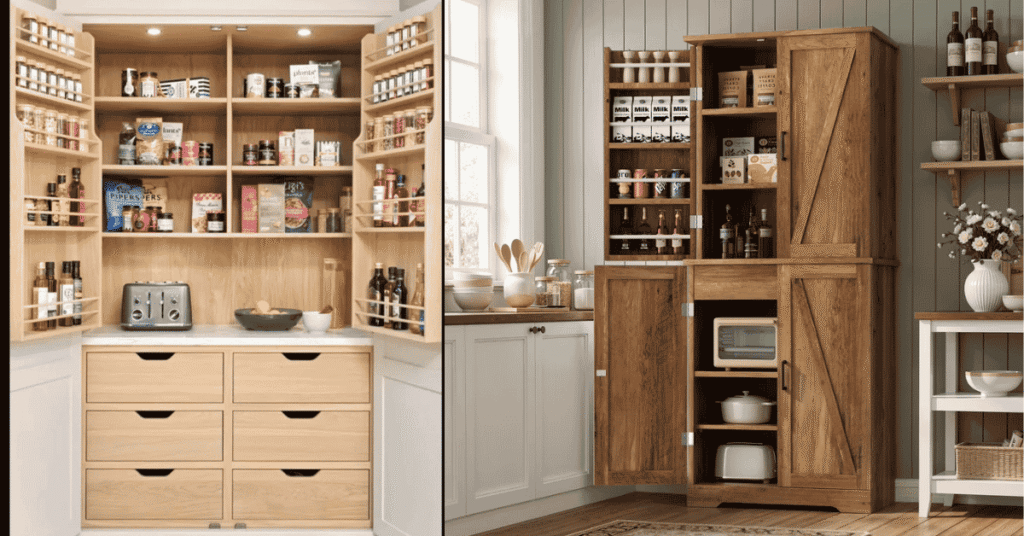
Small kitchens end up feeling cluttered for one simple reason. Food gets scattered across several cabinets, and deep shelves swallow up whatever’s already sitting there. A well-planned tall pantry unit pulls all of that into one place, clears the worktops, and makes cooking genuinely less of a chore. Keep each item visible and within reach that’s really the whole point. Done properly, a larder cupboard can change how a small kitchen works day to day. Not exaggerating.
Measure Before Choosing a Kitchen Larder Cupboard
Start with the basics: full height, width, depth of the space you’ve got. Then look at what’s nearby doors, drawers, radiators, sockets, appliance openings. A cabinet can fit neatly between two walls and still block the fridge, or narrow the main walkway down to nothing.
For a lot of compact UK kitchens, going slim and tall actually beats going wide. A unit around 30 to 40 centimetres wide will happily hold tins, packets, breakfast food, small appliances more than you’d expect from something that narrow. It might slot in beside the fridge. Tuck into the end of a cabinet run. Fill that one awkward corner nobody else wants.
People forget this bit: check tight stairs, narrow doors, hallway corners, before ordering a solid freestanding unit. Getting it through the front door matters just as much as where it ends up. And honestly, getting the kitchen larder cupboard measurements sorted from day one saves a lot of grief later.
Use Vertical Space Properly
Height gives you storage without eating into floor space. That’s exactly what a small kitchen needs. Keep everyday ingredients between waist and eye level, where you’ll actually reach for them without thinking. Heavy jars, bottles, appliances keep those lower down. Safer to lift, less risky if something slips out of your hands.
Save the highest shelves for spare baking supplies, serving dishes, anything you only need a few times a year.
Adjustable shelves earn their keep here. Fixed spacing wastes space in ways you won’t notice until it’s too late. A short tin doesn’t need the clearance a cereal box does, or an oil bottle, or a bulky appliance. A varied layout holds more, almost every time and it stays easier to actually use. Get this bit right and a larder cupboard stops being a junk drawer and starts being proper storage.
Add Pull-Out Storage to a Kitchen Larder Cupboard
Deep shelves hide food at the back. That’s how you end up with three half-used bags of the same pasta, bought weeks apart because nobody could see the first two. Pull-out baskets, internal drawers, sliding shelves they all solve this by bringing everything forward, into view.
Wire baskets suit bottles and larger packets, since you can see straight through to what’s there. Solid drawers work better for smaller items that might slip through gaps otherwise. Worth checking the weight limit too, before loading one section up with tins or heavy glass jars.
A full pull-out tower needs clear floor space in front it won’t open properly otherwise. In a narrow galley kitchen, smaller internal drawers behind a hinged door are often the more sensible choice for a larder cupboard this size.
Make Better Use of the Door
The door itself gets overlooked constantly, but it’s some of the most useful space going. Shallow racks on the inside can hold herbs, tea bags, stock cubes, sauces, baking packets small things that would otherwise vanish behind the bigger boxes.
Measure the internal clearance first, though. Door racks need to clear the shelves when it closes, and the hinges have to carry the extra weight without sagging over time. Keep the lighter stuff on the door. Bottles and heavy jars stay inside the main unit, where they belong.
Organise a Kitchen Larder Cupboard Around Daily Habits
Group food by how you actually use it not by some tidy category that looks good on paper. Breakfast items together. Baking ingredients in their own section. Sauces near the pasta, rice, and other meal staples. Whatever gets reached for most often goes at the front, full stop.
Transparent containers can tidy up loose, opened packets. But there’s no real need to decant everything into matching jars that’s more effort than most people have time for. Original packaging usually carries cooking directions, allergy information, expiry dates worth keeping around.
A basket set aside just for opened food cuts down on waste too. Half-used pasta, flour, snacks put them there first, so they get finished before anyone opens something fresh.
Consider a Freestanding Kitchen Larder Cupboard
You don’t need a full fitted renovation to get this right. Freestanding models add storage without touching your existing cabinets a solid option if you’re renting, or working with a tighter budget than you’d like.
Painted timber suits traditional kitchens. Plain wood and flat-fronted styles fit more modern spaces. Check whether the skirting board stops the unit sitting flush against the wall happens more often than people expect. And any tall freestanding piece really should be secured to the wall, to stop it tipping. Fitted or freestanding, every larder cupboard needs proper measuring first, before it’s carried anywhere near the door.
Store Awkward Items More Efficiently
Internal drawers handle the odds and ends nicely food clips, reusable bags, spice packets, baking bits and pieces. Ventilated baskets suit potatoes and onions well. A strong lower shelf can carry a slow cooker, mixer, or air fryer without any fuss.
Shelf risers create a second level for tins and jars, so the back row doesn’t disappear entirely from view. Turntables help with sauces stuck in corners though on a narrow shelf, they sometimes waste more space than they save.
A battery-powered motion light is a small thing that makes a real difference. Brightens up a dark cupboard, stops food getting forgotten at the back for months on end. These small touches add up a larder cupboard feels far more organised without needing a full redesign.
Keep a Kitchen Larder Cupboard Easy to Maintain
Don’t fill every last centimetre. A bit of spare room makes the weekly shop easier to put away and stops packets getting crushed in the process.
Move older items toward the front. Check dates every few weeks takes two minutes, honestly. Wipe up spills quickly, especially around flour, sugar, anything sticky. Buy organisers only when they solve an actual problem you’re having. Too many baskets and labels can quietly eat into the storage they’re supposed to protect.
A quick tidy before the weekly shop is usually enough to spot duplicates and clear room for whatever’s coming in next.
Final Thoughts
The best small-kitchen storage is simple, visible, and easy to keep on top of nothing more complicated than that. A well-positioned larder cupboard cuts worktop clutter, keeps ingredients together, and makes an awkward room feel genuinely more practical to cook in. Measure carefully. Go for flexible shelving. Organise the contents around how your household actually eats, not how it looks in a magazine photo.
FAQs
How Deep Should a Larder Cupboard Be?
Most fitted units run around 50 to 60 centimetres deep, though a shallower model can suit a narrow room better.
Can This Type of Cupboard Fit in a Very Small Kitchen?
Yes. Slim designs sit beside a fridge or at the end of a cabinet run just fine, as long as the door clearance and walkway get measured first.