wembley stadium
If you’ve ever bought tickets for Wembley and thought, “Why does every block number look the same?”you’re not alone. Wembley can be brilliant… or a bit of a let-down, depending on where you sit and what you’re going to see. Whether it’s a big England match, an FA Cup final, or a stadium-sized concert, the seating plan at Wembley is all about angles, height, and how far you’ll be from the action.
Let’s break it down like a local would: what the tiers actually feel like, which sections tend to be good value, where the “bargain” seats can backfire, and how concert layouts change everything.
Understanding the Wembley Stadium Layout
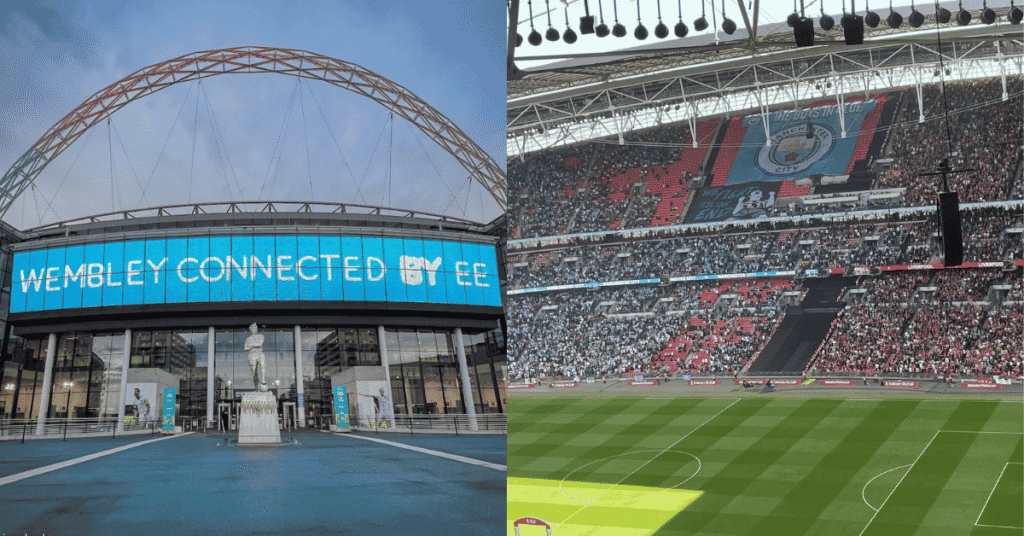
Wembley is basically a giant bowl with multiple tiers wrapping around the pitch/stage area. On most ticketing maps, you’ll see blocks grouped into levels rather than one simple “front/back” system.
The main seating levels you’ll see
- Lower Tier: Closest to the action. Great atmosphere. Views can be amazing… unless you’re very low and very flat.
- Middle Tier : Often pricier, usually more comfortable, and tends to give a clean, balanced view.
- Upper Tier: Higher up, but surprisingly good for seeing the whole shape of the game or stage visual if you don’t mind the height.
If you’re looking at a seating plan at Wembley online Take those seriously at Wembley, small differences in angle can massively change what you can see.
How to Read the Seating Plan at Wembley Like a Pro
Ticket maps can be confusing because Wembley changes layout depending on the event.
For football
You want a seat that gives you:
- Enough height to see the full pitch
- A central-ish angle so you’re not constantly craning your neck
- A view of both ends (especially if you want to follow tactics, not just vibes)
For concerts
Concert layouts can shift:
- End-stage (stage at one end): Side seats can be excellent value, but some angles are awkward.
- In-the-round (rare at Wembley): More even views, fewer “bad” sides, but audio can vary by production.
A quick reality check many locals use is searching “view from my seat wembley” before buying. It’s one of the easiest ways to get a feel for what a block actually looks like on the day, not what the diagram suggests.
Best Views at Wembley
Best all-round view for football: mid-height, near halfway
If you want the classic “proper match view,” aim for:
- Lower Tier but not too low (mid rows are often better than the front few)
- Or Middle Tier around the halfway line
You’ll see the shape of the game, the build-up play, and you won’t lose the ball behind players every five seconds.
Best atmosphere: lower tier behind the goal
If you’re there for noise, chants, and that electric feel:
- Behind-the-goal sections in the Lower Tier usually bring it
- Great for cup finals and big England games
Just remember: you won’t get the same tactical view as a halfway-line seat. It’s more emotional than analytical and that’s the point.
Best for concerts: front-side sections (not dead-on side)
For big end-stage shows, the sweet spot is often:
- Lower Tier side but slightly angled toward the stage (not directly side-on)
- Lower Tier or Middle Tier if you want a clear view of the full production
Dead-on side seats can mean you’re watching the performer’s shoulder blades all night or relying on the screens.
Cheapest Seats at Wembley
Everyone wants a bargain, but Wembley bargains come with trade-offs. The cheapest tickets are often in:
- Upper Tier corners
- Upper Tier behind-goal
- Concert “rear” or “behind stage” areas (if offered)
When cheap seats are still a win
- Football: Upper Tier central seats can be great value because you see everything clearly.
- Concerts: If you care more about the atmosphere and screens than being close, Upper Tier central can still feel like a proper event.
When cheap seats can be disappointing
- Very high and very cornered: you may feel far from the action and slightly disconnected.
- “Behind stage” concert tickets: sometimes you’ll see very little of the stage itself, and screens can be limited depending on the setup.
If you’re trying to keep costs down, prioritize central position over “closer.” A central Upper Tier seat often beats a super-low seat stuck at a sharp angle.
Sections to Avoid at Wembley
Not every “avoid” is a disaster some are fine for the right person. But these are the common pain points.
1) Very low Lower Tier rows
Front few rows can feel exciting, but:
- Your view can be blocked by people standing, flags, or security lines
- For concerts, the stage height can mean you’re looking up with your neck angled all night
If you’re on the Lower Tier, mid rows are often the sweet spot.
2) Extreme side seats for end-stage concerts
Side seats can be good value, but go too far and you risk:
- Limited view of the main performance area
- Sound that feels “off” compared to more central areas
- Watching screens more than the stage
3) “Restricted view” tickets
Sometimes it’s a pillar, an overhang, a camera platform, or production equipment. If your ticket says restricted, assume it means you’ll miss something important.
4) Upper Tier corners for people who hate heights
Wembley is steep up top. If heights make you uneasy, corners can feel extra intense because the angle is more dramatic.
Concert vs Football Capacity: Why Ticket Maps Look Different
People ask about numbers all the time, and it’s worth knowing why they vary. Wembley’s standard stadium capacity is famously high, but concerts are a different beast.
Capacity of Wembley Stadium for a concert
The capacity of Wembley Stadium for a concert changes depending on:
- Stage size and position
- How much of the pitch becomes standing space
- Safety buffers, camera lanes, sound towers, and production zones
So if you see different figures across different shows, that’s normal. One artist’s setup can add a huge standing area; another might block off big chunks behind the stage.
Wembley Arena vs Wembley Stadium
Wembley has more than one major venue, and people confuse them constantly:
- Wembley Stadium = the massive outdoor stadium (football, huge concerts)
- The SSE Arena, Wembley = indoor arena nearby
You’ll see searches like “wembley sse capacity” because fans want to compare venues. The wembley arena capacity is much smaller than the stadium, and it’s built for indoor shows, quicker entry, and a more intimate feel.
Does Wembley Have a Roof? What It Means for Your Seat
A very common question is: does wembley have a roof?
Yes Wembley has a roof structure, but it’s not like a fully enclosed dome that guarantees you’ll stay dry. The roof design covers many seats, but it doesn’t completely seal the stadium, and weather can still blow in.
Practical seat advice for UK weather
- If rain is likely, seats higher up under the roofline often feel more sheltered than very low rows.
- Wind can whip around the bowl, especially in exposed areas.
- For concerts, ponchos beat umbrellas (umbrellas can be a nuisance to everyone behind you).
Quick Logistics: Wembley Stadium Postcode & Getting Your Bearings
If you’re plugging it into your phone, the wembley stadium postcode is HA9 0WS. That’s the one most people use for navigation, ride-hailing drop-off planning, and figuring out nearby parking options.
If you’re coming by public transport, you’ll usually choose between nearby stations depending on your route. On event days, it’s busy, queues are normal, and stewards funnel crowds in specific directions so arriving a bit earlier can make your whole experience calmer.
Picking Seats Based on “Your Type” (Fast Recommendations)
If you want the best view, full stop
Choose middle height and central angle. For football, that’s often around halfway line. For concerts, that’s usually central facing the stage, not too low.
If you want value for money
Go Upper Tier central rather than Lower Tier corner. You’ll feel far, but you’ll see everything clearly.
If you’re short
Avoid the very front of the Lower Tier for concerts. Mid rows give a better sightline.
If you’re going with kids
Aim for:
- A seat where you can sit without the entire row standing in front of you
- A more central block so they can follow what’s happening without getting frustrated
FAQs
1) What’s the best way to check a seat view before buying?
Search “view from my seat wembley” and compare the block and row real photos help more than any diagram.
2) What is the Wembley Stadium postcode for sat nav?
The wembley stadium postcode is HA9 0WS.
3) Does Wembley have a roof and will I stay dry?
People ask does wembley have a roof yes, but it’s not fully enclosed. Many seats are covered, yet wind and rain can still blow in.
4) What is the capacity of Wembley Stadium for a concert?
The capacity of Wembley Stadium for a concert varies by stage layout and standing areas, so it can change from show to show.
5) What’s the difference between Wembley Stadium and the arena nearby?
Wembley Stadium is the huge outdoor venue. The indoor venue is The SSE Arena; people often look up wembley sse capacity or wembley arena capacity when comparing which venue a show is at.