Birds of Prey UK
If you’ve ever watched a buzzard circling lazily over a field, or seen a kestrel hanging in the air above a motorway verge, you’ll know there’s something instantly gripping about birds of prey UK. They’re powerful, perfectly adapted hunters, yet still surprisingly easy to see if you know where and when to look.
This guide is designed to help you do exactly that. We’ll walk through the best places to find UK birds of prey, the ideal times of year to visit, and some simple tips for identification birds of prey UK so you can tell your kites from your buzzards and your falcons from your hawks. We’ll also look at specialist centres such as Gauntlet Birds of Prey and the Cornish Birds of Prey sanctuary for close-up encounters, family days out and photography.
Whether you’re a keen birder building a life list, a photographer chasing that perfect flight shot, or a family just wanting a memorable day in nature, this British birds of prey guide will give you a solid starting point.
Meet the British Birds of Prey
There are more species of UK birds of prey than many people realise. As a rough overview, they fall into a few main groups:
- Buzzards and hawks – broad-winged woodland and farmland hunters
- Falcons – fast, sleek aerial specialists
- Kites and harriers – elegant, long-winged raptors that glide and quarter low ground
Some of the most frequently seen British birds of prey include:
- Common buzzard – now widespread, often seen soaring over fields or perched on fence posts
- Red kite – easily recognised by its forked tail and graceful, tilting flight
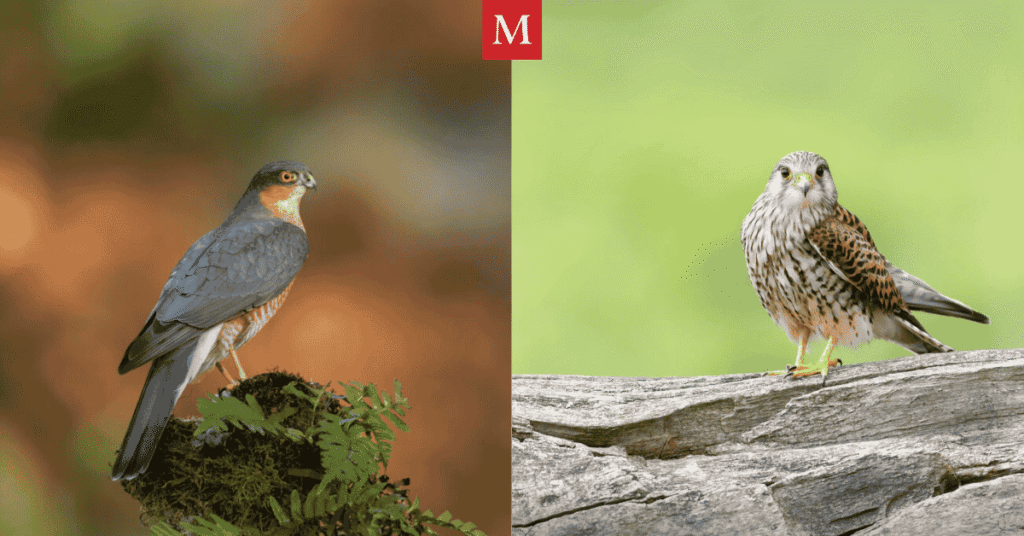
- Kestrel – classic small birds of prey UK watchers know well for its distinctive hovering
- Sparrowhawk – a compact hunter of gardens and woodland edges, often just a blur of wings
- Barn owl and tawny owl – our best-known owls, usually seen at dusk, dawn or after dark
Once you’ve got a feel for these “core” species, adding more unusual raptors becomes much easier.
Identification: Birds of Prey UK Made Simpler
Getting identification birds of prey UK right can be one of the most rewarding parts of birdwatching, but it can also be frustrating if everything seems to look like a brown blob in the distance.
1. What shape is it?
- Broad wings, fairly stocky body, rounded tail – likely a buzzard or hawk
- Long, pointed wings, slim body – you’re probably looking at a falcon
- Long wings and a long, often forked tail – a kite is a strong candidate
- Rounded wings and head, “flat” face – think owl
2. How is it flying?
- Soaring in circles on rising air – classic buzzard or red kite behaviour
- Hovering on the spot above grass or roadside verges – very likely a kestrel
- Low and fast, weaving between trees or gardens – sparrowhawk on the hunt
- Low over reeds or rough ground, with a tilting, side-to-side glide – often a harrier
3. Where are you?
Habitat is your best friend:
- Cliffs and coasts: peregrine falcons, sometimes kestrels and ravens
- Upland moors: hen harrier, merlin
- Farmland and mixed countryside: buzzards, red kites, kestrels, sparrowhawks
- Towns and cities: peregrines and increasingly some kestrels
Combine shape, flight style and habitat and you’ll find identification birds of prey UK becomes much more manageable.
Where to See Birds of Prey in the UK
You can see birds of prey UK almost anywhere, but some locations give you a much better chance of success.
Farmland and Countryside
Across much of lowland Britain, your main raptor companions are:
- Buzzards, circling high or perched on roadside posts
- Kestrels, hovering over rough grass and field edges
- Red kites, gliding effortlessly along hills and valleys
Quiet lanes, public footpaths and bridleways are ideal.
Coasts and Cliffs
Sea cliffs and rocky headlands are some of the best places to watch British birds of prey in dramatic settings. Look for:
- Peregrine falcons patrolling cliffs and occasionally stooping at incredible speeds
- Kestrels hovering along clifftop paths
Coastal migration hotspots in spring and autumn can also bring passing harriers, ospreys and other raptors.
Uplands, Moors and Forests
If you’re willing to head into hill country and moorland, you might encounter:
- Merlins, small falcons that dart low over open ground
- Goshawks, in large conifer forests and mature woodlands
These species can be elusive, but the landscapes themselves are worth the trip, even before you add UK birds of prey into the mix.
Birds of Prey Centres: Gauntlet & Cornish Birds of Prey
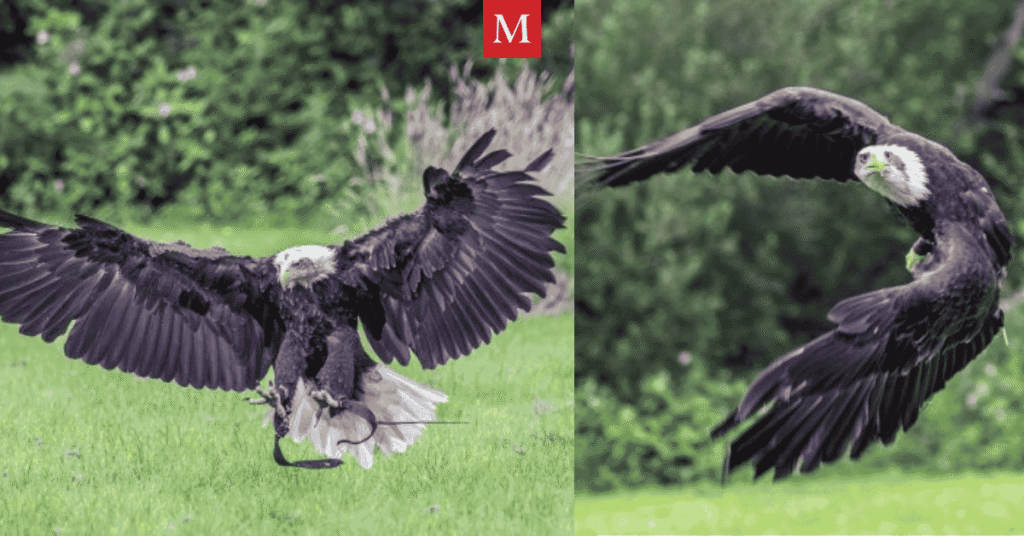
Two names you specifically want to target are Gauntlet Birds of Prey and Cornish Birds of Prey.
Gauntlet Birds of Prey
Gauntlet Birds of Prey (often called Gauntlet Birds of Prey – Eagle & Vulture Park) is based in Cheshire and is known for its large and varied collection. A visit here typically includes:
- Flying displays with hawks, falcons, owls, eagles and vultures
- Talks about behaviour, training and conservation
- The chance to see rare or exotic species alongside familiar British birds of prey
For families, it offers an engaging, interactive way to learn about raptors. For photographers, it’s a chance to capture sharp, close-up shots that are hard to achieve in the wild.
Cornish Birds of Prey
The Cornish Birds of Prey centre, in Cornwall, has a strong focus on rescue and rehabilitation. . Visitors can expect:
- Daily flying displays with owls, hawks and falcons
- Insight into the stories behind individual birds
- A relaxed, rural setting that suits full-day visits
Cornish birds of prey when planning a trip to Cornwall will find this sanctuary a rewarding and meaningful place to spend time, especially if you care about animal welfare.
Best Times of Year to Visit for Birds of Prey
You can see birds of prey UK at any time of year, but your experience will change with the seasons.
Spring (March–May)
- Courtship and display flights, including “sky dancing” and elaborate aerial acrobatics
- Birds setting up territories and returning to breeding sites
- Generally good light and comfortable temperatures for long walks
This is one of the best times for watching raptors behave naturally and energetically.
Summer (June–August)
- Young birds fledging and learning to fly and hunt
- Great time for watching small birds of prey UK like kestrels and hobbies hawking insects
Expect more people at popular viewpoints and reserves, but also the widest choice of locations and conditions.
Autumn (September–November)
- Migrating raptors passing along coasts and ridges
- Young birds dispersing, sometimes appearing in new areas
- Softer, lower-angle light that’s perfect for photography
Coastal sites and estuaries really come into their own at this time of year.
Winter (December–February)
- Hen harriers, short-eared owls and other winter specialities at roost sites
- Buzzards, kites and kestrels more obvious against bare trees and hedges
FAQs: Birds of Prey UK
1. How many British birds of prey are there?
There are around 15–16 regularly occurring British birds of prey, depending on how you count residents, breeders and regular visitors. These include buzzards, kites, falcons, harriers, eagles and several owl species.
2. What are the most common birds of prey in the UK?
The most commonly seen birds of prey UK are buzzards, red kites, kestrels and sparrowhawks. In some areas, it’s rare to drive far along a motorway or A-road without seeing at least one of these.
3. What counts as small birds of prey in the UK?
When people talk about small birds of prey UK, they usually mean kestrel, sparrowhawk, hobby and merlin.
4. Are birds of prey centres like Gauntlet and Cornish Birds of Prey ethical?
Both Gauntlet Birds of Prey and the Cornish Birds of Prey sanctuary put a strong emphasis on welfare, education and, in the Cornish centre’s case, rescue and rehabilitation. As with any animal attraction, it’s worth reading their information and seeing how they talk about enrichment, space and care.
5. How can I improve my identification birds of prey UK skills?
The best approach is a mix of field time and reference material. Spend time watching birds from one or two regular spots, visit centres like Gauntlet or Cornish Birds of Prey for close-up views, and use field guides and apps to back up what you’re seeing. Over time, recognising UK birds of prey by shape, flight and behaviour will start to feel natural.