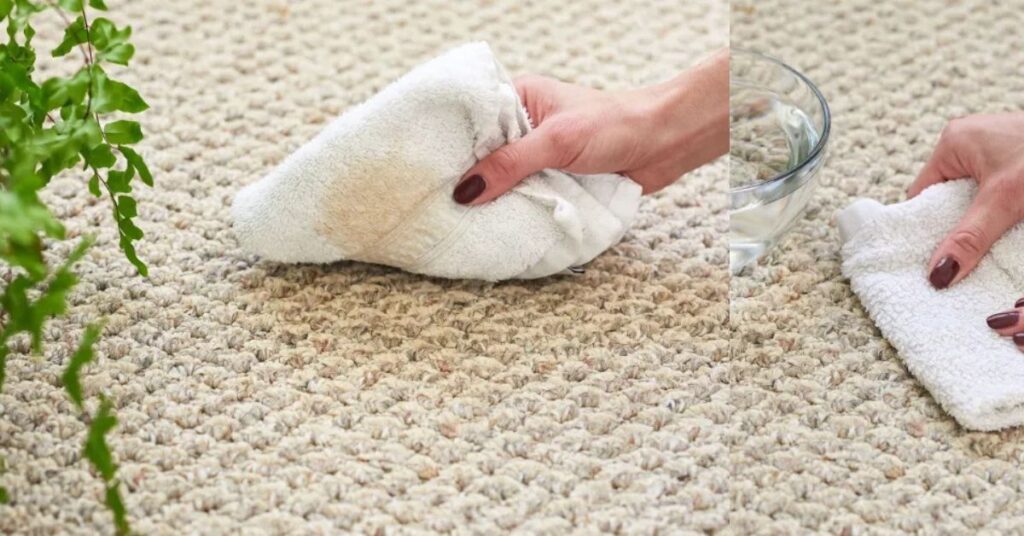
Nobody plans to spill coffee on the carpet. It just happens, usually when you’re carrying too much, and it always seems to land on the cream one.
Before you do anything, take a breath. Coffee isn’t the villain it looks like. It’s mostly water with some colour in it, and fresh colour comes out of carpet far more easily than you’d think. What makes a stain permanent is usually what happens next: the scrubbing, the flooding, the harsh product grabbed in a panic.
This guide shows you how to remove coffee stain from carpet in five fixes, from a plain cloth and cold water up to proper stain removers and hired machines. Along the way there’s advice for wool, rugs, milky coffee, and the stain you didn’t spot until the weekend.
The First Few Minutes
Speed matters more than anything else here, so start before you read on. Spoon up any pool of coffee. No spoon nearby? Kitchen roll does the job. Then lay a clean white cloth over the spill and press, properly, with your palm. You’ll feel it draw the liquid up. Move to a dry part of the cloth, press again, and keep going until nothing more comes up.
Now add a little cold water, ideally from a spray bottle. Start at the edge of the mark and work towards the middle, so you’re pulling the stain together instead of chasing it outwards. Blot dry. If a brown shadow’s still showing, you want Fix 2.
One rule you can’t bend: cold water only. Heat locks in the colour, and if there’s milk in the cup it locks in the proteins too.
Why Coffee Stains Carpet
The colour in coffee comes from tannins. You’ve seen what they do inside a teapot that’s been left for a few days, and carpet is no different. Wet tannins sit on the fibres and lift off easily. Dry tannins hold on. By the next morning a damp cloth treats them as part of the carpet, which is why the first hour counts for more than the cleaner you choose. Catch it in minutes and cold water may be enough. Leave it overnight and you’ll need vinegar. A week later, fading it is a realistic goal.
Carpet has a catch that a mug or a worktop doesn’t have: it’s layered. Below the pile is a backing, and below that an underlay, and a big spill can sink through all of it. When the top dries, damp from underneath creeps back up and takes colour with it. Cleaners call this wicking. It’s the reason a stain you were sure you’d removed turns up again the next day. So lift out as much liquid as you can first, and keep the water to a minimum.
What was in the cup changes the plan. Black coffee is mostly tannin, so it’s the simple one. Milk brings proteins that harden with heat and smell sour as they age, which is where washing-up liquid comes in. Syrup and sugar leave a sticky film that picks up dirt, so you’ll rinse more than once. Espresso is concentrated and the colour goes deeper. Iced coffee is mainly a volume problem, so mop up the bulk before anything else.
What You Need
Nothing you won’t already have. White cloths, so no dye can transfer onto the carpet. A spoon, a bowl or spray bottle of cold water, washing-up liquid, white vinegar and bicarbonate of soda. A soft brush or an old toothbrush, and a vacuum. A carpet stain remover is worth keeping in reserve for Fix 5.
Know Your Carpet First
Most carpets in UK homes are either synthetic (nylon, polyester or polypropylene) or wool and wool mixes. If you can’t remember which you’ve got, check the label on an offcut or dig out the fitter’s paperwork.
Synthetics are fairly forgiving. Nylon is hard-wearing and takes home remedies well. Polyester copes with water-based stains but turns dull and sticky if you overdo the detergent. Polypropylene resists most spills, though heat and strong solvents can harm it. Wool needs more care.
Whichever you have, patch test first. Pick a spot nobody looks at, such as inside a wardrobe, and dab on whatever you plan to use. After a couple of minutes press a white cloth against it. If colour comes off on the cloth, that product isn’t for your carpet.
How to Clean Wool Carpet
Wool is a natural protein fibre, much like human hair. Heat damages it, strong alkaline cleaners damage it, and hard scrubbing can make it felt or shrink. When you’re washing wool carpet, use cool water, keep the patch damp rather than wet, dab instead of rubbing, and dry it quickly with a towel and a bit of airflow. For anything stronger than water, look for the WoolSafe mark, which comes from an independent organisation that tests products on wool.
Advice on kitchen remedies for wool is split. Plenty of people use a very weak vinegar and water mix, but test it before you trust it. A dry sprinkle of bicarb left briefly is fine, whereas a wet paste left sitting isn’t. If the carpet is old or valuable, a WoolSafe product or a professional is the sensible choice.
Does Pile Type Matter?
A little. Cut pile (saxony or twist) handles ordinary blotting without any trouble. Loop pile such as berber snags on stiff brushes, so stick to dabbing. Shag and deep pile hold moisture down near the base, so rinse lightly and use a fan. Carpet tiles can sometimes be lifted out and cleaned on their own, but read the maker’s guidance first.
How to Remove Coffee Stain from Carpet: 5 Easy Fixes
Take these in order. If cold water clears the mark, you can stop right there.
Fix 1: Blot, Then Cold Water
This handles most fresh spills. Spoon off the liquid, press a white cloth on the stain for a few seconds, then lift and switch to a clean part of the cloth. Dab cold water in from the edges and finish by blotting with something dry. When the cloth comes away almost clean, you’re done. If the spill happened in a hallway or bedroom and you only found it hours later, jump to the section on old stains.
Fix 2: Washing-Up Liquid
A faint brown shadow after the cold water means it’s time for a little detergent. Stir a few drops of washing-up liquid into a cup of cool water. Dab it on with a clean cloth rather than pouring it, leave it two or three minutes, then blot and rinse with dabs of cold water. Repeat if you need to. Be sparing with the liquid, because leftover soap attracts dirt and leaves a dull patch once the carpet dries.
Fix 3: Diluted White Vinegar
Vinegar is acidic, and that helps break down tannins, which makes it useful on marks that have started to dry. Mix one part white vinegar with four parts cool water in a spray bottle. Mist the stain, wait about five minutes, then blot, rinse with cold water and blot dry. It suits synthetic carpets. On wool, dilute it further and test beforehand. Neat vinegar can mark some dyes and fibres, so always dilute it.
Fix 4: Bicarbonate of Soda
Cleaning sodium bicarbonate, the white powder sold as bicarb or baking soda, won’t dissolve a dark stain on its own. What it does well is absorb moisture and odours and lift light marks. As a bicarb soda cleaner it’s most useful on dried stains and on carpet that smells of stale coffee. Scatter a thin layer over the dry patch, leave it for about 15 minutes (longer on a bigger area), then vacuum it up thoroughly. If something’s still visible, go back to Fix 2 or Fix 3.
Don’t put bicarb and vinegar in the same bowl hoping for a stronger cleaner. They fizz and cancel each other out. Use one, then the other. A bicarbonate soda cleaner can also leave a chalky film if the vacuuming is rushed.
Fix 5: A Stain Remover or Carpet Cleaner Machine
Old, large or stubborn marks need something designed for the job. The best carpet stain remover for coffee is usually an oxygen-based or enzyme formula suited to your fibre. Oxygen products lift colour. Enzyme products break down organic matter such as milk, but they work more slowly, so give them the contact time on the label. Vanish, Dr. Beckmann and Bissell are all easy to find in UK shops. Patch test first, follow the label, and rinse afterwards.
For a bigger area, a machine can make sense. Many UK supermarkets and DIY stores hire out carpet cleaners by the day. The best carpet cleaning solution for carpet cleaner use is normally the one the manufacturer recommends, as homemade mixes can foam, clog the tank or affect the warranty. When you compare a best carpet cleaner solution in the shop, check which fibres it suits, whether it’s low-foam, and whether it leaves a sticky residue. Vacuum first and pre-treat the stain. Move the machine slowly, then make a couple of dry passes to draw out the water. Rinse with clean water and dry the area with towels.
Old and Dried Stains
Tannins grip harder as time goes on, so a week-old stain takes patience, but it’s seldom hopeless. If you’re searching for how to get coffee stains out once they’ve dried, begin by scraping off any crust with a blunt knife and vacuuming the loose bits. Dampen the patch with cold water, mist on the weak vinegar mix from Fix 3, and leave it five to ten minutes. Blot, dab on a little washing-up liquid in cool water, rinse, and blot dry. If a ring remains, bring in a carpet stain remover and repeat. Several light rounds do better than one big soaking, which only drives the stain deeper and leaves residue.
Milky and Sugary Coffee
Milky coffee leaves a protein mark that can turn sour if it isn’t fully removed. Start with cold water and washing-up liquid, keep heat away, and rinse thoroughly, because leftover milk is what makes the smell return as the carpet dries. Sugary coffee leaves a tacky film. Keep dabbing with cold water and blot with dry towels. If it still feels sticky once dry, rinse again.
How to Remove a Coffee Stain from a Rug
Rugs need slightly different handling. For a coffee rug stain, read the care label first. Rugs can be wool, cotton, viscose or synthetic, and viscose reacts badly to water. A small washable rug can go outside, where you treat the stain from the back so the coffee is pushed out the way it went in.
A large or fixed rug can’t be turned over. Blot, rinse with cold water and use washing-up liquid as you would on carpet, with a dry towel underneath to soak up moisture and protect the floor. Avoid soaking a rug with a jute or natural backing, since it can mark the floor and weaken the fibres. For a hand-knotted or antique rug, call a specialist.
Homemade Carpet Cleaner Recipe and Homemade Carpet Shampoo
A basic homemade carpet cleaner recipe uses one cup of cool water (about 240 ml), a teaspoon of washing-up liquid and a tablespoon of white vinegar. Stir gently so it doesn’t foam, dab it on, wait a couple of minutes, then blot and rinse. It suits spot cleaning on synthetic carpets.
When a small patch needs more, try homemade carpet shampoo: a litre of lukewarm water, a teaspoon of mild washing-up liquid and two tablespoons of white vinegar. Work it in with a soft brush, then rinse with clean water. Don’t pour it into a machine unless the manual allows it, because it can foam and damage the motor, and leave it off wool.
Smell and Drying
Once the colour has gone, the carpet can still smell faintly of coffee. Sprinkle on dry bicarb, leave it for a few hours and vacuum it up. A shop-bought carpet deodorizer, usually a powder you sprinkle on and vacuum off, does a similar job, though test it first on wool or pale carpet.
Drying is where many people go wrong, and damp carpet is where brown rings come from. Press dry towels into the area, open a window or run a fan, keep people and pets off until it’s fully dry, then vacuum to lift the pile.
Mistakes and Myths
Most clean-up failures come from the same short list. Rubbing roughs up the fibres and pushes coffee deeper. Hot water sets the stain. Bleach strips colour and can leave a pale patch that looks worse than the stain did. Soaking carries water down to the underlay and causes damp smells and rings. Too much product leaves residue that attracts dirt. Skipping the patch test is the costliest mistake of the lot, because it can’t be undone.
A few popular tips don’t earn their reputation. Salt absorbs a little liquid, but a dry cloth does the same and salt can leave grit in the pile. Fizzy water does roughly what plain cold water does. Ironing over a damp cloth can scorch synthetic fibres and set the stain on wool, and shaving foam or hairspray leaves residue that attracts dirt.
Stopping the Next Spill
A few habits help. Use a lid when you carry mugs around the house, keep hot drinks off the floor, and put a washable rug under desks and favourite chairs. Keep a small kit nearby with white cloths, a spray bottle and a tub of bicarb, so you can act in the first minute. When you’re fitting a new carpet, ask about stain protection and check it suits the fibre. Regular vacuuming matters too, since loose grit makes stains harder to lift.
Pros and Cons
Home Remedies (Washing-Up Liquid, Vinegar and Bicarb)
Pros
- They cost little, and most are already in the kitchen.
- They’re mild enough for most synthetic carpets and quick on fresh spills.
Cons
- They’re weaker on old, dark or set-in stains.
- Some need caution on wool, so testing first is a must.
Shop-Bought Carpet Stain Remover
Pros
- It’s formulated to break down coffee and other tannin stains.
- Fibre-specific versions exist, including WoolSafe-marked ones.
Cons
- It costs more, and different stains may need different products.
- It needs a thorough rinse, because leftover residue attracts dirt.
When to Call a Professional
Consider a professional carpet cleaner if the stain is large, has soaked down to the underlay, keeps coming back, or sits on a delicate or expensive carpet or rug. Before you book, ask whether they use WoolSafe-approved products on wool, whether they charge per room, per square metre or per stain, how long drying takes, whether they guarantee the result, and whether they’re insured. If you rent, check your tenancy agreement and tell your landlord or agent about any stain you can’t shift.
FAQs
Are coffee stains permanent on carpet?
Rarely. If you blot a fresh stain quickly and avoid hot water and scrubbing, most of it comes out. Older stains need more rounds, but they usually improve.
Is hot or cold water better for coffee stains?
Cold. Hot water can set the stain, particularly with milky coffee.
Is vinegar safe on wool carpet?
A very weak mix is sometimes used, but advice varies. Test first, or choose a WoolSafe-approved cleaner.
Does bicarbonate of soda lift coffee stains?
It mainly absorbs moisture and smell and can lift light marks. It’s best on dried stains and odours, followed by a mild cleaning solution.
What works on an old coffee stain?
Dampen it with cold water, apply diluted vinegar, blot, then use washing-up liquid in cool water. Repeat lightly and add a carpet stain remover if a mark remains.
How do I get coffee out of a light carpet?
Act fast, use cold water and mild detergent, and avoid bleach, which can leave yellow or pale patches. A patch-tested stain remover is the next step.
Can I use a carpet cleaner machine on coffee?
Yes, with the manufacturer’s recommended solution. Skip homemade mixes that foam, and rinse with plain water afterwards.
Quick Recap
Press, don’t rub. Keep the water cold. Try washing-up liquid first, then diluted vinegar, then bicarb or a proper stain remover if the mark stays. Know your fibre, test every product, and let the carpet dry fully.






1 thought on “How to Remove Coffee Stain from Carpet: 5 Easy UK Fixes”
Comments are closed.