Almost everyone has a pair of trousers sitting in their wardrobe that they never wear. You bought them because they looked great on the hanger, but five minutes after putting them on at home, you remembered why they annoy you. The waistband digs into your stomach when you sit down, the back gaps open by two inches or the hems drag through dirty puddles on the street.
Off-the-peg clothing is cut to a generic factory template that assumes human bodies are flat, symmetrical rectangles. In reality, real bodies have curves, muscular thighs and different waist heights.
When you add in cheap fabrics that lose their shape by midday, shopping for pants turns into an exercise in pure frustration. But once you understand why trousers fail in specific spots, you can spot bad cuts on the shop rail in thirty seconds. Here is the honest truth about how trouser rises, leg cuts, fabrics and hems actually work in everyday life.
Why the Waistband Gaps at the Back and What to Do About It
The most common fitting complaint is pulling on a pair of pants that fits your thighs perfectly, only to find a huge gap at the back of your spine. You try cinching it with a belt, but that just bunches up the cloth into an uncomfortable lump against your lower back.
This happens because of the trouser rise. The rise is the distance from the middle crotch seam straight up to the waistband edge. If a pair of trousers does not match your natural trouser rise body proportions, the waistband will constantly slide down or pull forward.
A high rise waistband fit sits over your navel, resting right at your natural waist. It gives reliable sitting down waistband comfort because the cloth stays anchored around your torso instead of sliding down your hips when you lean forward over a keyboard. A mid rise tailored cut sits roughly two inches lower, resting on top of your hip bones.
When you try on trousers, always pay attention to the crotch depth seat measurement. If the crotch seam is cut too shallow, the fabric pulls tight between your legs the second you sit down.
The secret to stopping the back gap is looking for split waistband curtain tailoring inside the rear seam. Good trousers have a small V-shaped split cut into the back waistband lined with soft cotton cloth. This split gives an alteration tailor room to take in the waist without distorting the pockets, making an easy gaping waistband tailoring fix that costs about ten pounds at a local dry cleaner.
The Side Pocket Flare: Why Your Pockets Bulge Open Like Wings
Have you ever looked in a shop mirror and noticed that the side pockets of your trousers are sticking straight out? Stylists call this pocket flare which ruins the clean line of an outfit instantly.
A side slant pocket flare happens because the trousers are too tight across your hips, buttocks or upper thighs. When there is not enough cloth across your seat, the side seams get pulled backwards. This forces the pocket openings to pull apart like open mouths.
The fix is simple, but it requires ignoring the size number on the label:
- Always do a quick thigh measurement sizing check by sitting down in front of the changing room mirror. If the pockets pull open or the fabric strains across your lap, that size is too small.
- Always buy trousers that fit your widest point first, whether that is your hips, bum or thighs.
- Once the side pockets lie completely flat and smooth against your body, you can take the trousers to a tailor to pull in the waistband.
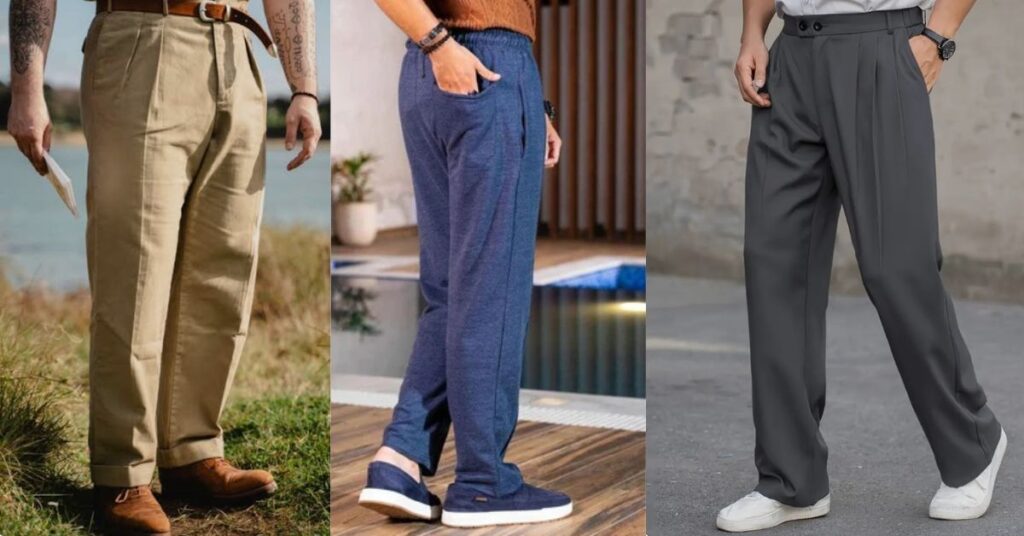
For men, choosing pleated front suit trousers gives your hips extra room to expand when seated, stopping pockets from pulling open. If you prefer a cleaner modern look, flat front minimalist trousers work well as long as the thigh cut is cut wide enough for your build. Always make sure the rear has neat slanted back welt pockets that sit flat against your glutes without pulling open.
The Wet Pavement Problem: How to Get Hem Length and Shoe Breaks Right
Dragging trouser hems through rainy streets is a fast way to ruin expensive clothes. Once the back of a hem touches the ground, it acts like a wick, soaking up muddy puddle water that travels six inches up your leg.
This is especially common with wide leg trousers and flowy wide leg trousers women styles. While puddle hem wide leg trousers look relaxed in fashion photographs, in daily life they get frayed by the backs of your shoes within three weeks. A wide trouser should hover roughly half an inch above the ground when you are wearing your normal shoes so it never touches the pavement.
For narrower trousers, the fit comes down to your trouser hem shoe break, which is how the fabric folds over the top of your shoe:
- No break: The hem ends cleanly right above your shoe laces, giving a sharp no break ankle length line. This keeps your cuffs clean and works best with cropped ankle skimming cropped trousers.
- Half break: The cloth creates one small, neat horizontal fold across the front of your shoe. This is the standard choice for smart trousers, smart casual trousers and everyday mens trousers.
- Full break: The fabric puddles in multiple folds over your laces. On modern trousers, this looks sloppy and makes your shoes look small.
If you wear retro cuts, a flared hem trouser silhouette widens gently below the knee, balancing out wide shoulders nicely. If your trousers are dragging, a basic alteration tailor hem shortening takes less than a day. A clean straight leg trouser cut or a tapered ankle hem finish will instantly look twice as expensive once the hem sits at the correct height.
Fabric Traps: Why Cheap Linen Wrinkles and What to Buy Instead
The fabric blend on the inside wash tag dictates whether a pair of trousers will hold its shape or look like crumpled paper by lunchtime.
The Truth About Summer Linen
Pure linen trousers are fantastic in hot weather because flax fibres let heat and sweat escape quickly. However, cheap white linen trousers are often thin and see-through in direct sunlight while pure linen trousers women pieces crease heavily the moment you sit down in a car.
If you want the cooling feel of linen without looking messy, look for a breathable summer linen blend that mixes flax with cotton or lyocell. The cotton adds body and prevents deep stubborn wrinkles while retaining breezy airflow for spring summer lightweight pants.
Heavy Winter Fabrics and Relaxed Cuts
When autumn arrives, light cotton leaves your legs freezing. Switching to autumn winter trouser fabrics protects you from biting winds.
Dense wool flannel tailored trousers have a brushed texture that traps warm air against your skin while hanging straight over your boots. For casual wear, corduroy winter trousers feature thick velvety ridges that resist cold drafts. For off-duty weekends, relaxed fit casual trousers give you plenty of breathing room without looking sloppy. For summer offices, breathable tropical wool trousers use open-twist yarns that let air blow right through while holding a sharp front crease.
Jersey and Everyday Comfort
If you work from home or travel a lot, pairing a soft knit jersey and trousers gives you supreme comfort. Many women prefer ladies pull on jersey trousers uk cuts because the wide elastic bands do not pinch your waist after eating.
For everyday work pants, look for stretch cotton elastane fabric with two percent stretch for natural movement. For wide cuts, a viscose blend fluid drape ensures the legs swing naturally instead of feeling stiff. When packing for holidays, choose an anti crease synthetic fabric blend or crease resistant travel trousers that shake out smooth without an iron.
Men’s Trousers: Office Tailoring, Tough Workwear and Rain Gear
Men generally buy trousers for specific jobs rather than fashion trends. Having the right pair for the right task saves you from ruined clothes.
Office Tailoring and Everyday Work Pants
For formal business settings and evening events, mens formal trousers, formal male pants and proper dress trousers need to hang cleanly without wrinkling. Dark pants men formal cuts with a sharp front crease make your legs look straight and tidy.
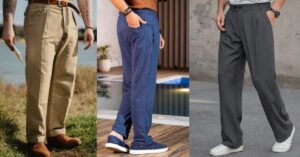
In offices with an office dress code smart casual policy, mens smart pants made from cotton twill chinos or wool-blend slacks bridge the gap between jeans and suits. Sticking to neutral stone beige trousers, classic navy blue formal work trousers or charcoal grey tailored pants gives you a versatile base that pairs with blazers, polo shirts or knitwear.
Utility Cargos and Heavy Work Pants
Modern mens cargo trousers have trimmed down. The best cuts have cargo side flap pockets that sit flat against your leg when empty so you do not look bulky.
For building sites and manual work, work trousers men need to take a beating. Dependable work trousers are constructed from heavyweight denim workwear pants or heavy cotton duck canvas with reinforced knees and deep functional front pockets that can hold screws and tools without ripping.
Walking and Wet Weather Trousers
Standard denim or cotton trousers are terrible for rainy outdoor hikes. When wet cotton gets hit by wind, it chills your legs rapidly.
Dedicated walking trousers use quick-drying synthetic fabric that sheds light rain. If heavy rain rolls in, waterproof trousers with taped waterproof seams outdoors and a durable dwr water repellent coating keep you completely dry. Look for side leg zips so you can pull them on over muddy boots quickly.
Patterns and Prints: Checks, Stripes and Animal Motifs
While plain black trousers form the core of most working wardrobes, adding trousers patterned with stripes or checks gives simple sweaters and plain t-shirts an instant lift.
Pinstripes and Vertical Stripes
Vertical lines draw the eye up and down, making your legs look longer. A pair of striped trousers or relaxed striped wide leg trousers in cream and navy looks easy-going with white trainers and a denim jacket. For business meetings, pinstripe trousers womens cuts or sharp mens striped pants add authority without feeling stuffy.
Checks and Plaids
Check trousers for women and traditional checked trousers for men add rich visual texture during cooler months. Looking through check pants ladies racks, subtle windowpane checks or muted grey houndstooth patterns act almost like neutral plains, pairing easily with black, camel or navy jumpers.
Animal Prints
Bold leopard print trousers have become a staple neutral in modern style, sharing the same wardrobe appeal as leopard print jeans for adding personality to simple outfits. The trick to pulling them off is keeping everything else plain. Pair leopard print bottoms with a heavy black wool sweater and simple flat shoes so the trousers stay the main focus.
For summer outings, lightweight printed trousers with floral or geometric motifs pair nicely with flat leather sandals and a white t-shirt. With patterned trousers womens styles, keeping the top half neutral prevents the outfit from looking busy.
Everyday Care: Waistband Hardware, Washing and Creases
Good care habits make a ten-pound high street pair last for years. You do not need to spend huge amounts on dry cleaning if you treat the fabric properly at home. Most high street tailoring brands leave half an inch of spare cloth inside the hems, making alterations straightforward.
Waistband Hardware
Look at how the trousers fasten at the front. A flat hook and bar waist closure stays smooth under knitwear, whereas big buttons can poke through thin jumpers. For casual trousers, look for an elasticated back waistband or drawstring waist smart trousers that give you hidden waist expansion while looking smart from the front.
If you hate wearing belts, look for trousers with side adjuster metal buckles. These let you tighten the waistband by an inch on each side without bunching up the cloth under belt loops waistband styling.
Washing and Crease Removal
Most daily cotton slacks and chinos are machine washable everyday trousers, but always turn them inside out before washing on a cold cycle to stop the dye washing out.
For wool trousers, follow dry clean wool press crease instructions. You only need to dry clean wool slacks once or twice a year. Between wears, hang them upside down from the cuffs using a clamp trouser hanger crease prevention rack. The natural weight of the waistband pulls out daily sitting wrinkles overnight without using an iron.
Frequently Asked Questions
Why do my trousers always gap at the back of my waist?
Waistband gaps happen when trousers fit your hips and thighs but are too wide for your smaller natural waistline. Ready-to-wear brands cut waistbands straight instead of curved. A local alteration tailor can take in the back seam in minutes, especially if the trousers have split waistband tailoring.
How do I stop side pockets from flaring open?
Side pockets flare open when trousers are too tight across your hips, buttocks or upper thighs, pulling the side seams apart. Sizing up until the pockets lie completely flat against your hips is the only real fix. You can then have a tailor nip in the waistband to fit your waist.
How high off the ground should wide-leg trousers be?
Wide-leg trousers should clear the ground by about half an inch when you are wearing your normal footwear. They should never drag along the pavement, as the rear hems will quickly soak up puddle water and fray against the ground.
What is the difference between chinos and suit trousers?
Chinos are made from durable cotton twill with casual external stitching and flat pockets, making them ideal for everyday and smart-casual wear. Suit trousers are cut from finer wool, wool blends or tropical wool, featuring a pressed vertical crease, smooth internal waistband and a formal drape.
How should I wash linen trousers to stop them shrinking?
Always wash linen trousers on a gentle thirty-degree cycle using mild liquid detergent. Never put linen trousers in a tumble dryer, because intense heat shrinks the natural flax fibres and bakes stubborn wrinkles into the cloth. Hang them up to dry while damp and iron on reverse.